Six years of waiting
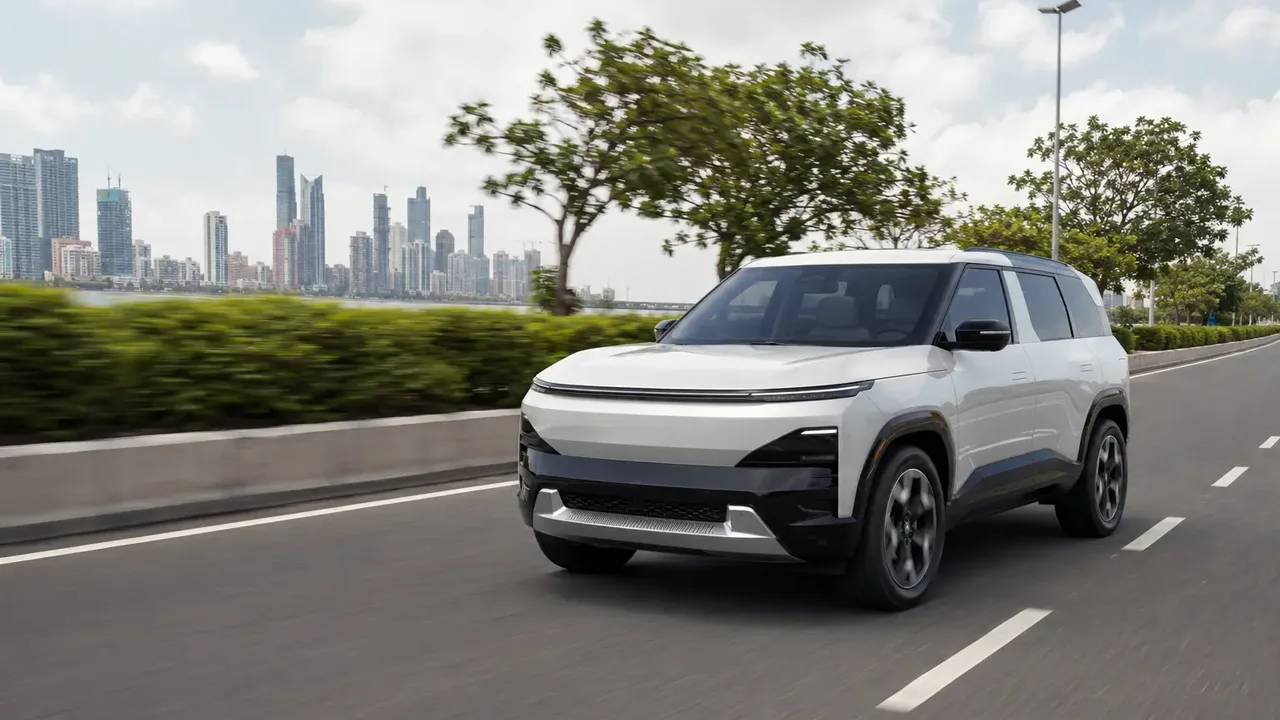
Tata Motors launched the Sierra EV in Mumbai on 30 June 2026, priced from ₹18.79 lakh and rising to ₹25.99 lakh (ex-showroom). Bookings opened the same day; deliveries begin 15 July.
The wait has been long. The original Sierra ran from 1991 to 2000 and remains a cult object among Indian SUV enthusiasts, largely on the strength of one detail: the Alpine-style wraparound rear quarter glass, which nothing else on Indian roads has ever had. The electric concept appeared at Auto Expo 2020. Six years later, the production car is finally here.
It is Tata's seventh electric model and slots between the Curvv EV and the Harrier EV.
The numbers
Batteries and range (both MIDC-certified):
- 63 kWh — claimed 565 km
- 75 kWh — claimed 665 km
- 75 kWh with dual-motor QWD — claimed 624 km
That 665km figure is the headline, and it deserves scrutiny. No rival in this price bracket currently claims anything close. Tata's own Harrier EV claims 627 km from the same 75 kWh pack — the Sierra is smaller and lighter, which plausibly explains the gain. But MIDC figures are notoriously generous, and Tata itself is promising "500+ km real-world," which is a materially different number and an unusually honest one.
Powertrain. Standard variants pair the 63 kWh pack with a single rear-mounted motor. The top-spec 75 kWh gets Quad Wheel Drive (QWD) — a rear motor making 234bhp/340Nm and a front motor making 138bhp/164Nm.
Performance. 0–100 kmph in 5.8 seconds in Boost Mode. That makes the Sierra EV the quickest production vehicle Tata has ever sold, half a second faster than the Harrier EV.
Charging. Up to 120 kW DC (a 1.6C rate), adding 263 km in 15 minutes on the 75 kWh pack, or 238 km on the 63 kWh. A 7.2 kW home AC charger is a ₹49,000 option.
Battery warranty. Tata is claiming 80% battery health retention after seven years, with a lifetime battery warranty on the pack — a commitment now made across its EV range.
The variants, decoded
| Variant | Battery | Price (ex-showroom) |
|---|---|---|
| Pure 63 RWD | 63 kWh | ₹18.79 lakh |
| Pure S | 63 kWh | ₹19.99 lakh |
| Adventure | 63 kWh | ₹20.99 lakh |
| Adventure | 75 kWh | ₹22.19 lakh |
| Empowered | 75 kWh | ₹23.79 lakh |
| (Top QWD) | 75 kWh | up to ₹25.99 lakh |
Pure 63 is not a stripped-out base car: 12.3-inch touchscreen, 10.25-inch digital cluster, six airbags, wireless Android Auto and CarPlay, cruise control, push-button start.
Pure S adds the panoramic sunroof, LED fog lamps, front parking sensors, and V2L/V2V charging.
Adventure is where it steps up meaningfully — 360-degree camera, wireless charger, 12-speaker JBL with Dolby Atmos, leather-wrapped wheel, ambient lighting, terrain modes. The 75 kWh version unlocks the 665km claim.
Empowered brings the Horizon triple-screen dash (three 12-inch displays), ventilated and six-way powered memory front seats, leatherette, dual-zone climate.
The details that matter
- 2,730 mm wheelbase, 622-litre boot
- The biggest panoramic sunroof in the segment at 1,525 × 925 mm
- 19-inch alloys with aerodynamic inserts
- 540-degree camera with an underbody transparent view on higher trims
- Level 2 ADAS, six airbags, ESC, TPMS
- Flush door handles, powered gesture tailgate, digital key
- Hidden rubber window beading — a Range Rover trick, and a genuinely premium touch
- Built on the Acti.ev+ platform, with TiDAL 2.0 software architecture supporting extensive OTA updates
- Multi-link front and rear suspension with frequency-dependent dampers
- Seven colours, launch shade Rishikesh Rapids
Tata also unveiled a Sierra EV Sanctuary Edition — an open-cabin safari build with the roof and B-pillars removed, roll cage, all-terrain tyres, bull bar, electric winch, retractable ladder, stadium-style third row and waterproof upholstery. It is not a retail product, but it is superb marketing, and Tata has confirmed more special editions before the end of 2026.
Does it work?
Tata has been to the top of the tallest dune in the UAE — Tal Moreeb — with it, which is either a genuine capability statement or the best-executed PR stunt of the Indian automotive year. Possibly both.
The commercial logic is sound. Tata already dominates India's EV market with 38% share and 12,023 units in June. The Sierra EV gives it something it has lacked: a halo product with margin sitting above the Punch/Nexon volume base. That is exactly the portfolio structure that has made Mahindra formidable.
The competition
The Sierra EV enters India's most contested electric segment:
- Mahindra BE 6 — sportier, coupe-SUV styling, credible EV credentials
- Hyundai Creta Electric — the safe bet, backed by Hyundai's service network, and reputed to deliver the closest real-world range to its official claim in the segment
- Maruti e Vitara — production-constrained but a high-volume threat once capacity ramps from September
- MG ZS EV, VinFast VF 7, Toyota's incoming eBella
Autocar India's own experts, asked to advise a buyer with a ₹25–27 lakh budget, pointed to the Creta Electric on service-network and real-world-range grounds — which tells you exactly what the Sierra EV must overcome. It is not a spec-sheet problem. It is a trust problem, and it is the same problem every Tata product has faced for twenty years.
Our verdict
On paper, the Sierra EV is the most complete electric SUV India has produced. The range claim leads the segment, the QWD system answers the one criticism that always attached to the Sierra nameplate, the design is genuinely striking, and the ₹18.79 lakh entry price is aggressive.
The questions are the ones no launch article can answer: real-world range against the 665km claim, and long-term software and battery reliability — the areas where Tata's reputation has historically been weakest and where Hyundai's is strongest.
Independent range tests over the next eight weeks will decide whether this is a landmark or a headline.
Key takeaways
- Launched 30 June 2026 from ₹18.79 lakh to ₹25.99 lakh; deliveries from 15 July
- 63 kWh (565 km) and 75 kWh (665 km MIDC) battery options
- Top spec gets dual-motor Quad Wheel Drive; 0–100 kmph in 5.8 seconds
- 120 kW DC charging adds 263 km in 15 minutes
- Rivals the Mahindra BE 6, Hyundai Creta Electric and Maruti e Vitara
Sources & further reading
- Tata Motors launch materials (30 June 2026)
- Autocar India
- CarWale
- CarDekho
- Rushlane
- LatestLY
Figures, prices and policy details were current at the last-updated date above. Automotive pricing, incentives and regulations change frequently — verify time-sensitive details with the linked primary sources. Read our editorial policy and fact-checking standards.