The paradox
Recall repairs are free. They fix genuine safety defects. And yet, across the industry, roughly half of all recalled vehicles are never brought in.
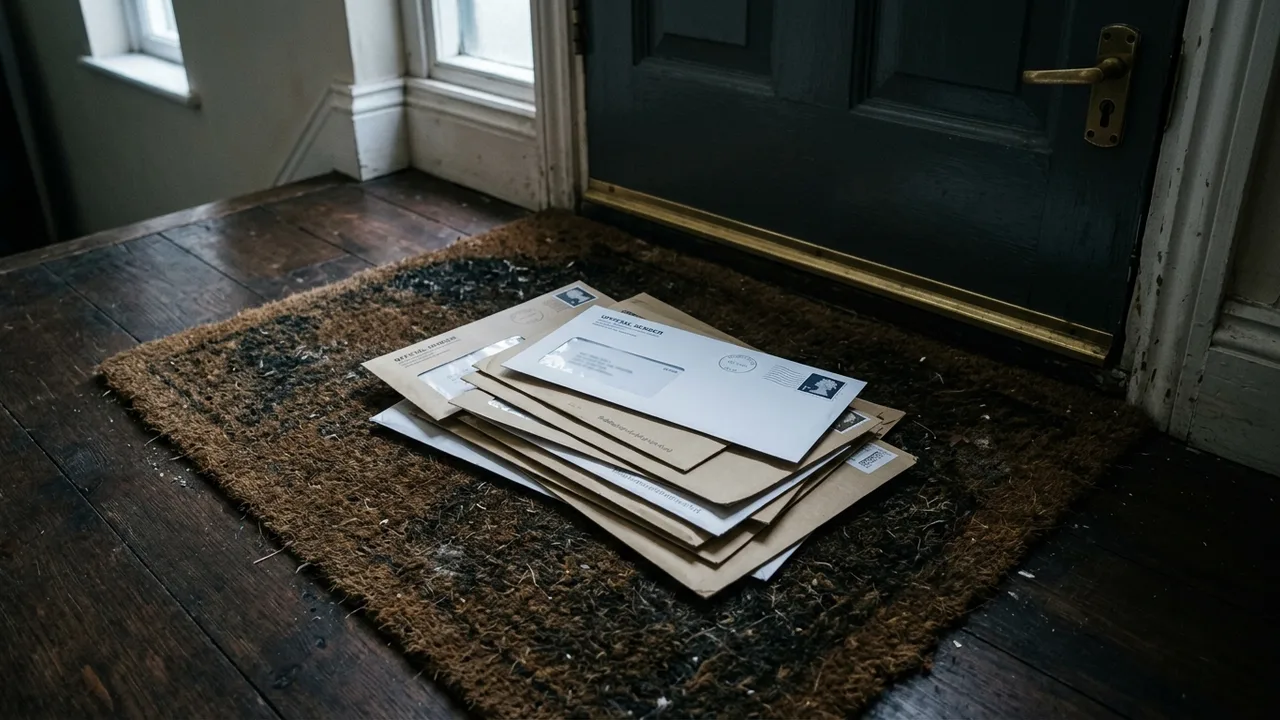
People ignore recalls for entirely human reasons: the letter looks like junk mail, the car "seems fine," the dealer is inconvenient, or the notice went to a previous owner's address and never arrived at all.
But ignoring a recall — particularly a serious one — has consequences that extend well beyond the safety risk itself. Here's what actually happens in the UK if you don't act.
Consequence 1 — Your insurance
This is the big one, and it's widely misunderstood.
For a standard recall, your insurance is generally unaffected. Insurers don't void policies over an unresolved minor recall.
For a stop-drive or do-not-drive order, the picture changes sharply. The Association of British Insurers advises drivers to tell their insurer if their car is under recall and follow the advice given. And insurers may refuse to pay out if you have a crash while knowingly operating a vehicle under a critical safety recall.
Think through what that means. If your car is under a stop-drive order, you were notified, and you drove it anyway and crashed — your insurer may argue you were operating a vehicle you knew to be dangerous, and decline the claim. You could be personally liable for third-party damage and injury. That is a potentially ruinous financial exposure, entirely avoidable, over a free repair.
The safe course: for any stop-drive order, tell your insurer, follow their advice, and don't drive the car until it's fixed.
Consequence 2 — Your MOT
The DVSA can flag vehicles affected by serious recalls in MOT records.
For a car under a stop-drive order, this can mean being marked with a dangerous defect — which is an automatic MOT failure. The car cannot be legally driven on an expired MOT with a dangerous defect, and the flag appears in the vehicle's MOT history, which is publicly viewable at gov.uk.
(The DVSA's exact handling has varied between campaigns and been revised more than once during the Takata crisis — sometimes testers were instructed to test normally and note an advisory, sometimes to fail the vehicle. Check the current MOT special notice for the specific recall.)
The practical point stands: a serious open recall can cost you your MOT, and the record follows the car.
Consequence 3 — Your resale value
This one is guaranteed, not conditional.
An open recall is visible. Any buyer who runs the VIN through gov.uk/check-vehicle-recalls — and any competent dealer or buyer's-inspection service will — sees it immediately.
An open recall tells a buyer two things:
- There's an unresolved safety action on the car.
- The current owner didn't bother to get a free repair done — which raises questions about every other maintenance item.
At best, it's a negotiating lever the buyer uses against you. At worst, for a stop-drive car, it's a legal barrier: under the General Product Safety Regulations 2005, a business cannot sell a product it knows to be unsafe, so a dealer can't take your affected car in part-exchange and resell it until it's fixed.
A completed recall, by contrast, is a small selling point — evidence of a car that's been kept on top of.
Consequence 4 — The law
Driving a vehicle under an active stop-drive order can expose you to prosecution for using a vehicle in a dangerous condition. Reported penalties include a £2,500 fine, three penalty points, and in some circumstances a driving ban.
This is separate from the insurance and MOT consequences — it's a straightforward road-traffic offence. You're driving a car that a manufacturer and the DVSA have formally declared unsafe.
Consequence 5 — The actual danger
It's easy, in a list of administrative consequences, to lose sight of the real one.
The reason recalls exist is that the defect can hurt or kill you or someone else. Takata airbags have killed at least 28 people in the US and injured over 400 — many in minor crashes that everyone should have walked away from. The Jeep power-steering fire recall is tied to 51 fires. A ball joint failure means total loss of steering at speed.
The administrative consequences are real. But they're downstream of the one that matters: these defects are recalled because they can be lethal, and the repair is free.
Why the notification gap makes this worse
A significant share of "ignored" recalls aren't ignored at all — the owner never knew. The letter went to a previous keeper's address.
Two things protect you:
- Keep your address current with the DVLA. Manufacturers write to the registered keeper. If that's three houses ago, you'll never see the notice.
- Check your own VIN every six months at gov.uk/check-vehicle-recalls, and always before an MOT and before selling. Don't wait to be told.
The bottom line
Ignoring a recall risks your insurance cover, your MOT, your resale value, potentially your licence — and, most importantly, your safety. All to avoid a repair that is free and often takes an hour.
There is no version of the maths where ignoring a serious recall makes sense. Check your VIN, book the repair, keep the paperwork.
Key takeaways
- Insurers may refuse to pay out if you knowingly drive under a stop-drive order and crash
- Serious recalls can be flagged in MOT records and cause a dangerous-defect failure
- An open recall is publicly visible and reduces resale value; a completed one is a selling point
- Driving under a stop-drive order can mean a £2,500 fine, 3 points and a possible ban
- Keep your DVLA address current and check your VIN every six months — many "ignored" recalls were never received
Sources & further reading
- Association of British Insurers
- DVSA
- GOV.UK vehicle recall service
- General Product Safety Regulations 2005
- NHTSA Takata data. General guidance, not legal advice.
Figures, prices and policy details were current at the last-updated date above. Automotive pricing, incentives and regulations change frequently — verify time-sensitive details with the linked primary sources. Read our editorial policy and fact-checking standards.