⚠️ Live safety recall. VINs have been searchable since 10 June 2026. Do not wait for the letter (mailing 7 July). Check at nhtsa.gov/recalls.
The recall
American Honda is recalling 880,514 vehicles because the rear subframe — the structural cradle holding the rear suspension — can corrode at the suspension mounting points until it fractures and fails.
- NHTSA campaign: 26V365 (also reported as 26V367000)
- Filed: 4 June 2026
- Dealers notified: 5 June 2026
- VINs searchable: 10 June 2026
- Owner letters mailing: 7 July 2026
- Honda internal codes: AOU (Honda), AOT (Acura)
The affected vehicles
| Model | Years | Units |
|---|---|---|
| Honda Pilot | 2016–2022 | 463,253 |
| Acura MDX | 2014–2020 | 217,517 |
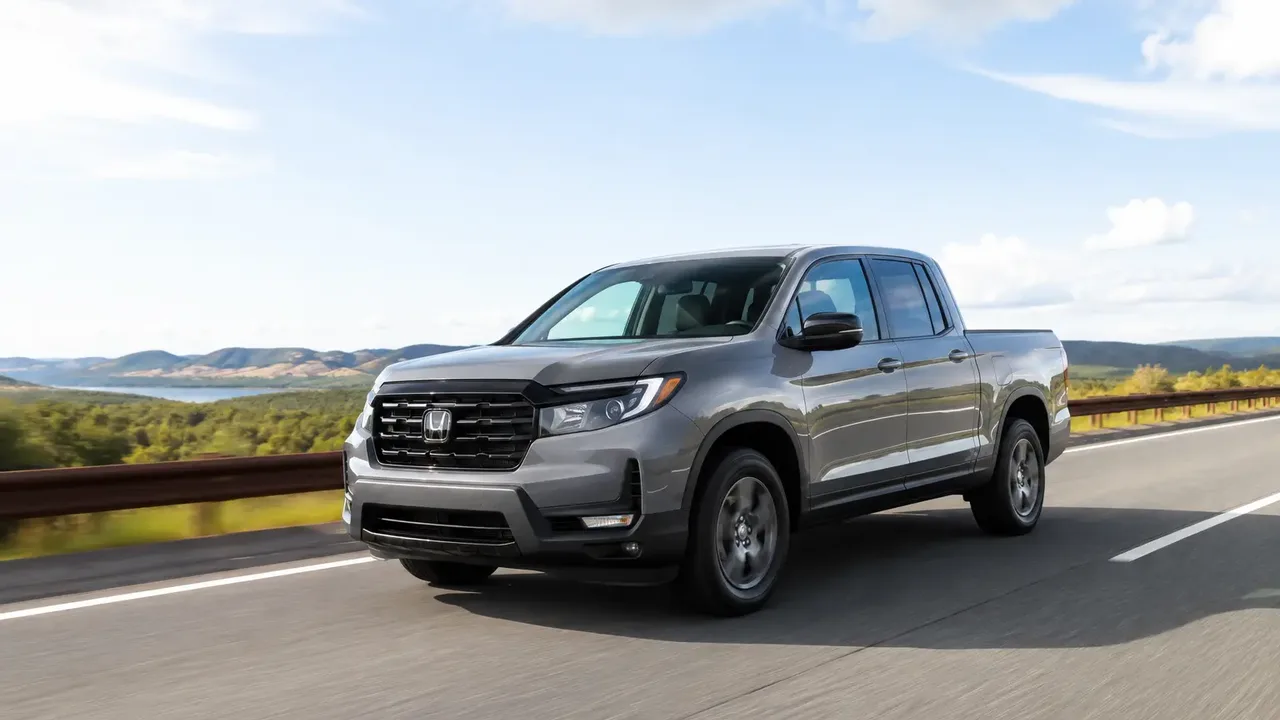
| Honda Ridgeline | 2017–2023 | 110,070 |
| Honda Passport | 2019–2023 | 89,674 |
| Total | 880,514 |
The critical qualifier: only the salt belt
This recall applies only to vehicles originally sold or registered in "salt-belt" jurisdictions — 23 states plus Washington, D.C., where road salt and de-icing agents are used heavily in winter.
The list includes: Connecticut, Illinois, Indiana, Iowa, Maine, Maryland, Massachusetts, Michigan, Minnesota, New Hampshire, New Jersey, New York, Ohio, Pennsylvania, Rhode Island, Vermont, Virginia, West Virginia, Wisconsin and others, plus Washington D.C.
Vehicles sold elsewhere are not included — even if they have since been relocated to a salt-belt state. That is a meaningful gap, and if you bought a Pilot in Arizona and moved to Michigan five years ago, your VIN will come back clear while your subframe sits in the same salt every winter. Honda's scoping is based on original sale/registration, not current exposure.
If that describes you: have the rear subframe inspected anyway, at your own cost if necessary. It is worth the money.
What's actually wrong
The rear subframe was built by a supplier using a coating that did not meet Honda's paint adhesion specifications.
In Honda's own filing: improper coating specifications may result in insufficient paint adhesion and premature paint peeling near the arm bracket weld area. Where de-icing salt is heavily used, the exposed area corrodes prematurely. As corrosion progresses, material thinning occurs, and driving vibration can cause the mounting area to fracture and fail.
The consequence: failure of the rear control arm mounting point means the rear wheel becomes misaligned or inadequately retained. That affects handling, stability and braking — a loss-of-control risk that can arrive without warning.
The insidious part: the corrosion progresses from the inside out. External rust may not be visible even when the structural damage is advanced. You cannot inspect this yourself by looking underneath.
What to watch and listen for
Honda's filing identifies the warning signs, and they are the same ones you would ignore in an older vehicle:
- Abnormal noise from the rear suspension
- Abnormal vibration from the rear
- Changes in handling — looseness, shimmy, or a tendency to drift
Honda has NOT issued a do-not-drive or park-outside advisory, and it estimates only about 1% of the recalled population — roughly 8,800 vehicles — actually carries the defect. The remaining 99% are being recalled as a precaution.
But: if your vehicle shows any of those symptoms, treat it as unsafe and get it to a dealer immediately. A corroded mounting point is a progressive failure, and the symptoms are the last stage before it stops being progressive.
The remedy
Honda and Acura dealers will inspect the rear subframe free of charge and then, depending on findings:
- Install a rear subframe reinforcement kit, or
- Repair corroded components, or
- Replace the rear subframe entirely
All free of charge, regardless of warranty status or ownership history. Honda has also improved the pre-paint treatment and increased coating thickness on replacement components.
Honda customer service: 1-888-234-2138.
The uncomfortable timeline
This is where the story gets less comfortable for Honda.
- December 2021: Honda first identifies a difference in paint quality between the supplier's process and its own test conditions
- November 2022 – February 2023: Honda surveys potentially affected vehicles
- September 2023: Honda concludes no unexpected corrosion progression was detected. No recall is issued.
- September 2025: Honda Canada receives its first report of an issue
- May 2026: Honda determines a safety concern exists
- 4 June 2026: recall filed
That is four and a half years from first identifying the coating discrepancy to filing the recall. Honda looked at this in 2023 and decided it was not a problem.
To be fair: Honda reports no warranty claims, no injuries and no deaths connected to this issue in the US as of the determination date — most likely because, as the company notes, the failure produces clear symptoms before it becomes catastrophic. And Honda kept monitoring rather than closing the file.
But a defect that was identified in 2021 and recalled in 2026 is a defect that spent five winters in the salt.
Context
This is not Honda's first corrosion recall. In 2023, it recalled 564,000 older CR-V SUVs for a very similar road-salt corrosion defect in their rear trailing arm frames.
The Pilot, Passport, Ridgeline and MDX are core products — they accounted for 117,225 US sales in the first five months of 2026 alone. This recall lands weeks after Honda reported a multi-billion-dollar loss tied to discontinued EV projects, making the health of its combustion and hybrid lineup more commercially critical than ever.
Key takeaways
- 880,514 vehicles: 2016–2022 Pilot, 2014–2020 Acura MDX, 2017–2023 Ridgeline, 2019–2023 Passport. NHTSA 26V365
- Only vehicles originally sold/registered in 23 salt-belt states + Washington D.C. are covered
- A supplier coating defect lets road salt corrode the rear subframe until the suspension mount can fracture
- Corrosion progresses from the inside out — external rust may not be visible
- No do-not-drive advisory, but any rear-suspension noise, vibration or handling change means stop driving
Sources & further reading
- NHTSA recall 26V365 / 26V367000
- American Honda Part 573 safety recall report
- Autoblog
- SlashGear
- TechTimes
- TFLcar
- BizzyCar. Verified July 2026 — confirm current status at nhtsa.gov/recalls.
Figures, prices and policy details were current at the last-updated date above. Automotive pricing, incentives and regulations change frequently — verify time-sensitive details with the linked primary sources. Read our editorial policy and fact-checking standards.