⚠️ Live safety recall. Check your VIN at ford.com/support/recalls or nhtsa.gov/recalls. Ford customer service: 1-866-436-7332.
The recall
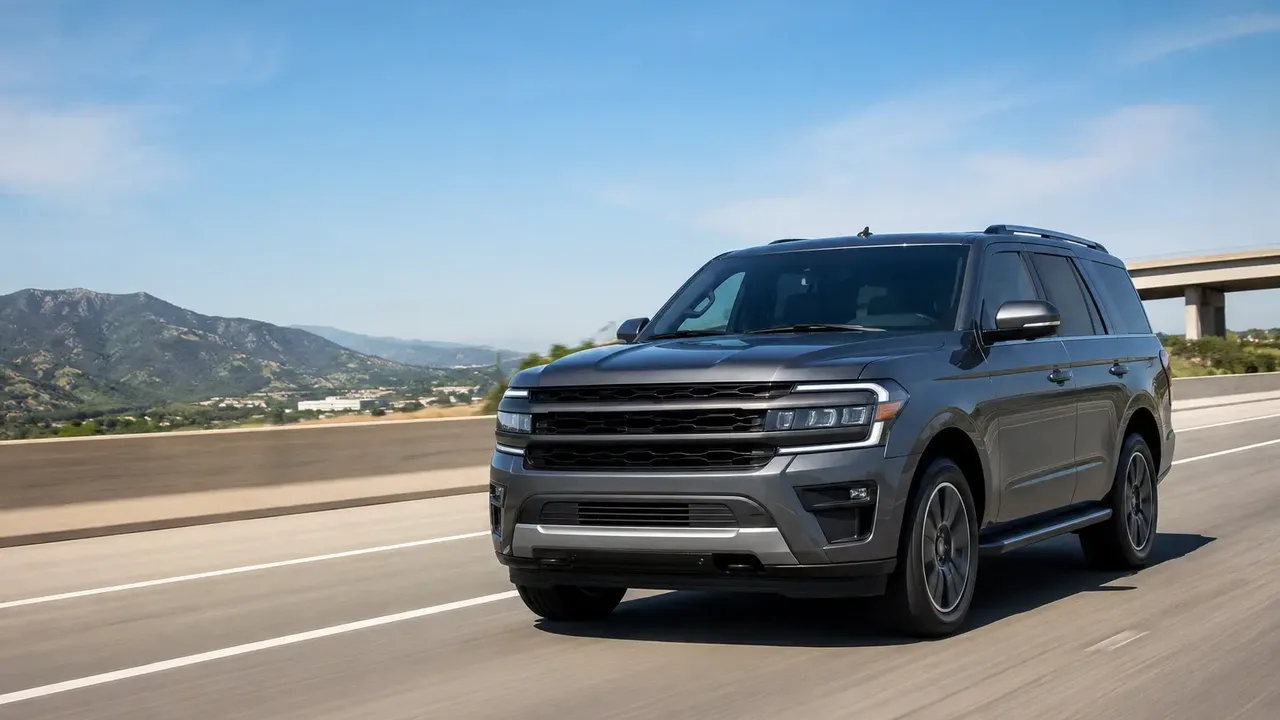
Ford is recalling 419,967 vehicles because a seat belt pretensioner may lock up and fail to properly restrain an occupant during a crash.
- Models: 2022–2027 Ford Expedition and Lincoln Navigator
- Filed: June 2026 — Ford's largest single recall action of that month
- Remedy: free inspection and repair at a Ford or Lincoln dealer
What a pretensioner actually does — and why this matters more than it sounds
Most people think a seat belt is a strap. It is not. In a modern car it is an active safety system, and the pretensioner is the part that does the work.
In the first 10 to 20 milliseconds of a crash — long before you have begun to move forward, and long before the airbag has inflated — the pretensioner fires a small pyrotechnic charge that violently retracts the belt, pulling you back and hard into the seat. It removes the slack. It removes the few inches of gap between your chest and the webbing.
That gap is everything. Its purpose is to put you in the correct position before the airbag arrives at your face at around 200 mph.
If the pretensioner locks up and fails to retract, three things happen:
- You move further forward before the belt engages. More distance means more velocity means more force when it does catch.
- You meet the airbag out of position. An airbag that catches you while you are already travelling toward it is significantly less effective — and, in an out-of-position occupant, can itself cause injury.
- The load is distributed wrongly. The belt is designed to load the pelvis and the clavicle. Out of position, it can load the abdomen and neck.
The belt still exists. It is simply no longer doing the job it was engineered to do, at precisely the moment it is needed.
That is why a "seat belt recall" on a family SUV is not a minor housekeeping matter.
Why these vehicles
The Ford Expedition and Lincoln Navigator are large, heavy, three-row family SUVs. They are, disproportionately, the vehicles people put their children in.
They are also frequently used as fleet, livery and airport-transfer vehicles, which means a large number of the affected cars are on their second or third operator and may not be receiving owner notification letters at all.
If you operate an Expedition or Navigator in a commercial fleet: run every VIN. The letter may be going to a leasing company's mailroom.
What to do
1. Check your VIN. Go to ford.com/support/recalls or nhtsa.gov/recalls and enter your 17-character VIN. Do not rely on model year — the affected population is defined by build date and plant.
2. Check for ALL open recalls, not just this one. This is the most important line in this article.
Ford has issued 51 recalls covering over 11.2 million vehicles in the first half of 2026. The Expedition and Navigator appear in more than one of them — including the 4.4 million-vehicle trailer brake and indicator software recall, which covers 2022–2027 Expedition and 2022–2027 Lincoln Navigator among others.
Being enrolled in one recall does not enrol you in another. Each has its own campaign number, its own defect, and its own remedy. When you enter your VIN, read the entire list.
3. Schedule the repair. Free of charge, regardless of warranty status, mileage or how many times the vehicle has been sold.
4. Keep the paperwork. A completed recall is worth real money at resale, and an uncompleted one is a red flag every buyer's inspection will find.
Ford's 2026 in context
This is one of a series of very large Ford actions in a matter of weeks:
| Recall | Vehicles |
|---|---|
| Trailer brake/indicator software | 4,400,000 |
| Transmission park system (rollaway) | 741,195 |
| Centre console | 548,000 |
| Seat belt pretensioners | 419,967 |
| Ball joint (DO NOT DRIVE) | 4,653 |
Ford's own position is that the volume reflects an intensive strategy to find and fix problems quickly — and that it has more than doubled its safety and technical expert teams. There is something to that. The counterpoint is that NHTSA fined Ford in late 2024 for failing to comply with federal recall requirements, which is not what happens to a company that is merely being thorough.
For an owner, the argument is academic. The practical fact is simple: if you own a recent Ford, you have a materially higher-than-average chance of having an open recall right now. Check.
Key takeaways
- 419,967 vehicles: 2022–2027 Ford Expedition and Lincoln Navigator
- A seat belt pretensioner may lock up and fail to restrain an occupant in a crash
- The pretensioner positions you correctly before the airbag deploys — its failure degrades the whole restraint system
- Repair is free regardless of warranty or ownership
- These models appear in multiple open Ford recalls — check your VIN for all of them
Sources & further reading
- NHTSA recall database
- Ford Motor Company recall notices
- Motor1
- Yahoo Autos. Verified July 2026 — confirm current status at nhtsa.gov/recalls.
Figures, prices and policy details were current at the last-updated date above. Automotive pricing, incentives and regulations change frequently — verify time-sensitive details with the linked primary sources. Read our editorial policy and fact-checking standards.