True Motion Auto Verdict: 9/10
The electric Cayenne is a genuine technological tour de force — 16-minute fast charging, up to 1,139 hp in the Turbo (the most powerful production Porsche ever), real luxury and real practicality, all in one physics-defying package. It's brilliant, and it's brilliantly expensive. If your budget stretches past six figures, it's the most complete performance-luxury electric SUV on sale. The only real flaw is slightly generic styling.
When a company that "refuses to build a bad car" goes electric
Porsche has a reputation, well earned, for stubbornly refusing to build a bad car — even, as one reviewer joked, when it's building a tractor. So the arrival of the first fully electric Cayenne was always going to be interesting: could Porsche bring its engineering obsession to a family electric SUV and produce something genuinely special, or would it be another competent-but-soulless luxury EV?
Having spent time with it, the answer is emphatic. The electric Cayenne is a technological masterpiece — a car that manages to be a drag racer, a luxury limousine and a practical family hauler simultaneously, and does all three with a completeness few rivals approach. It defies physics in the way only serious engineering money can. It also defies most people's budgets, which is the catch. But on its own terms, it's superb.
The headline: charging that shames everything else
Start with the single most impressive number, because it reframes what an EV road trip can be.
The Cayenne Electric's 800-volt PPE platform (shared with the Macan Electric) enables DC fast charging at up to 400 kW — filling the battery from 10–80% in just 16 minutes, or adding up to 325 miles in 10 minutes. That is roughly half the charging time of a typical premium electric SUV, and it fundamentally changes the ownership experience: a coffee stop genuinely refills the car. For a family EV meant to cover distance, this is transformative — it's the closest an electric SUV has come to the convenience of a petrol fill-up.
A NACS port adds Tesla Supercharger access on top. Porsche even offers optional inductive wireless charging — park over a floor plate in your garage and it charges overnight, no plugging in. This is the bleeding edge of EV charging technology, and it's all here.
The power: genuinely absurd
The Cayenne Electric's performance range is vast, topping out at the frankly ridiculous.
| Trim | Power | 0–60 |
|---|---|---|
| Base Cayenne Electric | 435 hp (402 hp in some markets; 442 hp overboost) | ~4.5 sec |
| Cayenne S Electric | up to 657 hp | quicker still |
| Cayenne Turbo Electric | 1,139 hp, 1,106 lb-ft | supercar-fast |
The Turbo's 1,139 hp makes it the most powerful production Porsche ever built — more than the Taycan Turbo GT's ~1,020 hp. It's less a car than, as one writer put it, a tectonic event. But note the crucial point: even the "base" 435 hp model does 0–60 in about 4.5 seconds and is far from slow. You do not need the Turbo to have a fast Cayenne — the base car is plenty, and the value is there rather than at the top.
The numbers (US)
| Spec | 2026 Porsche Cayenne Electric |
|---|---|
| Starting MSRP | ~$111,350 (base) · S ~$128,650 · Turbo ~$165,350 (excl. $2,350 destination) |
| Battery | 113 kWh gross (~108 kWh usable) |
| Range (est.) | ~300–340 miles (US EPA pending); UK base ~399 mi WLTP |
| Architecture | 800-volt PPE |
| Peak DC charging | 400 kW (10–80% ≈ 16 min; +325 mi in 10 min) |
| Charge port | NACS |
| Drivetrain | Dual-motor AWD (all trims) |
| Power | 435 / 657 / 1,139 hp |
| Warranty | 4 yr / 50,000 mi basic |
What it's like to live with
The everyday brilliance is the point. For all the Turbo theatre, what impresses most is how complete the Cayenne Electric is as a daily family SUV. It's easy to use, comfortable over distance, genuinely practical (29.6–30.8 cu ft of cargo), and quiet in the way only a well-engineered EV can be. The interior is lovely — a high-quality cabin with Porsche's new Driver Experience cockpit. This isn't a track toy that tolerates family duty; it's a family SUV that happens to have supercar reserves.
The "side order of sports car." Underneath the practicality, it drives like a Porsche should — agile for its size, composed, with the huge performance always in reserve. It blends everyday liveability with genuine driving ability in a way that justifies the badge.
Range that works. US EPA figures were pending at review time, but estimates of ~300–340 miles (and a ~399-mile WLTP figure for the UK base car) mean real-world range in the 300-mile ballpark — comfortably usable, and paired with that 16-minute charging, road trips are genuinely easy.
Where it falls short
We're honest even about a 9/10 car:
True Motion Auto has not independently road-tested this vehicle. Specifications, pricing and performance figures are compiled from manufacturer technical data and published independent tests, and are attributed where quoted. Our score reflects a structured research assessment of specifications, pricing, safety data and owner feedback for the segment — not an independent road test. Read how we review cars.
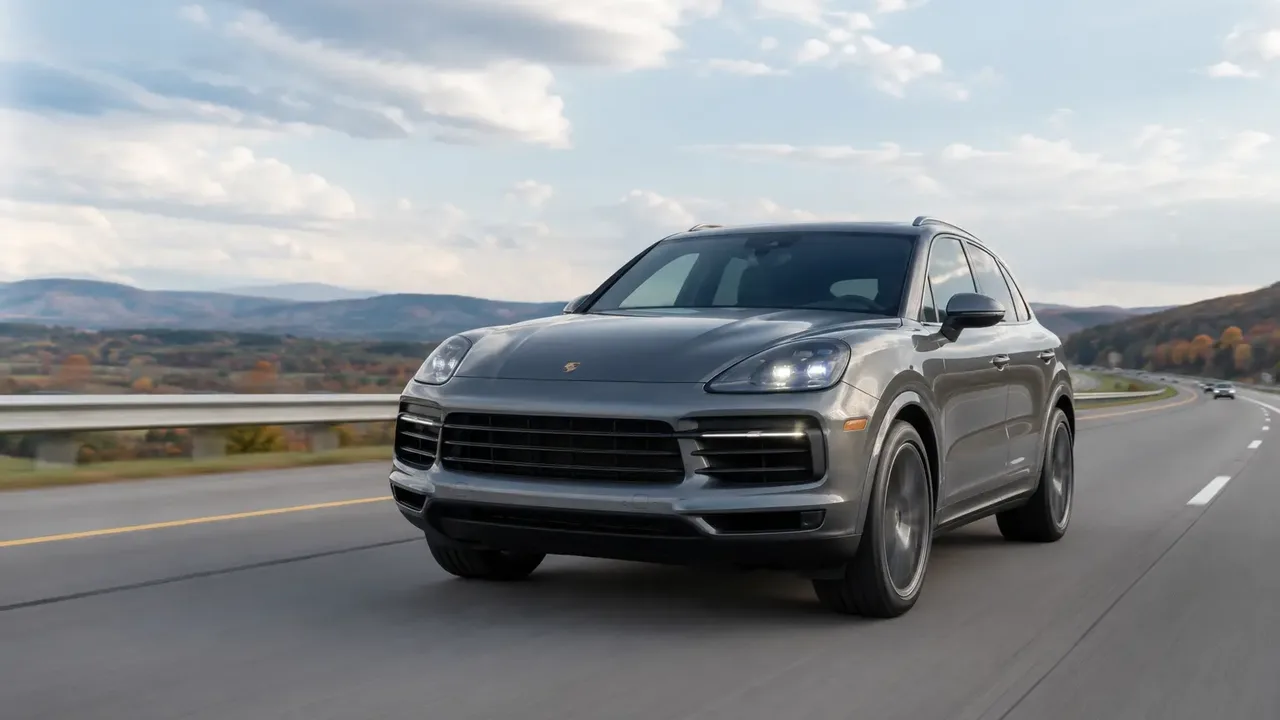
The styling is its weakest point. Like the electric Macan, the Cayenne Electric looks slightly too soft-edged and generic head-on — a touch anonymous for a car this special and this expensive. It's better in profile and neat at the rear, but it doesn't have the visual drama the engineering deserves. You're buying it for what it does, not how it turns heads.
The price is eye-watering. Six figures to start, and options pile up fast — ceramic brakes, the fancy leather, Porsche Active Ride — nudging a loaded Turbo toward a quarter of a million dollars. This is the fundamental barrier: it's brilliant, but it's brilliant for the wealthy.
Home charging is slow without the hardware. On a normal 7.4 kW home wallbox, a 0–100% charge takes 17-plus hours. The 16-minute miracle needs a rare, ultra-powerful 800V public charger. Match your charging reality to the car.
The competition
Lotus Eletre: the most direct sports-electric-SUV rival at this size and price — dramatic, capable, worth cross-shopping.
BMW iX (incl. M70): more comfort-biased, can match the base Cayenne on pace, arguably better-looking, often less money.
Polestar 3: comfort-focused, quieter on tyre noise, a more restrained alternative.
Tesla Model X: far cheaper, less luxurious and less polished — a different (value) proposition entirely.
Who should buy it
Buy the Cayenne Electric if: you want the most complete performance-luxury electric SUV on sale, you value class-leading 16-minute charging and genuine Porsche driving ability with full family practicality, and your budget genuinely stretches past six figures. Crucially, buy the base or S, not the Turbo — the base car is already fast and complete; the value is there, not in the 1,139-hp halo.
Look elsewhere if: the price is a stretch (the base car is the sensible entry, but it's still $111k+), you want striking styling (it's a bit generic), or you can't access ultra-fast public charging to exploit the car's headline ability.
The bottom line
The electric Cayenne is Porsche doing what Porsche does — refusing to build a bad car — and the result is a genuine tour de force. It charges in 16 minutes, offers everything from a rapid 435-hp base car to a physics-bending 1,139-hp Turbo, and wraps supercar reserves in a genuinely practical, luxurious family SUV. The styling is a touch generic and the price is stratospheric, but as a piece of engineering it's close to peerless. If you can afford it, it's the most complete thing of its kind on sale. The V8 Cayenne era is ending — and if the future is 1,100 hp and 16-minute charging, that's a future worth having. Buy the base car, marvel at the charging, and enjoy the ride.
Key takeaways
- The first electric Cayenne is a technological tour de force — 800V platform, 400 kW charging (10–80% in ~16 min), NACS, optional wireless charging
- Power spans 435 hp (base, ~4.5 sec 0–60) to 657 hp (S) to 1,139 hp (Turbo — the most powerful production Porsche ever)
- Genuinely complete as a family SUV: practical, luxurious, quiet, with a "side order of sports car" — brilliant everyday and extraordinary flat-out
- Downsides: slightly generic styling, a six-figure price ($111k–$165k+ before options), and slow home charging without ultra-fast hardware
- Buy the base or S, not the Turbo — the value and completeness are there; the 1,139-hp halo is overkill
Sources & further reading
- Porsche press materials
- Autoblog
- What Car?
- Top Gear
- CarBuzz
- Edmunds
- Car and Driver
- KBB. US EPA range pending
- verify final figures. Verified July 2026.
Figures, prices and policy details were current at the last-updated date above. Automotive pricing, incentives and regulations change frequently — verify time-sensitive details with the linked primary sources. Read our editorial policy and fact-checking standards.