Three acronyms that decide what you pay
In India, how a car arrives determines what it costs — often by lakhs. The same model can carry wildly different prices depending on whether it's shipped in fully assembled, in a partial kit, or built domestically.
The three letters to understand: CBU, CKD, and "Make in India." They sit on a spectrum from most-taxed to least-taxed, and where a car falls on that spectrum is frequently the single biggest factor in its price.
The spectrum, from most expensive to least
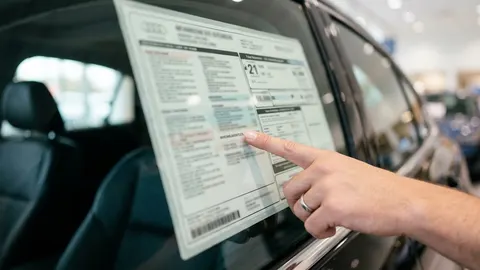
CBU — Completely Built Unit. The car is fully assembled abroad and shipped to India ready to drive. This attracts the highest import duties — up to ~110–115% effective on the CIF value, plus IGST. A CBU is a finished foreign car, and India taxes it accordingly to protect domestic manufacturing.
Example: Tesla's Model Y, imported as a CBU, launched at ₹59.89 lakh — the CBU duty made visible.
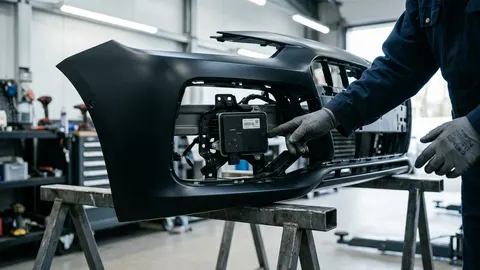
SKD — Semi Knocked Down. The car arrives partially assembled — major components pre-joined, requiring some final assembly in India. Lower duty than CBU, because some value is added locally. A middle rung.
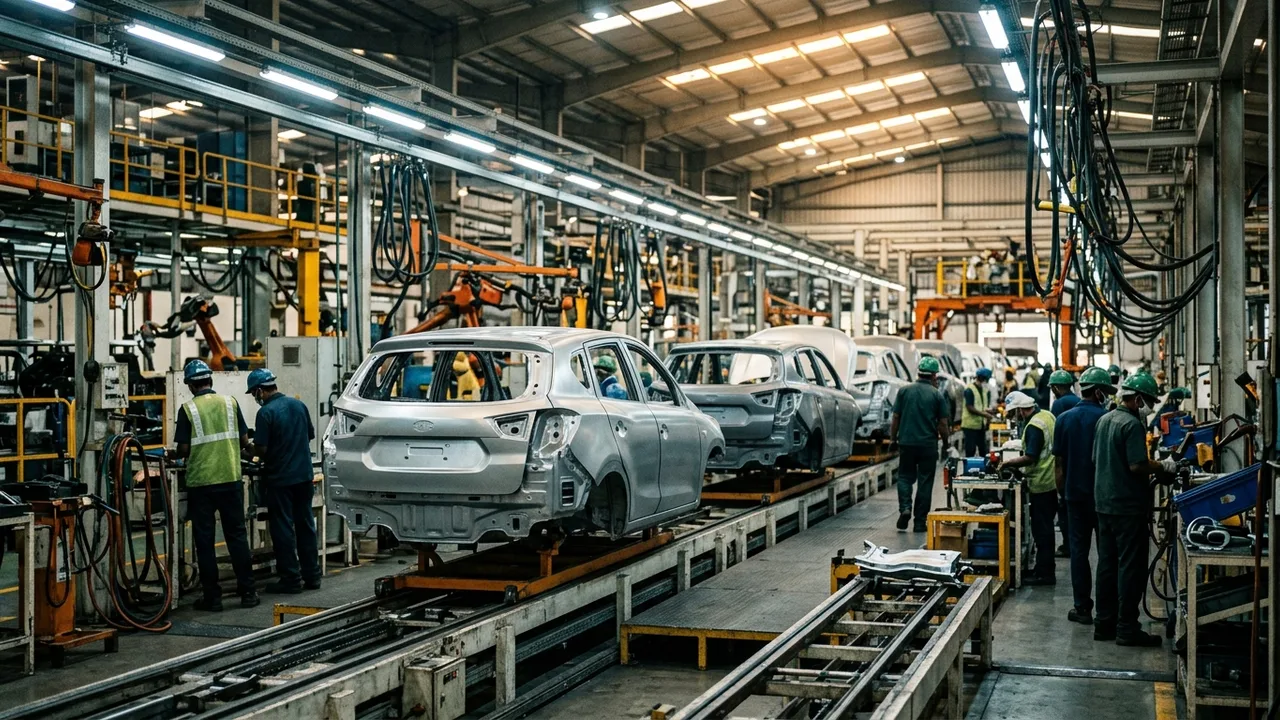
CKD — Completely Knocked Down. The car arrives as a kit of individual components and is fully assembled in India. Significantly lower duty than CBU — because substantial assembly (and therefore value, and jobs) happens domestically. CKD assembly can reduce a vehicle's cost by roughly 40% versus CBU import.
Example: analysts estimated a CKD-assembled Tesla Model 3 could be priced around $55,000 versus the CBU premium — the CKD route materially cheaper.
"Make in India" — full local manufacturing. The car is manufactured in India with significant local content and domestic value addition. Lowest tax burden — attracting the standard GST rates rather than punitive import duties. This is what makes a locally-built Hyundai or a Maruti so much cheaper than an equivalent import: it's not paying import duty at all, just GST.
The logic: India taxes imports, rewards local value
The entire structure is a deliberate gradient designed to answer one question: how much of this car's value was created in India?
- None (CBU) → maximum duty
- Some (SKD) → less duty
- Most (CKD) → much less duty
- Substantially all (Make in India) → just GST, no import duty
Every step toward local value addition is rewarded with lower tax. It's "Make in India" enforced through the tariff schedule — build more of the car here, pay less.
This is why global manufacturers who want to sell in volume don't import CBUs — they set up CKD assembly or full local manufacturing. The duty gradient makes CBU imports viable only for low-volume premium/luxury models where the buyer can absorb the duty, or as a market-testing route before committing to local production.
How this plays out in the real market
The CBU route is used for:
- Premium and luxury models where volumes are low and buyers are duty-tolerant (imported Mercedes, BMW, Porsche flagships; Tesla's initial entry)
- Testing a market before committing capital
- Halo/flagship variants alongside locally-built mainstream ones
The CKD route is used for:
- Premium brands wanting better pricing without full local manufacturing (many luxury marques assemble key models CKD in India)
- A stepping stone toward full localisation
Full local manufacturing is used for:
- Every mass-market car (Maruti, Tata, Mahindra, Hyundai's India operations, etc.)
- Any manufacturer serious about volume in India
Why the same badge can span all three
Here's what confuses buyers: a single brand often sells cars across all three categories.
A luxury manufacturer might:
- Import its flagship as a CBU (highest price, lowest volume)
- Assemble its core models CKD in India (mid price, higher volume)
- Price them worlds apart despite the same badge
So "a BMW" or "a Mercedes" isn't one price point — it's a range determined partly by how each specific model arrives. The locally-assembled 3-Series and the imported flagship are taxed completely differently.
What it means for an Indian buyer
1. The same model, assembled differently, can cost lakhs less. If a car is available as both a CBU import and a CKD/locally-built version, the local version is dramatically cheaper for essentially the same product. Always check how your specific variant is sourced.
2. "Locally assembled" is a value signal. A CKD or Make-in-India car isn't just cheaper — it's cheaper because it sidesteps punitive import duty, not because it's inferior. You're paying less tax, not getting less car.
3. Imported CBU flagships carry a huge duty premium. If you're buying an imported CBU (a Tesla, an imported luxury flagship), understand that a large chunk of what you're paying is import duty, not the car's intrinsic value. That's the cost of buying something India's policy is designed to discourage.
4. Watch for localisation announcements. When a manufacturer moves a model from CBU import to local CKD assembly or manufacturing, the price typically drops substantially. If a car you want is rumoured to be localising, waiting can save lakhs.
5. This is why "Make in India" matters to your wallet. The policy isn't abstract industrial strategy — it directly determines whether the car you want costs its "real" price or its "real price plus 100% duty."
The bottom line
Three letters set the price. CBU (fully imported) carries the maximum duty — up to ~110–115%. CKD (assembled from kits in India) cuts that dramatically, roughly 40% cheaper. Make in India (full local manufacturing) pays just GST, no import duty at all. The gradient is deliberate: India rewards local value addition at every step. For buyers, the practical rule is simple — the more of your car that was built in India, the less tax is baked into its price. Check how your specific model arrives before you assume you know what it should cost.
Key takeaways
- CBU (fully imported) attracts the highest duty — up to ~110–115% effective on CIF value
- CKD (kit assembled in India) can be ~40% cheaper than the same car imported as a CBU
- "Make in India" (full local manufacturing) pays only GST — no import duty — making mass-market cars affordable
- The gradient is deliberate: India rewards local value addition at every step toward domestic manufacturing
- The same badge can span all three — always check how your specific variant is sourced
Sources & further reading
- ClearTax India import duty guide
- Aranca
- S&P Global Mobility
- Union Budget provisions
- SPMEPCI scheme documentation. Verified July 2026.
Figures, prices and policy details were current at the last-updated date above. Automotive pricing, incentives and regulations change frequently — verify time-sensitive details against the primary sources listed below. Read our editorial policy and fact-checking standards.