Tariffs reshuffle the deck
A tariff isn't just a cost — it's a competitive event. It advantages some manufacturers and punishes others based on decisions many of them made years or decades ago: where to build factories, how to source parts, which markets to serve from where.
The manufacturers who bet on local production are quietly gaining ground. The ones who bet on efficient global importing are bleeding. Here's the strategic scorecard of the tariff era — who's positioned to win, who's exposed, and why.
Note: this is strategic analysis of structural positioning, not investment advice or precise market-share figures — those shift constantly. The point is the underlying logic of exposure.
The winners: local footprint = tariff insulation
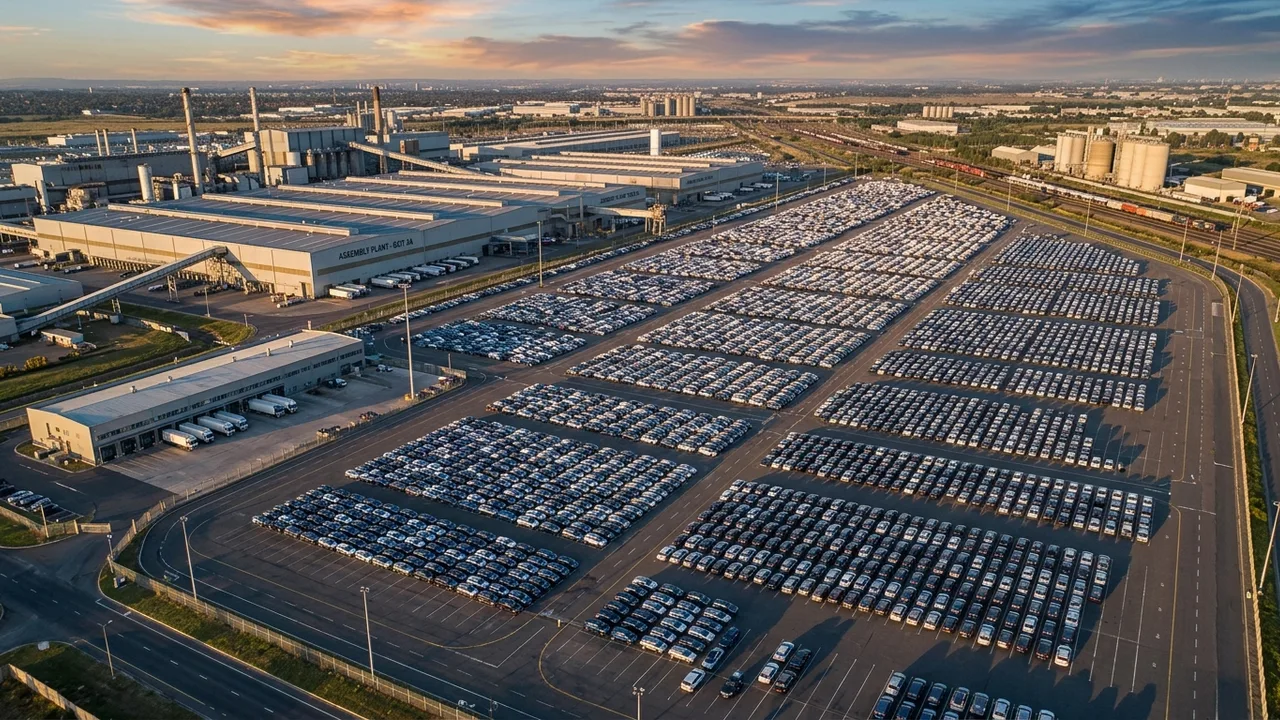
Manufacturers with deep domestic (or in-bloc) production are the structural winners, because a car built where it's sold doesn't cross a tariffed border.
In the US:
- Automakers with substantial US assembly — including some "foreign" brands like Toyota, Honda, Subaru, BMW and Mercedes that build major volumes in US plants — carry less vehicle-level tariff than pure importers
- USMCA-compliant Mexican and Canadian production (0% vehicle tariff) is a genuine competitive advantage for the models that qualify
The nuance: even these winners aren't fully insulated, because imported parts still carry 25%. A US-assembled car with a heavily imported bill of materials is less protected than its assembly badge suggests. The real winners are those with both local assembly and high local parts content.
The losers: import-dependent business models
Manufacturers who serve a market primarily through imports are the structural losers, facing a stark choice: absorb the tariff (bleed margin), pass it on (lose price competitiveness), or relocate (a multi-year, multi-billion commitment).
Most exposed in the US:
- Brands importing the bulk of their US line-up from non-deal countries (25% baseline)
- Even deal-country importers (EU/Japan/Korea at 15%) face a cost disadvantage versus domestic-built rivals
- Premium importers can absorb more (less price-sensitive buyers), but the cost is real
The strategic bind: relocating production takes years and doesn't escape parts tariffs. An import-dependent manufacturer can't simply flip a switch — it's stuck absorbing or passing on cost while it slowly, expensively, reshores. That's a multi-year competitive handicap.
The regional picture: three different games
United States — the 25% baseline (with deal-rate and USMCA exceptions) rewards domestic footprint. Winners: local builders. Losers: importers. The USMCA review adds uncertainty even for the current winners.
Europe (Chinese EVs) — the EU's up-to-45% tariff on Chinese EVs was meant to protect European makers. But Chinese brands adapted: they absorbed costs to defend share, pivoted into hybrids (which the BEV tariff didn't cover), and kept growing — Chinese brands hit a record ~10.7% of EU sales in May 2026. So the "protected" European incumbents got less protection than intended, and Chinese challengers proved remarkably adaptable. A cautionary tale about tariffs' limits.
United Kingdom — with no Chinese-EV tariff, Chinese brands (BYD, MG, Omoda/Jaecoo, Leapmotor) are clear winners, expanding rapidly on price. Established brands face more low-cost competition here than anywhere in the West. UK winners: value-focused Chinese entrants. Under pressure: incumbents competing on price.
India — the duty wall and China wall (see our Tesla/BYD piece) mean domestic manufacturers (Tata, Mahindra, Maruti) are the structural winners, protected from both cheap imports and Chinese investment. Foreign importers pay dearly.
The China dimension, everywhere
Across all Western markets, the meta-story is China. Chinese manufacturers built a genuine cost and technology advantage in EVs, and the tariff walls (100% US, 45% EU, 0% UK) are essentially the West's varied attempts to manage it.
The scorecard on those walls so far:
- US (100%): effective exclusion — Chinese brands locked out
- EU (45%): partial — Chinese brands adapted via hybrids and absorption, still gaining share
- UK (0%): open door — Chinese brands winning decisively
Chinese makers' adaptability — pivoting products, absorbing costs, localising where allowed — has been the tariff era's most striking competitive feature. Walls slow them; they rarely stop them.
The adaptation lever: who's moving fastest
Beyond static footprint, the dynamic winners are those adapting fastest:
- Reshoring/localising production to escape tariffs (slow, but the durable fix)
- Product pivots (Chinese brands into hybrids to dodge BEV-specific tariffs)
- Selective absorption to defend share in key segments
- Supply-chain re-sourcing toward tariff-favoured origins
The manufacturers treating tariffs as a strategic variable to engineer around — not just a cost to complain about — are separating from those merely enduring them.
What it means for buyers
1. Tariff-advantaged brands can offer better value. A manufacturer with local production and low tariff exposure has more room to price competitively or hold spec. All else equal, tariff-insulated brands are better positioned to give you more car for your money.
2. Watch which brands are absorbing. A brand eating tariff cost to defend share is, in effect, subsidising your purchase — there's value there, and negotiating room.
3. Chinese EVs are a value story where they're allowed. In the UK especially, the tariff-free Chinese entrants offer genuine value. Judge them on merits (safety, warranty, residuals), but don't dismiss them.
4. Don't confuse brand nationality with tariff exposure. A US-built "foreign" brand may be better-insulated (and better value) than an import-dependent "domestic" one. Check where the specific car is built.
The bottom line
Tariffs reward the manufacturers who invested in local production and punish those who bet on efficient importing — advantaging decisions made years ago. In the US, domestic and USMCA-compliant builders gain; importers bleed. In Europe, "protected" incumbents got less shelter than hoped as Chinese brands adapted. In the UK, tariff-free Chinese entrants are winning outright. In India, the walls protect domestic makers. The through-line everywhere is China's adaptability and the West's varied walls against it. For buyers, the lesson is to look past the badge to a brand's actual tariff exposure — because that, increasingly, determines who can offer you the better deal.
Key takeaways
- Tariffs reward manufacturers with local production and punish import-dependent ones — advantaging past factory decisions
- US winners: local and USMCA-compliant builders (including US-built "foreign" brands); losers: importers
- The EU's 45% Chinese-EV tariff underperformed — Chinese brands adapted via hybrids and absorption, hitting record ~10.7% EU share
- UK's zero Chinese-EV tariff makes Chinese brands clear winners; India's walls protect domestic makers
- Chinese makers' adaptability is the era's defining competitive feature — walls slow them, rarely stop them
Sources & further reading
- Congressional Research Service
- GoodCarBadCar
- CEPR
- T&E analysis
- Cox Automotive
- manufacturer earnings and production data. Strategic analysis, not investment advice — market shares shift constantly. Verified July 2026.
Figures, prices and policy details were current at the last-updated date above. Automotive pricing, incentives and regulations change frequently — verify time-sensitive details with the linked primary sources. Read our editorial policy and fact-checking standards.