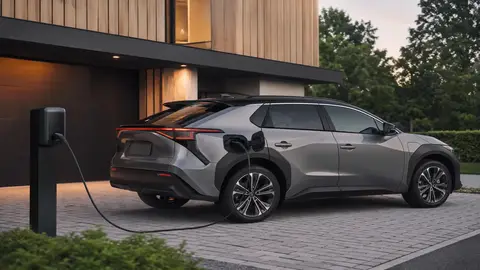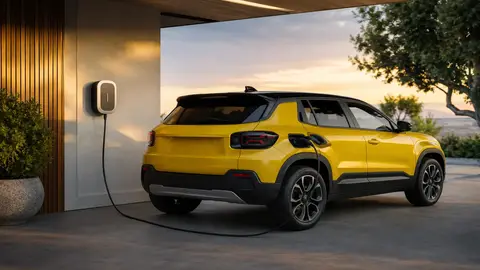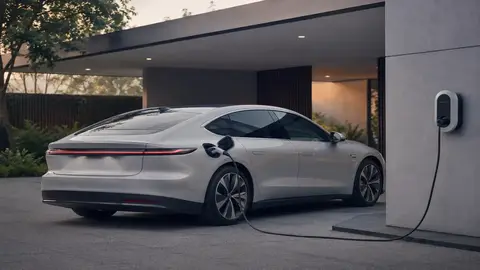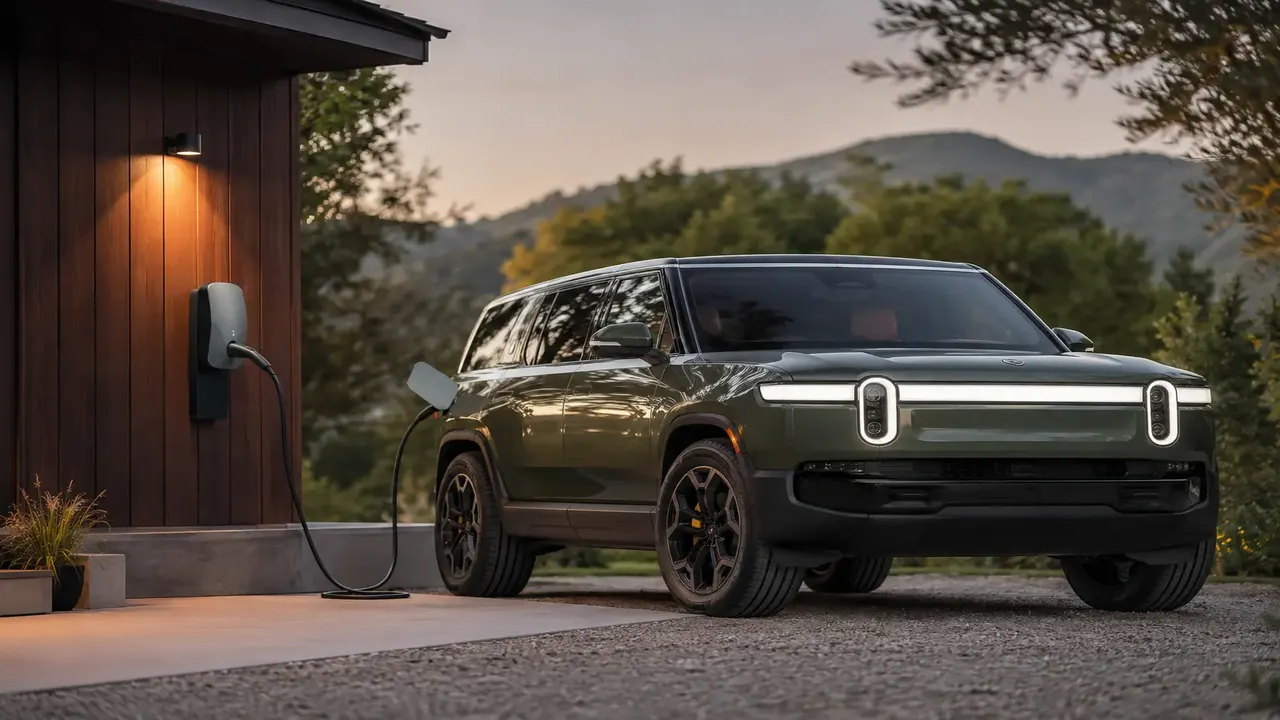
A portable EV charger is a compact cable unit you carry in the car and plug into whatever outlet you find. Most are Level 1 + Level 2 capable: plug into a standard 120V socket (NEMA 5-15) for slow Level 1 charging (~3-5 miles per hour), or a 240V outlet (NEMA 6-20, 14-50) for Level 2 (~9-30 miles per hour), often via interchangeable NEMA adapters. They're ideal as a backup, for travel, and for renters without a fixed charger. Typical units cost $150-$400, offer adjustable amperage and a timer, and work with all J1772 EVs (NACS versions exist too).
Portable charger capabilities at a glance
| Plug | Level | Power | Range added/hr | Use |
|---|---|---|---|---|
| NEMA 5-15 (120V) | Level 1 | ~1.4 kW | ~3-5 miles | Any standard socket |
| NEMA 6-20 (240V) | Level 2 | ~3.7 kW | ~9-12 miles | 240V outlets |
| NEMA 14-50 (240V) | Level 2 | up to ~9.6 kW | ~25-30 miles | Dryer/RV outlets |
| Typical price | - | - | - | ~$150-$400 |
What a portable charger is
A portable (or mobile) EV charger is essentially the charging cable that often comes with the car, upgraded into a versatile travel unit. It's a small box with a plug on one end and your car's connector on the other, designed to be carried in the boot and plugged into whatever power source you encounter. The clever part is interchangeable plugs: swap a NEMA adapter and the same charger works on a standard household socket or a high-power 240V outlet.
Level 1 and Level 2 from one unit
Most modern portable chargers are dual-voltage, handling both charging levels:
- Level 1 (120V): plugged into an ordinary household socket via a NEMA 5-15 adapter, you get roughly 1.4 kW and 3-5 miles of range per hour. Slow, but it works anywhere there's a normal outlet - useful in emergencies or overnight at a friend's house.
- Level 2 (240V): plugged into a 240V outlet (a NEMA 6-20 gives ~3.7 kW; a NEMA 14-50, like a dryer or RV outlet, can give up to ~9.6 kW), you get a far more useful 9-30 miles of range per hour - close to a wall-mounted home charger.
This dual capability is what makes a good portable charger so flexible: it's a trickle charger and a near-home-speed charger in one bag.
Features worth having
- Adjustable amperage: lets you dial the current down (e.g. 8/10/12/16A) to suit a weaker or older outlet and avoid tripping breakers.
- Scheduling / delay timer: start charging during cheap off-peak hours.
- Interchangeable NEMA adapters: the more adapters included, the more outlets you can use.
- Sturdy build and weatherproofing: look for a solid IP rating and a temperature-monitored plug, since portable units stress household outlets.
- Long cable and a carry case: 20-25 ft of cable and a storage bag make real-world use easier.
Who should use a portable charger
- Renters and apartment dwellers without a fixed wallbox - a portable Level 2 unit on an available 240V outlet can substitute for an installed charger.
- Travellers who want to top up at destinations, holiday homes, or anywhere with a suitable outlet.
- As a backup in the car for emergencies, even if you have a home charger.
- Plug-in hybrid owners, whose small batteries fill adequately even on Level 1.
Limits and safety
Portable chargers are convenient but have real limits. On a standard 120V socket they're slow. Drawing high current through a household outlet for hours stresses the wiring, so never use a flimsy extension cord, don't exceed what an outlet is rated for, and reduce the amperage if a plug gets warm. For repeated high-power Level 2 use at home, a properly installed wall charger on a dedicated circuit is safer and faster than relying on a portable unit plugged into a 240V outlet day after day. Treat a portable charger as a flexible companion, not a permanent substitute for a dedicated install if you charge heavily.
Portable chargers come with the connector your car needs - J1772 for most non-Tesla EVs, or NACS for Tesla and the growing number of NACS-native cars. In North America, check which your car uses; adapters between J1772 and NACS exist if you have the 'wrong' one. Outside North America, portable chargers use the Type 2 connector.
Portable vs installed home charger
| Factor | Portable charger | Installed wall charger |
|---|---|---|
| Speed | Up to ~9.6 kW on a 14-50 | Up to ~11.5 kW (48A hardwired) |
| Flexibility | High - take it anywhere | Fixed in place |
| Cost | ~$150-$400, no install | Hardware + $400-$1,200 install |
| Best for | Renters, travel, backup | Daily charging, heavy use |
Frequently asked questions
Can a portable EV charger do Level 2 charging?
Are portable EV chargers safe to use?
What NEMA adapters do I need?
Can I use a portable charger instead of installing a home charger?
How fast does a portable charger work?
Sources & further reading
Figures, prices and policy details were current at the last-updated date above. Automotive pricing, incentives and regulations change frequently — verify time-sensitive details with the linked primary sources. Read our editorial policy and fact-checking standards.