Nearly $70 billion of buyer's remorse
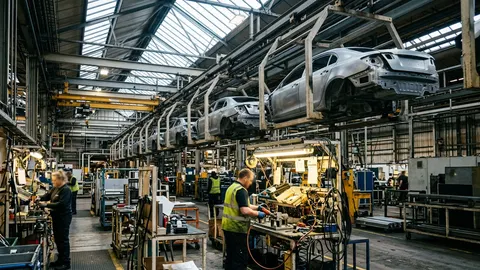
The American EV market didn't cool in 2026 — it went into reverse. Automakers have now booked close to $70 billion in EV-related write-downs, and the roster of EVs canceled in 2026 keeps lengthening. Honda's 0 Series is dead before reaching a showroom. Ford's F-150 Lightning is gone. Hyundai and Kia have quietly stripped multiple electric models from their US lineups. This isn't a pause for breath; it's a full-scale retreat.
The trigger is no mystery. With the federal EV tax credit gone, US EV deliveries fell 27% in the first quarter of 2026 — on top of a 46% collapse in late 2025. Product plans written for a subsidized market are being torn up for an unsubsidized one.
The full casualty list, brand by brand
Honda. The most dramatic exit. Honda canceled its 0 Series SUV and sedan — the clean-sheet EVs it had been steering toward late-2026 and early-2027 debuts — and took a reported $15 billion hit in the process. These were not compliance cars — the 0 Series was pitched as the future of the brand, and that future is now shelved.
Ford. Ford killed the F-150 Lightning in December 2025 as part of a $19.5 billion write-down, and scrapped its next-generation electric truck project along with it. The Lightning was the poster child for electric America — the truck that was supposed to convert the heartland. If an electric F-150 can't survive, the market has changed in kind, not just in degree.
Hyundai. Less theatrical, but real. Hyundai dropped the Korea-built Ioniq 6 and the 2026 Kona Electric from its US lineup, thinning its electric range to the models that still move.
Kia. Arguably the busiest eraser in the business. Kia ended Niro EV sales in the US, postponed both the EV6 GT and the EV9 GT, and delayed the EV4 sedan's American launch indefinitely. That's one model dead, two performance flagships in limbo and a launch with no date attached.
Add it up and a dozen-plus models have been cut or delayed across the industry since the tax credit died — and, as of mid-2026, nobody believes the list is finished.
Why 2026 became the year of the cancelation
EV programs are planned years ahead and priced around demand assumptions that, in the US, leaned heavily on the tax credit. Remove it and the arithmetic collapses. A 46% delivery slump in late 2025 could be dismissed as a shock; a further 27% fall in the first quarter of 2026 confirmed a new, lower baseline. Faced with factories, platforms and battery commitments sized for a market that no longer exists, automakers chose the expensive-but-honest option: write it down and walk away.
That's how you reach nearly $70 billion in industry-wide charges. A one-time hit is cheaper than building cars nobody is ordering. The hybrid comeback now underway tells the same story from the other side — the money hasn't left the industry, it has changed lanes. Our US EV sales watch tracks where the demand line goes next.
The honest assessment
None of this means the EV is finished — it means the subsidized-growth era is. Many of the casualties were marginal sellers or niche performance variants. But the Lightning and the 0 Series prove the harder point: even high-profile, heavily promoted EVs couldn't clear the new bar. The trade-off is plain. US buyers get fewer choices and less competition in the short term, while the EVs that survive 2026 will be the ones that stand on their own economics. That's a healthier foundation than a credit-inflated boom — though it won't feel that way if your deposit was on an EV4.
The questions buyers actually ask
Is the F-150 Lightning coming back? Nothing suggests so. Ford didn't just end production in December 2025; it scrapped its next-generation electric truck project too. Treat the Lightning as discontinued, not on hiatus.
Are these models canceled worldwide or just in the US? The Hyundai and Kia moves are US-lineup decisions — availability of the Ioniq 6, Kona Electric and Niro EV may differ elsewhere, so check your market. Honda's 0 Series cancelation is reported as the end of those models outright.
Is now a bad time to buy an EV? Not necessarily. Shrinking lineups can mean sharp deals on remaining stock, but weigh any discount against resale risk on discontinued models and check each brand's parts and software support commitments. General guidance, not purchase advice.
Key takeaways
- Automakers have booked nearly $70 billion in EV write-downs, with a dozen-plus models cut or delayed since the US tax credit ended.
- Honda canceled its 0 Series SUV and sedan before launch, taking a reported $15 billion hit.
- Ford killed the F-150 Lightning in December 2025 and scrapped its next-gen electric truck in a $19.5 billion write-down.
- Hyundai dropped the Ioniq 6 and 2026 Kona Electric from the US; Kia ended Niro EV sales and delayed the EV6 GT, EV9 GT and EV4.
- US EV deliveries fell 27% in Q1 2026 after a 46% slide in late 2025 — the demand collapse behind every one of these decisions.
Sources & further reading
- Manufacturer announcements and industry reporting via Automotive News, Yahoo Autos and AOL, December 2025 – mid-2026
Figures, prices and policy details were current at the last-updated date above. Automotive pricing, incentives and regulations change frequently — verify time-sensitive details against the primary sources listed below. Read our editorial policy and fact-checking standards.