The complaint is legitimate
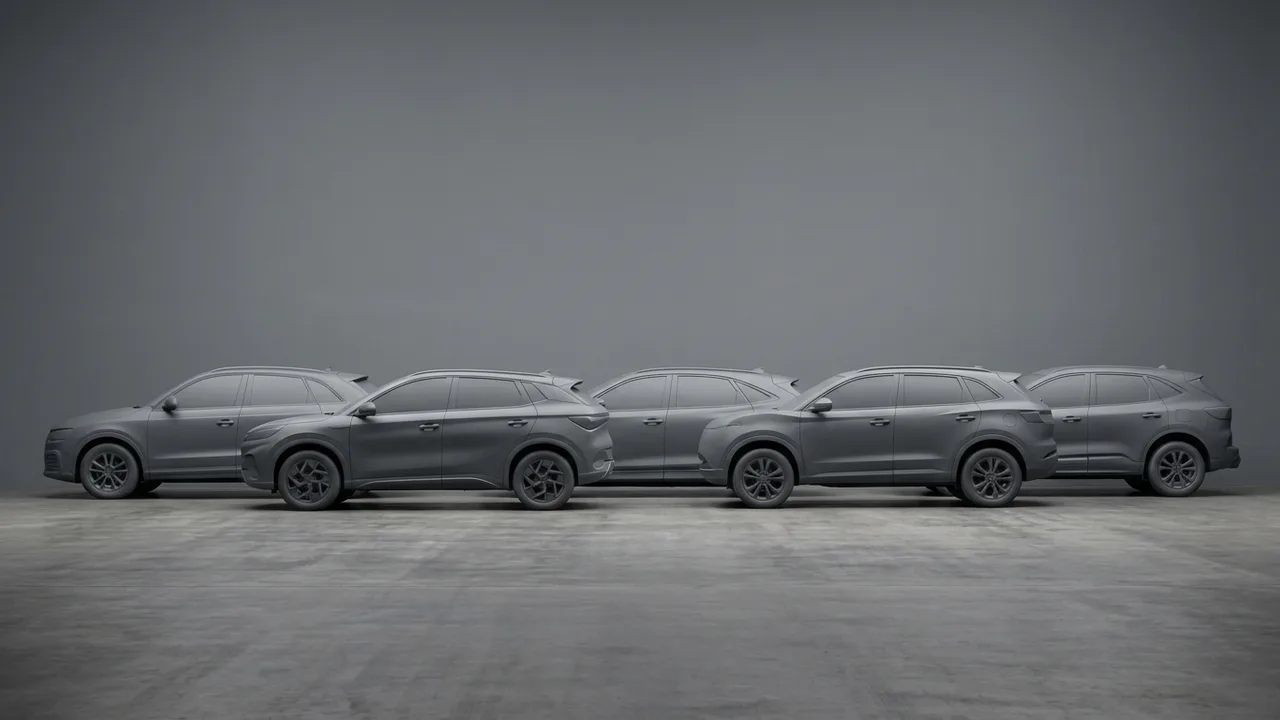
"All cars look the same now" is one of the most common complaints in motoring, and unlike many such complaints, it's substantially true.
Modern cars have genuinely converged. Proportions, silhouettes, front-end height, glasshouse shape and overall stance are more similar across manufacturers than they were in the 1960s, 70s or 80s.
The interesting part is why, because it isn't laziness or lack of imagination. It's a series of constraints, each individually sensible, that collectively narrow the available design space enormously.
The five forces
1. Pedestrian impact regulation — the biggest single factor.
This is the one most people don't know about, and it explains more of modern car design than anything else.
Regulations governing pedestrian head and leg impact require specific clearances between the bonnet and hard components beneath, and shape the front-end profile substantially.
The result is higher, blunter, more rounded front ends and less scope for the low, sharp noses that characterised earlier eras. A modern car cannot have a 1970s wedge nose — the regulation makes it impossible.
This is a genuinely good regulation. As our India road safety investigation documented, pedestrians are 19.5% of Indian road deaths, and pedestrian protection saves lives. The design cost is worth paying — but it is a cost, and it's a large part of why cars converged.
2. Aerodynamics, which have one right answer.
Efficiency requirements — emissions rules, fuel economy standards and, increasingly, EV range — put enormous pressure on drag coefficient.
And the aerodynamically optimal shape is highly constrained. Airflow doesn't care about brand identity. Rounded corners, tapering tails, flush surfaces, minimal frontal area and carefully managed wheel-arch flow are what works — and every manufacturer optimising for the same physics arrives at similar answers.
This pressure is intensifying with electrification, because drag directly determines range. The Zeekr 7X's 0.259 Cd is a good example of how hard manufacturers now push.
3. Crash safety structures.
Modern crash performance requires substantial structure: thick A-pillars, high sills, deep crumple zones and reinforced roof rails.
Those requirements dictate proportions. They're why glasshouses have shrunk relative to body depth, why A-pillars are thick enough to create genuine visibility complaints, and why beltlines have risen.
4. Platform sharing and manufacturing economics.
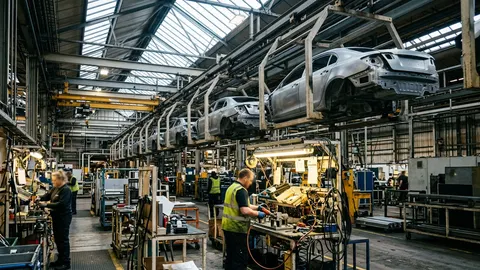
Development costs are enormous, so manufacturers share platforms across models and brands. A shared architecture constrains hardpoints — wheelbase, track, cowl height, seating position — and those constrain proportions.
5. Market convergence.
As our Gen Z and sedan pieces both noted, buyers converged on SUVs and crossovers globally. When most of the market wants the same body style, the market gets more of the same body style.
What designers can still control
The constraints are real, but the picture isn't hopeless, and design has responded by concentrating expression where it's still permitted:
Lighting. Now the primary brand signature — DRL patterns, full-width light bars, and distinctive shapes. This is where much modern design identity lives, from the BMW Neue Klasse's front band to Hyundai's Parametric Pixel elements.
Surfacing and detail. Body-side treatment, sculptural detail, and how light plays across surfaces.
Grilles and front-end graphics — hence their conspicuous growth, as one of the few remaining areas of visual freedom.
Proportion within limits. Wheel size relative to body, stance, and the roofline's fall.
Interiors, where regulation constrains far less and differentiation is genuinely possible.
Where genuine distinctiveness survives
Our own coverage shows it's still achievable:
- The Renault 5's retro charm — proof that an affordable EV can be genuinely desirable
- The Mahindra BE 6's concept-car silhouette — dramatic enough that our review noted the practicality cost
- The Scout Traveler's deliberate boxiness and retained physical controls
- The Ford Puma's character in a segment of anonymous crossovers
- The Hyundai Ioniq 9's polarising Parametric Pixel design — divisive precisely because it's distinctive
The pattern is instructive: distinctiveness now requires deliberate commitment, frequently with a functional cost. The BE 6's drama costs rear space. Boxy design costs drag. Manufacturers who want to look different must decide what they'll give up for it.
The bottom line
Cars really have converged, and the reason is five constraints that each make individual sense: pedestrian impact regulation shaping front ends, aerodynamics having one correct answer, crash structures dictating proportion, platform sharing constraining hardpoints, and market convergence on SUVs.
The most consequential is pedestrian safety regulation, and it's the one worth defending. It is a genuinely good rule that saves lives, and the aesthetic cost is a price worth paying.
Distinctiveness is still possible — the Renault 5, the BE 6, the Scout Traveler prove it — but it now requires deliberate commitment and usually a functional trade-off.
So the honest answer to "why does every car look the same?" is that most manufacturers have decided the trade-offs aren't worth it. The ones that decide otherwise still stand out — which is precisely why they do.
Key takeaways
- Cars really have converged, driven by five constraints that each make individual sense
- Pedestrian impact regulation is the biggest single factor — it dictates higher, blunter front ends and makes 1970s-style sharp noses impossible
- Aerodynamics has essentially one right answer — airflow doesn't care about brand identity, and electrification intensifies the pressure
- Crash structures dictate proportion, which is why glasshouses shrank, A-pillars thickened and beltlines rose
- Distinctiveness is still possible but requires commitment and a trade-off — the BE 6's drama costs rear space; boxy design costs drag
Sources & further reading
- Pedestrian impact and crash safety regulation
- automotive aerodynamics
- True Motion Auto reviews. Verified July 2026.
Figures, prices and policy details were current at the last-updated date above. Automotive pricing, incentives and regulations change frequently — verify time-sensitive details against the primary sources listed below. Read our editorial policy and fact-checking standards.