The systems, and why they're suddenly under the microscope
Advanced Driver Assistance Systems (ADAS) are the features that let a car steer, brake and accelerate itself under supervision: Tesla's Full Self-Driving (Supervised) and Autopilot, GM's Super Cruise, Ford's BlueCruise, Mercedes' Drive Pilot, and the adaptive cruise and lane-centring systems now standard on most new cars.
They've been sold as the future of driving. In 2026, they're being investigated as a present-day safety question — and the scrutiny is intensifying across every major system, not just Tesla's.
The central question regulators are asking is subtle, and it's worth getting right. It is not primarily "do these systems crash?" It is: "Do these systems know when they can't cope — and do they hand control back to the human in time?"
The Tesla FSD investigations — the leading edge
Tesla is the most-investigated, and its probes define the shape of the whole debate. As of 2026, NHTSA has three concurrent open investigations into FSD:
EA26002 — visibility degradation. An Engineering Analysis (the final tier before a recall) covering 3,203,754 vehicles, opened March 2026. The allegation: FSD's degradation-detection system fails to recognise when its cameras are blinded by sun glare, fog or airborne dust, and fails to warn the driver in time. Nine crashes, one fatality.
PE25012 — traffic violations. A Preliminary Evaluation into 58 incidents of FSD-engaged vehicles running red lights and crossing into opposing lanes.
A crash-reporting inquiry into whether Tesla has properly reported crashes under NHTSA's Standing General Order.
We cover these in depth in our dedicated Tesla tracker. The key point for this article is what they represent: EA26002 is a direct challenge to Tesla's camera-only ("Tesla Vision") architecture — the bet that cameras alone can do the job that competitors handle with lidar and radar too. The specific allegation — that the system doesn't know when it's blind — cuts to the heart of whether vision-only ADAS can safely self-monitor.
It's not just Tesla — and that's the real story
The instinct is to treat this as a Tesla problem. That's a mistake. Every hands-free system relies on the same fundamental bargain, and regulators are scrutinising all of them.
The systems from GM (Super Cruise), Ford (BlueCruise), and others use driver-monitoring cameras to ensure the human is paying attention while the car drives itself hands-free. These have generally earned better safety reviews than Tesla's approach precisely because of that robust driver monitoring — they watch your eyes and nag you the moment your attention drifts.
But the underlying vulnerability is universal. Every Level 2 system depends on:
- The car correctly detecting the limits of its own competence, and
- The human being ready to instantly retake control when the car reaches those limits.
Both of those are fragile. Automation complacency — the well-documented tendency of humans to stop paying attention when a machine is doing the work well — means point 2 fails routinely in the real world. And point 1 is exactly what EA26002 alleges Tesla's system gets wrong. The question isn't unique to any one brand.
The core problem: the handoff
If there's a single theme running through every ADAS investigation, it's the handoff — the moment the system decides it can no longer cope and returns control to the human.
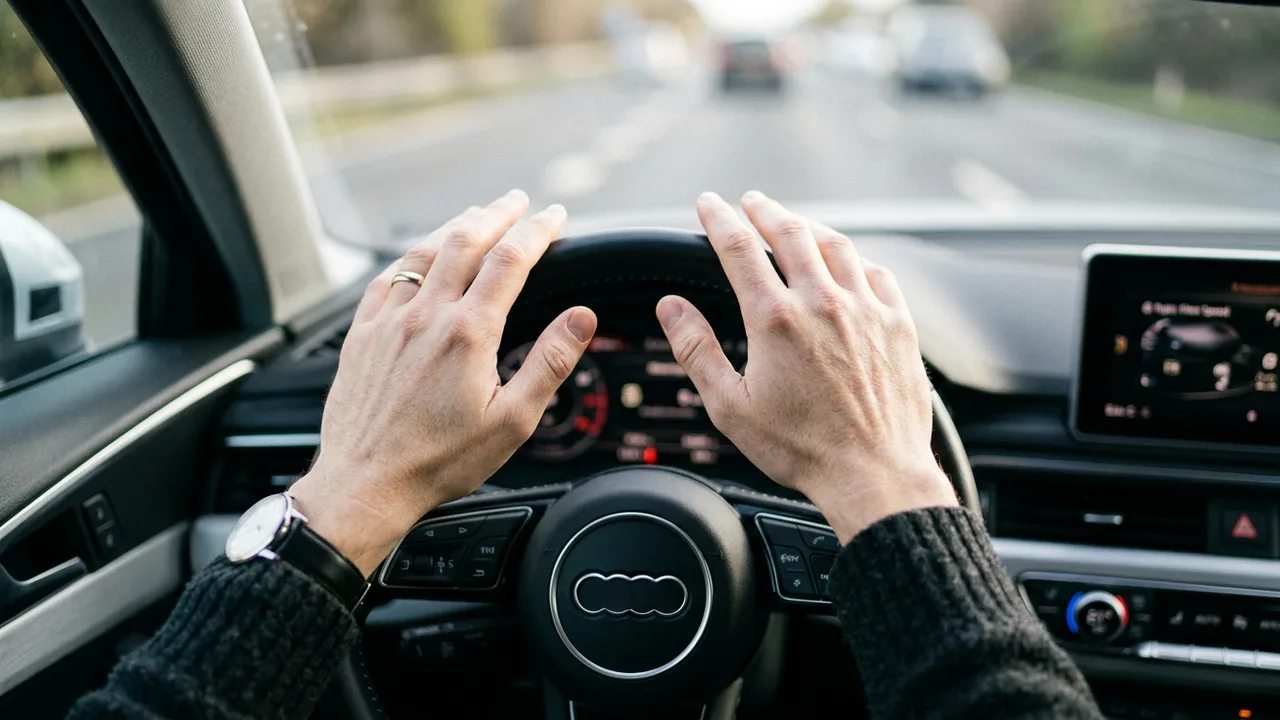
This is the most dangerous moment in supervised autonomy, for a brutal reason. The system hands back control precisely when the situation has become too difficult for the computer — which is to say, at the hardest possible moment — to a human who has, by definition, not been actively driving and may need several seconds to rebuild situational awareness they don't have.
A human who's been reading their phone for twenty minutes cannot safely assume control of a vehicle in a crisis in the 1–2 seconds the system gives them. That's not a hypothetical; it's the mechanism behind a significant share of ADAS-involved crashes.
The NHTSA finding against Tesla FSD is a specific instance of this: the allegation isn't just that the system fails in low visibility, it's that it fails to alert the driver with adequate time to respond. The handoff comes too late, or not at all.
Why "Level 2" is the crucial phrase
Every system named in this article — Tesla FSD included — is SAE Level 2. That is a technical classification with an enormous legal and practical consequence:
At Level 2, you are the driver. Always. Legally and practically responsible at every moment.
The system assists. It does not drive. No matter what the marketing name suggests — "Full Self-Driving," "Autopilot," "Super Cruise" — the human remains the legal operator. When a Level 2 system is engaged and a crash occurs, responsibility does not transfer to the manufacturer.
This gap — between what the names imply and what the classification requires — is itself something regulators are scrutinising. A system called "Full Self-Driving" that is legally a supervised driver-assist creates exactly the automation complacency that makes the handoff problem lethal. NHTSA's PE24031-era information requests explicitly raised concerns about how drivers misunderstand the limits of the technology.
Where this is heading
Regulation is tightening. NHTSA's escalation of the Tesla probe to an Engineering Analysis signals a willingness to demand recalls of ADAS software, not just hardware. A "recall" here would likely mean an over-the-air restriction — disabling or constraining the system in conditions it can't handle.
Internationally, the picture varies. The Dutch regulator has been weighing FSD approval for Europe; a negative decision would create precedent friction for EU-wide approval. Different jurisdictions are drawing the line in different places.
The technology bifurcates. On one side, camera-only systems betting that vision and neural networks are sufficient. On the other, sensor-redundant systems (lidar + radar + cameras) betting that you need hardware that can't be blinded. EA26002 is, in effect, a regulatory test of which bet is safe. Its outcome — expected around late 2027 — will shape the whole industry's approach.
What it means for you today
If you use any hands-free or driver-assist system:
- Know your level. It's almost certainly Level 2. You are the driver. Every second.
- Take the specific findings seriously. In glare, fog or dust, don't trust the system to tell you it's struggling — the evidence suggests it may not know. Take over early.
- Fight automation complacency actively. The better the system works, the more your attention will drift, and the less ready you'll be for the handoff. That's the trap.
- Don't let the marketing name lull you. "Full Self-Driving" is not full self-driving. The name is aspirational; the law is not.
Key takeaways
- Regulators are scrutinising all hands-free ADAS — Tesla FSD, GM Super Cruise, Ford BlueCruise — not just Tesla
- The core question isn't whether they crash, but whether they know when they can't cope and hand back control in time
- Tesla faces three concurrent NHTSA probes; EA26002 (3.2m vehicles) challenges its camera-only architecture
- The "handoff" is the most dangerous moment: the system quits at the hardest instant, to a human who wasn't driving
- Every system named is Level 2 — you are the legal driver at all times, whatever the name implies
Sources & further reading
- NHTSA ODI resumes (EA26002, PE24031, PE25012)
- SAE J3016 automation levels
- IIHS driver-monitoring evaluations
- NHTSA Standing General Order. Verified July 2026.
Figures, prices and policy details were current at the last-updated date above. Automotive pricing, incentives and regulations change frequently — verify time-sensitive details with the linked primary sources. Read our editorial policy and fact-checking standards.