A live tracker. Last updated July 2026.
The state of play
Tesla is currently the subject of three concurrent federal investigations by NHTSA's Office of Defects Investigation, all touching Full Self-Driving. Together they cover more than 3.2 million vehicles.
This is, by some margin, the most intensive regulatory scrutiny any automaker's driver-assistance system has ever faced in the United States.
🔴 OPEN — EA26002: FSD visibility degradation
The most serious of the three.
| Status | Engineering Analysis — the final investigative tier before recall or closure |
| Opened | 18 March 2026 (upgraded from PE24031, opened 17 October 2024) |
| Scope | 3,203,754 vehicles |
| Models | 2016–2026 Model S & Model X · 2017–2026 Model 3 · 2020–2026 Model Y · 2023–2026 Cybertruck |
| Incidents | 9 crashes — 1 pedestrian fatality (28 Nov 2023), at least 1 injury. 6 further incidents under review. |
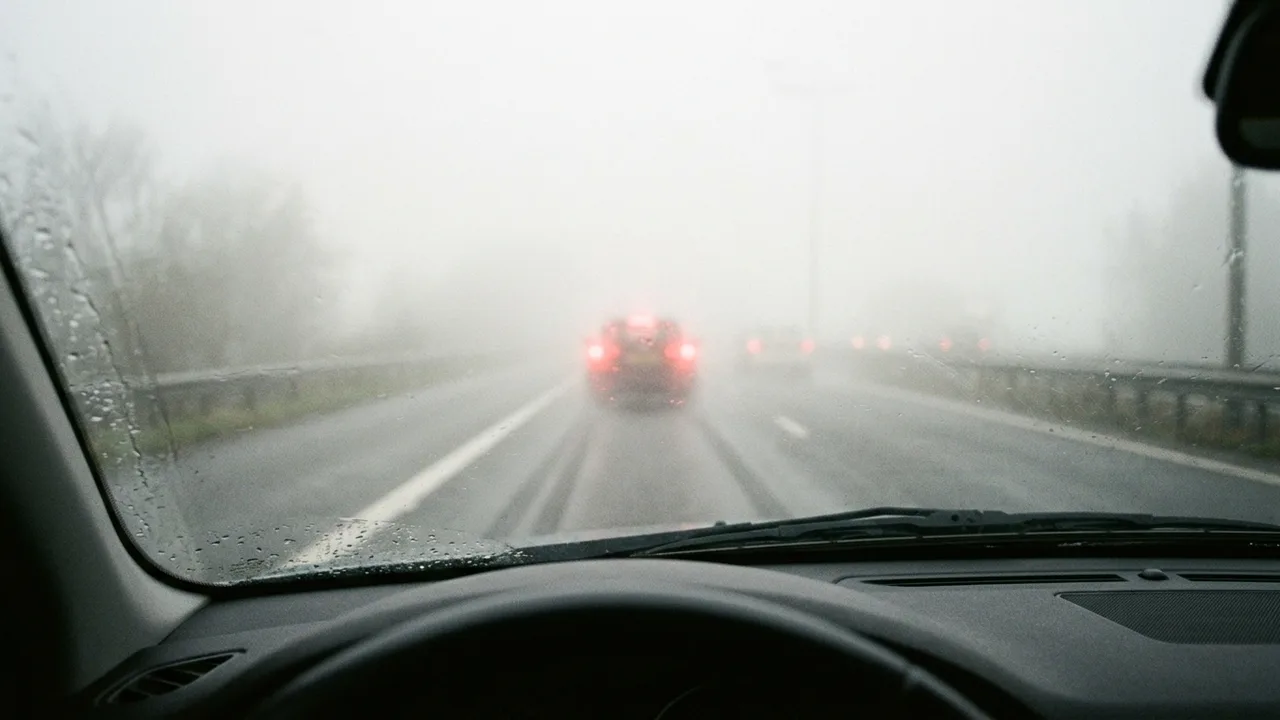
The allegation: FSD's degradation detection system — the software meant to recognise when the cameras cannot see and warn the driver — fails under sun glare, fog and airborne dust. In the crashes reviewed, ODI found the system either did not detect the impaired conditions or did not alert the driver until immediately before impact. In each case, FSD lost track of, or never detected, a lead vehicle in its path.
The two findings that hurt most:
- Tesla's own analysis conceded that its June 2024 software update would have affected only 3 of the 9 crashes had it been installed.
- Tesla told NHTSA that internal "data and labeling limitations" prevented uniform identification of relevant crashes. ODI believes this could have led to under-reporting.
Expected timeline: NHTSA typically completes an EA within ~18 months — putting a decision around late 2027.
Possible outcomes: case closed · influence letter · recall demand.
🔴 OPEN — PE25012: FSD traffic violations
| Status | Preliminary Evaluation |
| Incidents | 58 |
The allegation: FSD-engaged vehicles committing traffic violations — including running red lights and crossing into opposing lanes of traffic.
This is a categorically different problem from EA26002. The visibility probe alleges the system fails when it cannot see. This one alleges the system fails when it can see perfectly well — that it perceives a red light, and proceeds anyway.
🔴 OPEN — Crash-reporting practices
| Status | Separate ODI inquiry |
The allegation: that Tesla has failed to report crashes to NHTSA properly and on time under the Standing General Order.
The evidence supporting this is not circumstantial. The fatal pedestrian crash of 28 November 2023 was reported by Tesla seven months late, on 27 June 2024.
Tesla has received multiple deadline extensions while resisting the handover of FSD traffic-violation data. It is, in effect, simultaneously fighting a data-disclosure fight in one probe while another escalates on the strength of the data it did disclose.
✅ CLOSED — Smart Summon
Closed without a defect finding. Worth stating clearly: NHTSA is not simply rubber-stamping complaints against Tesla. When it finds no defect, it says so.
✅ REJECTED — Pedal misapplication petition
A petition seeking a recall over unintended acceleration was rejected, removing what had been the largest single recall threat hanging over the company.
What the pattern actually shows
Read the three open probes together and a coherent picture emerges, and it is not primarily about software bugs.
All three are about Tesla's relationship with its own data.
- EA26002 alleges the car cannot reliably detect its own perception failure.
- PE25012 alleges the car acts on perception it has correctly formed, and acts wrongly.
- The reporting probe alleges Tesla cannot — or does not — reliably tell the regulator what its cars have done.
The unifying question NHTSA appears to be asking is: does Tesla actually know what its fleet is doing?
That is a far more uncomfortable question for a company whose valuation rests on robotaxis than any individual software defect.
The vision-only bet, on trial
EA26002 is, at root, a referendum on Tesla's foundational engineering decision.
Tesla abandoned radar for camera-only "Tesla Vision" in mid-2021. Every serious competitor — Waymo, Rivian's Gen 3 (with lidar), Mercedes Drive Pilot — retains redundant sensing on the reasoning that a camera can be blinded and a radar cannot.
Tesla's counter has always been that humans manage with two cameras. The flaw NHTSA has identified goes precisely to that analogy: a human knows when they cannot see, and slows down. The allegation is that FSD does not.
That is not a bug you patch. It is an architectural question about whether a vision-only system can reliably self-diagnose its own blindness — and it does not get answered by an over-the-air update.
The international dimension
The Dutch regulator (RDW) has been weighing approval of FSD for European roads. A negative decision in the Netherlands would create precedent friction for broader EU approval and would land directly on top of the NHTSA process.
What owners should actually do
Nothing is being recalled today. You may continue to use FSD.
But understand what you are using. FSD is a Level 2 driver-assistance system. You are the driver, legally and practically, at every moment, regardless of the product's name.
And take the specific finding seriously, because it is specific: in glare, fog or dust, do not trust the system to tell you it is struggling. NHTSA's evidence suggests it may not know. Take over early.
Key takeaways
- Three concurrent NHTSA investigations into Tesla FSD are open as of July 2026
- EA26002 (visibility degradation): 3,203,754 vehicles, 9 crashes, 1 fatality — Engineering Analysis stage, the last step before a recall
- PE25012 (traffic violations): 58 incidents including running red lights
- A separate probe examines Tesla's crash-reporting practices — a fatal crash was reported seven months late
- Smart Summon was closed with no defect found; a pedal-misapplication petition was rejected
Sources & further reading
- NHTSA ODI resumes EA26002, PE24031, PE25012
- NHTSA Standing General Order filings
- Electrek
- CNBC
- Carscoops. Live tracker — verified July 2026. Check nhtsa.gov for the current status of all campaigns.
Figures, prices and policy details were current at the last-updated date above. Automotive pricing, incentives and regulations change frequently — verify time-sensitive details with the linked primary sources. Read our editorial policy and fact-checking standards.