Two extremes, one drivetrain
EV recalls split into two categories that sit at opposite ends of the convenience spectrum — and no other type of vehicle spans that range.
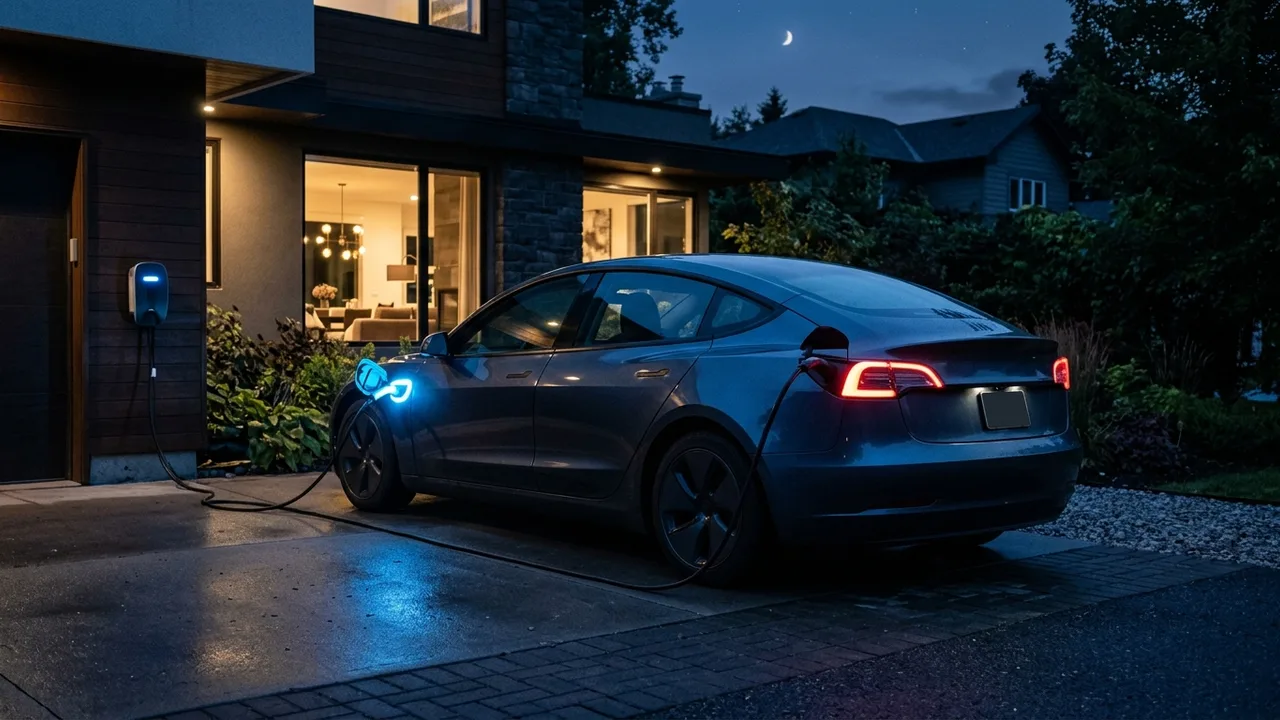
At one end: a recall fixed by an over-the-air software update, pushed to your car overnight while it sits in your driveway. You wake up, and it's done. No dealer, no appointment, no disruption.
At the other end: a battery pack replacement, where the defective component is worth more than half the value of the car, replacements are supply-constrained, and the "park outside" advisory means you can't put your own car in your own garage for months.
Understanding why EV recalls behave so differently from combustion-car recalls comes down to two things: software and batteries.
The software half: the OTA revolution
Modern EVs are, to a degree combustion cars never were, computers on wheels. Their core functions — power delivery, regenerative braking, battery management, driver assistance, even some aspects of thermal management — are governed by software that can be updated remotely.
This has genuinely transformed the recall experience for a large share of EV (and increasingly, connected combustion-car) defects.
When a recall can be fixed with a software change, it can often be pushed over-the-air:
- No dealer visit
- No appointment
- No physical repair
- Fixed overnight, in your driveway
Tesla pioneered this, and it's now widespread. It's a real, meaningful benefit: it dramatically raises completion rates (the car gets fixed whether or not the owner acts) and slashes the inconvenience.
But two caveats matter enormously.
First — OTA is less universal than the hype suggests. As we saw in the 2026 recall data, the OTA share swings wildly quarter to quarter. In Q1 2026, nearly half of recalled vehicles were OTA-eligible (skewed by one giant Ford campaign). In Q2 2026, only 3.2% were. A great many recalls — even on software-heavy cars — still require a dealer to physically apply the update or inspect hardware.
Second — a software fix isn't always the right fix. There's a legitimate safety concern that OTA updates can be used to paper over problems that really need hardware attention. If a system is fundamentally mis-architected — the recurring criticism in the Tesla FSD investigations — an over-the-air patch may reduce the symptom without curing the disease. Tesla's own admission that its FSD software update would have affected only 3 of 9 crashes is exactly this problem: the OTA fix wasn't enough.
The battery half: the hardest recalls in the industry
Then there's the other end of the spectrum, and it's brutal.
Battery recalls are among the most expensive and disruptive in automotive history, for reasons unique to the technology:
1. The component is astronomically valuable. The battery pack is typically the single most expensive component in an EV, often 30–50% of the vehicle's value. Replacing packs across a recalled fleet can cost a manufacturer billions. The GM Bolt battery recall and various others ran into the billions of dollars.
2. Thermal runaway is a fire risk that behaves differently. A damaged or defective lithium-ion cell can enter thermal runaway — a self-sustaining chain reaction that generates intense heat and fire, can reignite hours later, and is extremely difficult to extinguish. This is why so many battery recalls come with a "park outside" advisory: the fire risk exists while the car is parked and charging, or even at rest.
3. The "don't charge to 100%, park outside" limbo. Battery recalls frequently leave owners in a miserable interim state: told not to charge the battery fully, not to park indoors, and not to leave it charging unattended — for months, while replacement packs are manufactured. The car is technically drivable but hobbled, and can't be parked where the owner needs it.
4. Supply constraints stretch for months. You cannot manufacture millions of replacement battery packs quickly. Battery recalls routinely run staggered over a year or more, prioritised by risk — much like Takata, for the same supply reasons.
Real-world examples of the range
- Software/OTA end: numerous Tesla recalls addressed via overnight OTA updates — everything from Autopilot parameters to seatbelt-chime logic to Full Self-Driving behaviour tweaks.
- Battery end: the Jeep Wrangler 4xe and Grand Cherokee 4xe plug-in hybrid battery fire recalls — owners told to stop charging and park away from structures. Stellantis ultimately abandoned its plug-in hybrids in the US and Canada partly under the weight of these issues.
- Honda stepped away from multiple planned EV projects in 2026 following weak demand and losses — a reminder that the cost and risk profile of EV (and battery) programmes is reshaping manufacturer strategy, not just individual recalls.
What this means for EV owners
1. Keep your car connected and updated. Many EV recalls — and preventive fixes — arrive over-the-air. A car that's never connected to Wi-Fi or cellular can miss updates that a combustion car would need a dealer visit to receive. Connectivity is now a safety feature.
2. Take battery/charging advisories with total seriousness. A "park outside, don't charge to 100%" advisory is not bureaucratic caution. Thermal runaway is a real, fast, hard-to-extinguish fire. Follow charging restrictions precisely, for as long as they apply.
3. Understand the timelines are longer. If your EV is under a battery recall, brace for a wait measured in months, not weeks. The supply constraints are real. Ask about interim mitigations and, under park-outside orders, whether alternative parking or transport support is available.
4. Don't assume "software fix" means "trivial." An OTA update is convenient, but verify it actually addresses the root cause — particularly for ADAS-related recalls, where the software-vs-architecture question is genuinely unresolved.
5. Check your VIN like everyone else. EV or not, the fundamentals don't change: check the official recall checker regularly, and confirm completion with a dealer.
Key takeaways
- EV recalls span two extremes: overnight OTA software fixes vs battery-pack replacements worth 30–50% of the car
- OTA updates raise completion rates and cut inconvenience — but their share swings wildly (near 50% of vehicles in Q1 2026, 3.2% in Q2)
- A software patch isn't always the right fix — it can mask architecture problems that need hardware attention
- Battery recalls carry thermal-runaway fire risk, "park outside / don't charge to 100%" advisories, and months-long waits
- Keep your EV connected for OTA updates, and follow charging/parking advisories precisely
Sources & further reading
- NHTSA recall data
- BizzyCar Q2 2026 Recall Report
- Stellantis / Jeep 4xe recall notices
- Honda EV programme reporting
- GM Bolt battery recall history. Verified July 2026.
Figures, prices and policy details were current at the last-updated date above. Automotive pricing, incentives and regulations change frequently — verify time-sensitive details with the linked primary sources. Read our editorial policy and fact-checking standards.