The badge is the least reliable clue
Ask most people where their car is "from," and they'll name the brand's home country. A BMW is German. A Ford is American. A Toyota is Japanese.
This is almost useless information, and in the tariff era it can cost you real money to believe it.
- That "German" BMW might be assembled in the US (BMW's largest plant is in South Carolina)
- That "American" Ford might be built in Mexico
- That "Japanese" Toyota might be more American (by parts content and assembly) than a nominally domestic brand
The badge tells you who designed and markets the car. It tells you almost nothing about where the physical object was built, or where its most valuable parts came from — which is what actually determines its tariff load, and increasingly its price.
Fortunately, there are labels that do tell you the truth. Here's how to read them.
The AALA sticker (US) — your best tool
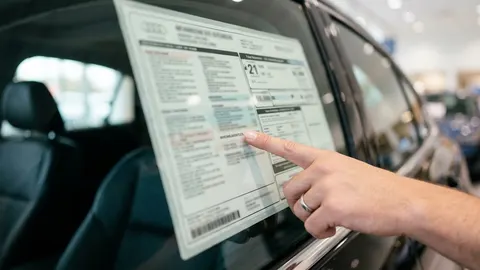
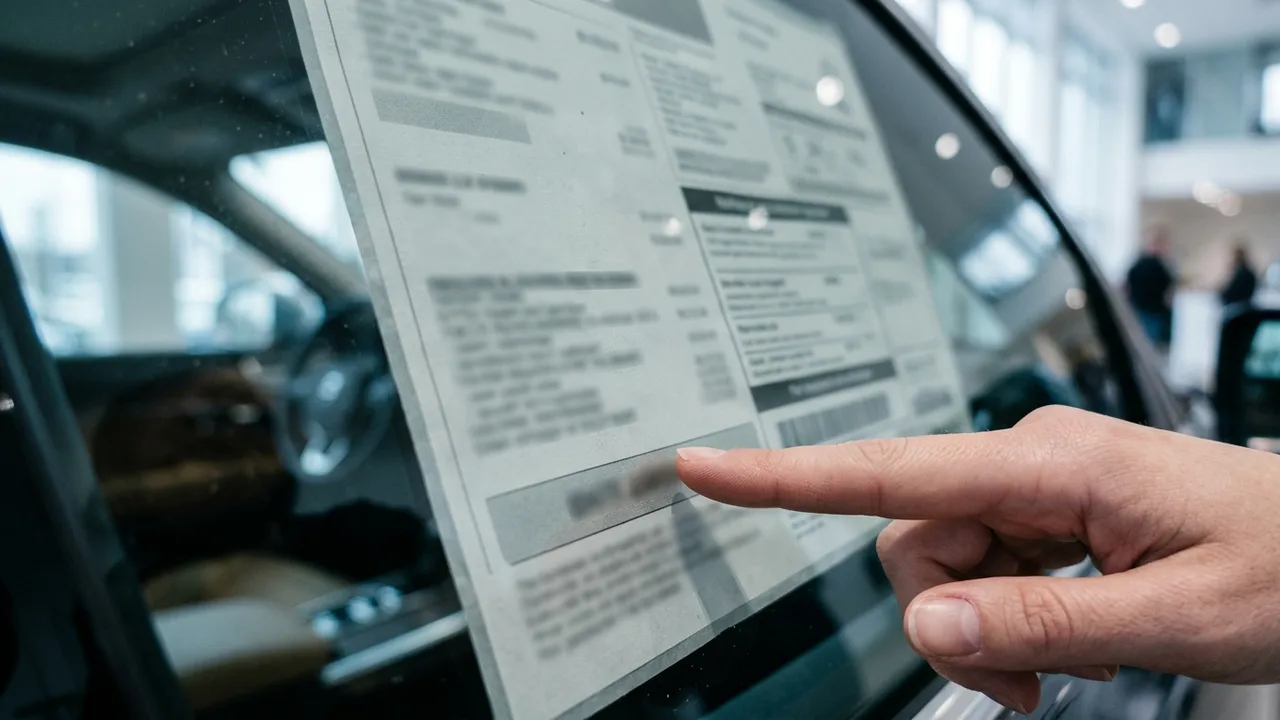
In the United States, the American Automobile Labeling Act (AALA) requires every new car to display, on the Monroney window sticker, several pieces of origin information. This is free, legally mandated, and sitting on the glass of every new car. Look for:
1. Final assembly point. The city and country (or state) where the car was actually put together. This is the single most important fact for tariff purposes — a US final assembly point escapes the vehicle-level import tariff (though not parts tariffs).
2. Percentage of US/Canadian parts content. A single number telling you how much of the car's content (by value) came from the US and Canada. A car that's 70% US/Canadian content carries far less embedded import-tariff cost than one at 20%.
3. Country of origin of the engine. Listed separately — because the engine is one of the most valuable components, and a separately-tariffed one. An imported engine in a US-assembled car means significant embedded parts-tariff cost.
4. Country of origin of the transmission. Same logic — another high-value, separately-tracked component.
Read all four. A car assembled in the US, with high US/Canadian parts content, and a domestic engine and transmission, is genuinely low-tariff. A car assembled in the US but with a low parts percentage and imported engine/transmission carries a lot of hidden tariff despite its "made here" assembly badge.
The VIN — a fast first filter
Every car's Vehicle Identification Number begins with a character that indicates the country of assembly:
| First character | Assembly country |
|---|---|
| 1, 4, 5 | United States |
| 2 | Canada |
| 3 | Mexico |
| J | Japan |
| K | South Korea |
| W | Germany |
| L | China |
| S | United Kingdom |
| 9 | Brazil (and others) |
This is a quick first filter — it tells you where the car was assembled, though not its parts content or (in North America) its USMCA compliance. Check the VIN's first character, then confirm the fuller picture with the window sticker.
What the labels can't tell you
Be honest about the limits:
They show content by value, not by count. A car can have "50% domestic content" that's really one expensive domestic component and dozens of cheap imported ones — or vice versa.
"US/Canadian" is often combined. The AALA groups US and Canadian content together, so you can't always separate them.
Assembly ≠ origin of value. A car assembled in country X from parts made in country Y has its value originating in Y, even if its badge and assembly say X. The parts-content percentage is your clue here.
USMCA compliance is separate. Whether a Mexican-built car qualifies for the 0% USMCA tariff depends on rules-of-origin tests the window sticker doesn't directly show. Ask the dealer.
How to actually use this when buying
1. Read the AALA sticker on the specific car — not a generic spec. Two examples of the "same" model can differ by plant and content. The sticker on the actual unit is what counts.
2. Prioritise final assembly + high content + domestic engine. For lowest tariff exposure (US market), you want US or USMCA-compliant assembly, a high US/Canadian parts percentage, and a domestically-sourced engine and transmission.
3. Cross-check the VIN. A fast confirmation of assembly country before you dig into the sticker.
4. Ask the dealer the two questions the labels don't fully answer: "Is this specific vehicle USMCA-compliant?" and "Where's the engine from?" A good dealer knows — USMCA compliance affects their own costs.
5. Ignore the badge entirely for this purpose. It's marketing, not manufacturing. The labels are the truth.
The bottom line
Where your car is "from" is a question the badge answers wrongly and the labels answer correctly. In the US, the AALA window sticker — final assembly, US/Canadian parts percentage, engine and transmission origin — is a free, legally-required source of exactly the information that determines a car's tariff load and, increasingly, its price. The VIN's first character is a fast first filter for assembly country. Together they let you see past the badge to where the physical car and its most valuable parts truly originate. In the tariff era, that's not trivia — it's money.
Key takeaways
- The badge tells you who designed/markets a car, not where it (or its parts) were built
- The AALA window sticker (US) shows final assembly point, % US/Canadian parts content, and engine/transmission origin
- The VIN's first character reveals assembly country (1/4/5 = US, 2 = Canada, 3 = Mexico, J = Japan, etc.)
- Labels show content by value, not count, and don't directly confirm USMCA compliance — ask the dealer
- Lowest tariff exposure: US/USMCA assembly + high domestic parts % + domestic engine and transmission
Sources & further reading
- American Automobile Labeling Act
- NHTSA VIN standards
- NHTSA Monroney label requirements
- Congressional Research Service. Verified July 2026.
Figures, prices and policy details were current at the last-updated date above. Automotive pricing, incentives and regulations change frequently — verify time-sensitive details with the linked primary sources. Read our editorial policy and fact-checking standards.