Cars as shorthand
Indian cinema has always used vehicles to say things quickly.
A car on screen communicates class, aspiration, freedom, rebellion or arrival faster than dialogue can — and in a country where car ownership was, for decades, a marker of considerable privilege, that shorthand carried enormous weight.
The relationship runs both ways. Films reflected what India drove, and then shaped what India wanted to drive.
The eras, and what they signified
The Ambassador era. For decades, the Hindustan Ambassador was the Indian screen car by default — because it was the Indian car by default. On screen it signified officialdom, authority and establishment: the minister's car, the police car, the bureaucrat's car.
As our Ambassador retrospective noted, it was India's everyman car and its official one simultaneously, and cinema used both meanings.
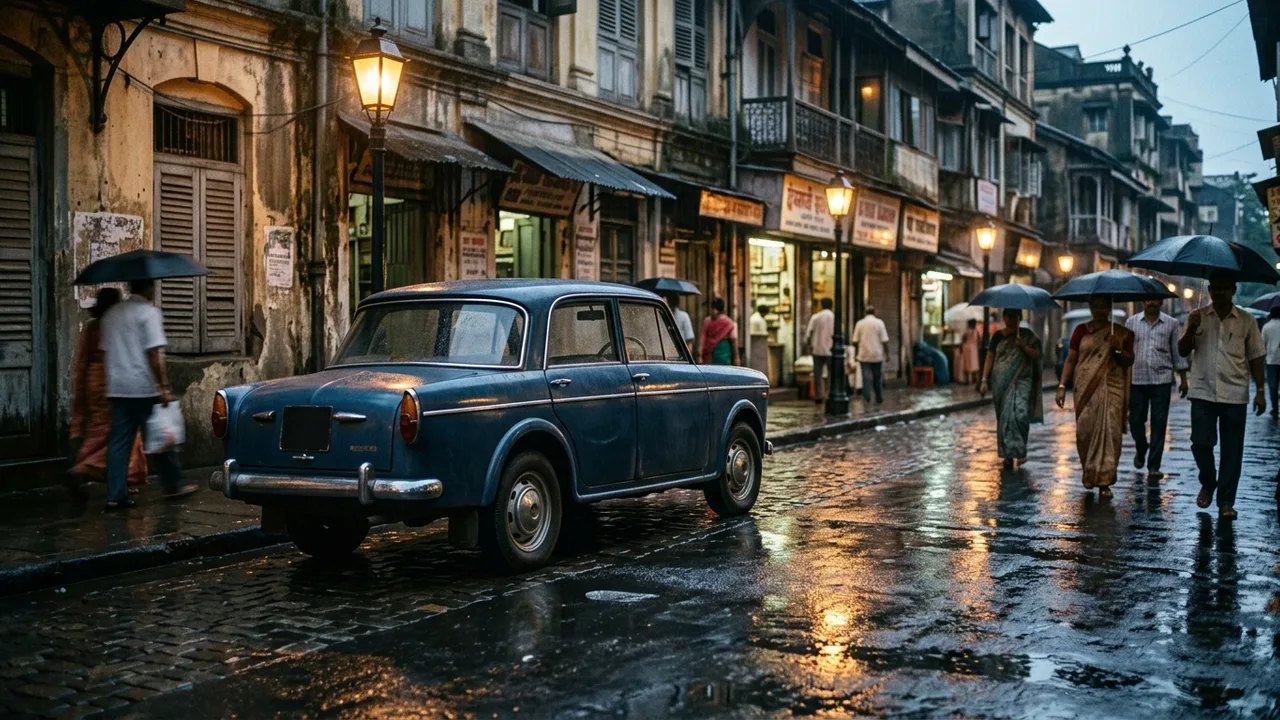
The Padmini and the taxi. The Premier Padmini became visual shorthand for Mumbai itself — the city's taxi fleet, and with it a whole register of urban working life.
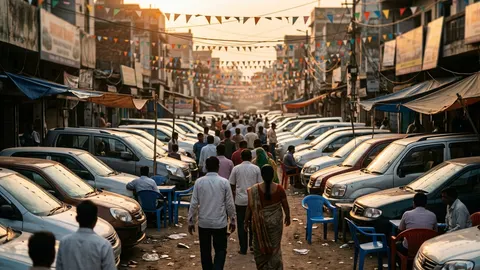
The liberalisation shift. As India's market opened and the Maruti 800 (see our retrospective) put the country on wheels, screen cars changed with it. A modern hatchback signified a modern, aspirational, middle-class India — a different story from the Ambassador's establishment authority.
The imported supercar era. As India's wealthy class grew, imported performance cars appeared on screen as unambiguous markers of extreme wealth — partly because, as our India duties analysis explains, import duties of ~110–115% make them precisely that. A supercar in an Indian film says something about money that the same car in a Hollywood film doesn't.
The SUV era. Reflecting the market shift our Indian comparisons document constantly — the rise of the SUV as the aspirational default, with the Mahindra Thar in particular achieving genuine cultural status as a lifestyle and rebellion signifier.
Why the Thar specifically
The Thar is worth singling out, because it's the clearest current example of the cinema-market feedback loop.
As our Thar review noted, it's "a cultural phenomenon, a genuine object of desire that turned a utilitarian military-derived off-roader into an aspirational lifestyle statement."
Screen presence and social media visibility are a substantial part of how that happened. The Thar signifies adventure, independence and a particular kind of confident modernity — and that meaning was built culturally as much as engineered.
Which is why the facelift's challenge was so delicate. As our review found, Mahindra had to refine it "without losing the raw character that made it a phenomenon" — because the character is the product.
The chase, and what changed
Action sequences have been a constant, but what they use has shifted:
Older films worked with what existed — Ambassadors, Padminis, Jeeps — and the sequences were correspondingly grounded.
Contemporary Indian action cinema deploys modern performance cars and international-standard stunt work, reflecting both bigger budgets and a market where such vehicles exist.
Something is arguably lost. A chase involving Ambassadors on real Mumbai streets had a texture that a globally-styled sequence with supercars doesn't — the same distinction our Ferrari 512TR piece drew between capability and character.
The feedback loop
This is the genuinely interesting mechanism.
Cinema doesn't only reflect the market — it shapes it. A car with the right screen presence acquires meaning that no advertising budget purchases, and that meaning translates into demand.
Manufacturers understand this, and product placement in Indian cinema is a substantial business.
But the most powerful associations are usually the unplanned ones — a car that happens to fit a character so well that the association sticks. The Ambassador's officialdom, the Padmini's Mumbai, the Thar's adventure. None of those were bought.
What it says about India
The through-line is aspiration, and its changing shape.
The Ambassador era: a car meant establishment and access. The Maruti era: a car meant modernity and middle-class arrival. The SUV era: a car means lifestyle, capability and self-expression.
Each shift tracks the economy. As our archive coverage documented, the 800 arrived into a market frozen since the 1950s and transformed it; liberalisation opened the market further; and the SUV boom reflects a larger, wealthier, more aspirational middle class.
Cinema recorded all of it, frequently before the sales figures did.
The bottom line
Indian cinema has used cars as shorthand for decades — establishment authority in the Ambassador era, modern arrival in the Maruti era, and lifestyle and self-expression in the SUV era — and each shift tracks the country's economic transformation.
The relationship runs both ways. Films reflect what India drives and then shape what India wants, and the Mahindra Thar is the clearest current example: a utilitarian off-roader turned into an object of genuine desire substantially through cultural presence.
The most powerful associations are the unplanned ones. The Ambassador didn't pay to mean officialdom. The Padmini didn't pay to mean Mumbai.
That's why product placement rarely creates a co-star — and why the machines that genuinely became co-stars did it by fitting a story so well that the meaning stuck.
Key takeaways
- Indian cinema uses cars as shorthand for class, aspiration, freedom and arrival — shorthand that carried enormous weight when ownership signified real privilege
- The eras track the economy: Ambassador (establishment authority) → Maruti 800 (modern middle-class arrival) → SUV (lifestyle and self-expression)
- Imported supercars signify extreme wealth in Indian cinema partly because ~110–115% import duties make them exactly that
- The Mahindra Thar is the clearest current example of the feedback loop — cultural presence turned a utilitarian off-roader into an object of genuine desire
- The most powerful associations are unplanned — the Ambassador didn't pay to mean officialdom, which is why product placement rarely creates a genuine co-star
Sources & further reading
- Indian cinema history
Figures, prices and policy details were current at the last-updated date above. Automotive pricing, incentives and regulations change frequently — verify time-sensitive details against the primary sources listed below. Read our editorial policy and fact-checking standards.