📚 BRAND HISTORY.
The companies that owned Indian motoring
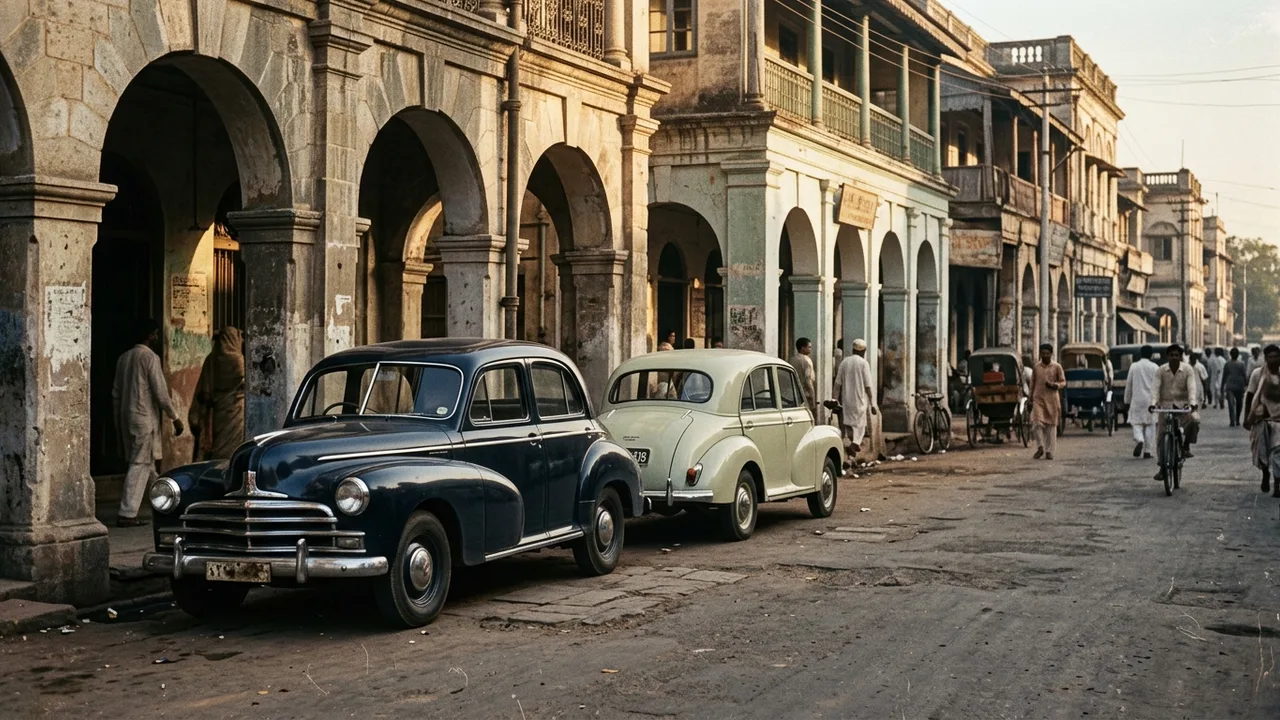
For roughly four decades, two companies effectively were the Indian car market.
Hindustan Motors built the Ambassador, based on the Morris Oxford Series III. Premier Automobiles built the Padmini, a licensed Fiat design.
Between them they had it entirely — protected by licensing restrictions, import controls and a closed economy that limited competition almost completely.
Both are effectively gone. Understanding why is the most instructive story in Indian industrial history.
The protected era
The conditions were extraordinary by modern standards:
Licensing restrictions limited who could manufacture and how much. Import controls kept foreign competition out almost entirely. Waiting lists ran for years, meaning demand exceeded supply permanently.
In that environment, there was no competitive pressure to improve.
As our Ambassador retrospective documented, the vehicle was built largely unchanged for over half a century, based on a 1950s British design. The Padmini's story is similar.
Neither company was badly run in the context of its incentives. They were producing what they were permitted to produce, in quantities they were permitted to produce, for buyers with no alternative. Improving the product would have cost money and gained nothing.
That's the whole lesson, and it's worth stating without moralising: the companies responded rationally to the incentives they faced. The incentives were wrong.
What killed them
1. The Maruti 800 (1983). As our retrospective concluded, it was "generationally different" — modern, efficient, reliable and attainable. Against it, the Ambassador and Padmini were exposed immediately as what they were: antiquated designs sustained by protection.
2. Liberalisation (from 1991). The economic reforms opened the market to international manufacturers and competitive pressure. Neither company had the products, the capital or the institutional capability to respond.
3. Decades of accumulated non-development. Fifty years without meaningful product renewal cannot be recovered in five. They had no modern platforms, no modern engines, and no experience of competing.
4. Institutional inertia. Government fleets, taxi permits and established supply relationships sustained them longer than the market would have — which arguably prolonged the decline rather than preventing it.
The endings
Premier Automobiles ceased Padmini production and the company transitioned away from mass-market car manufacturing, with various attempts at revival and diversification.
Hindustan Motors ceased Ambassador production, and the brand has passed through various ownership arrangements with periodic revival announcements. The Ambassador nameplate retains genuine emotional resonance in India, which is why revival rumours recur.
Neither exists as a meaningful car manufacturer today.
What their fall teaches
1. Protection produces stagnation, and it isn't the companies' fault. This is the central lesson. Given no competition, no manufacturer improves. As our Ambassador retrospective concluded: "Its five-decade run is a monument to both — genuine practical suitability, and the stagnation that protected markets produce."
2. Competition is what improves cars. The Ambassador's decline began with the 800 and accelerated with liberalisation. Indians got better cars because they were finally offered a choice.
3. Suitability isn't the same as quality. The Ambassador was genuinely well-suited to Indian roads — high clearance, absorbent suspension, repairable anywhere. Those were real virtues. They weren't enough once alternatives existed.
4. Institutional capability is hard to build and easy to lose. By 1991, neither company had the engineering organisation to develop a modern car. Tata built one from scratch with the Indica — as our retrospective covered, with real early quality problems, but they built it. Hindustan and Premier couldn't.
5. Nostalgia isn't a business. The Ambassador is beloved, and that affection has not translated into commercial viability. Revival announcements recur; revivals don't.
The comparison that matters
Tata's story is the counterfactual, and it's instructive.
Tata was also an Indian company operating in the protected era. It also faced liberalisation. The difference is that it built passenger car capability — through the Sierra in 1991, the Indica in 1998, and two decades of expensive learning that included genuine quality failures.
As our Indica retrospective concluded, everything Tata is today — India's EV leader, a genuine safety champion, maker of the best-selling car — was built on those hard lessons.
Hindustan and Premier didn't take them. That's the difference.
The bottom line
Hindustan Motors and Premier History: India's First dominated Indian motoring for four decades because the market was closed, and disappeared because it opened.
They weren't badly run given their incentives. In a protected market with permanent waiting lists, improving the product cost money and gained nothing. The incentives were wrong, and the companies responded rationally to them.
The Maruti 800 exposed them, and liberalisation finished them — because fifty years of non-development cannot be recovered once competition arrives.
Tata is the counterfactual. It built passenger car capability through expensive failure and is now India's EV leader. Hindustan and Premier didn't, and aren't.
The Ambassador remains beloved, and that affection is genuine. It isn't a business — and the recurring revival rumours are the clearest evidence that nostalgia and viability are different things.
Key takeaways
- Two companies owned Indian motoring for four decades because the market was closed — licensing restrictions, import controls and years-long waiting lists
- They weren't badly run given their incentives: with demand permanently exceeding supply, improving the product cost money and gained nothing
- The Maruti 800 exposed them and liberalisation finished them — fifty years of non-development can't be recovered once competition arrives
- Tata is the counterfactual: it built passenger car capability through expensive failure (the Sierra, the Indica) and is now India's EV leader
- The Ambassador remains genuinely beloved — and nostalgia isn't a business, which is why revival rumours recur and revivals don't
Sources & further reading
- Indian automotive industry history
Figures, prices and policy details were current at the last-updated date above. Automotive pricing, incentives and regulations change frequently — verify time-sensitive details against the primary sources listed below. Read our editorial policy and fact-checking standards.