📚 MODEL CHRONOLOGY. Details drawn from Maruti Suzuki records and established sources.
The most consequential lineage in Indian motoring
As our archive retrospective argued, the Maruti 800 is the most consequential car in Indian history — not because it was extraordinary engineering, but because of what it enabled.
The lineage that followed it is equally significant, because it kept the promise: an entry-level car that ordinary Indian households could genuinely afford, from a company whose service network reached everywhere.
This is that family tree, and the story it tells is about a market growing up.
The generations
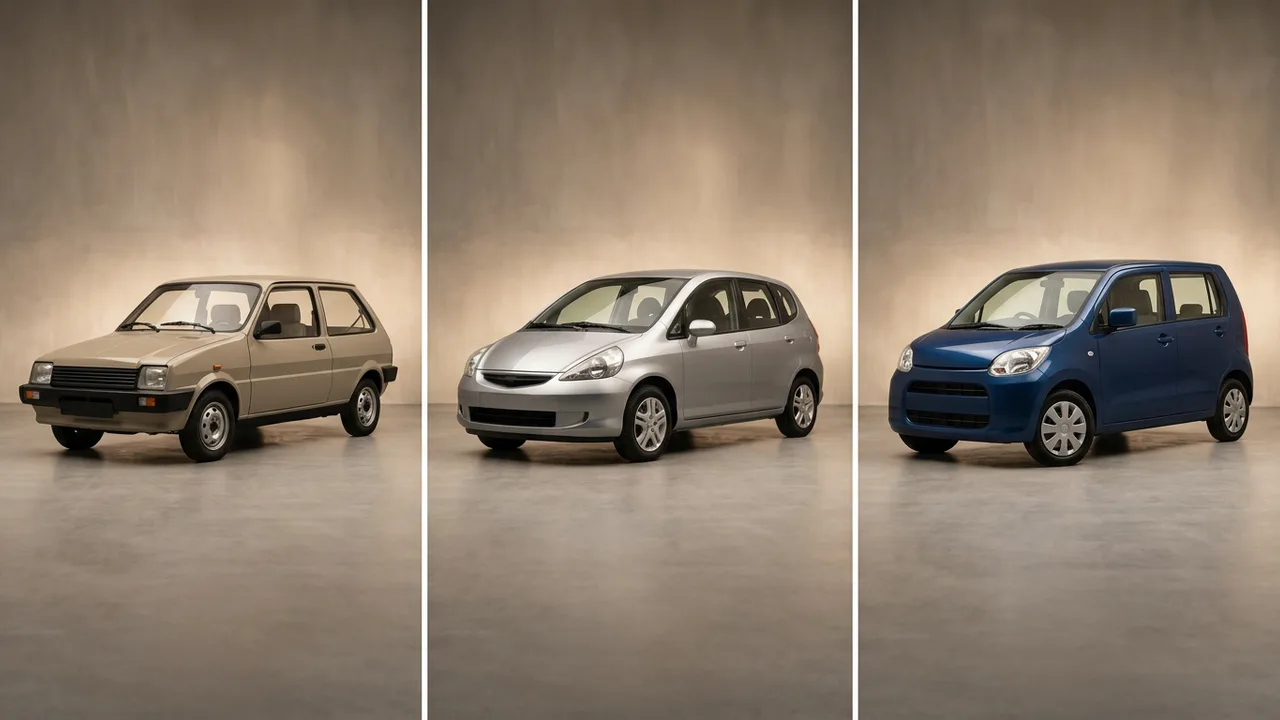
Maruti 800 (from 1983). The car that started it. A joint venture between the Indian government and Suzuki, based on the Suzuki Fronte/Alto, arriving into a market frozen since the 1950s — the Ambassador and Premier Padmini, both antiquated, both expensive relative to incomes, both subject to years-long waiting lists.
It was generationally different: modern, efficient, reliable and genuinely attainable. As our retrospective concluded, it was "extraordinary in what it enabled, not what it was."
Its legacy is visible in everything we write about India today — Maruti's service network, the small-car dominance of the market, and running costs as the primary purchase criterion all trace to this car.
Maruti Alto (from 2000). The successor, and for years India's best-selling car by a wide margin. More modern, more refined, better equipped — while holding the entry-level position the 800 established.
The Alto's significance is that it proved the position was durable. The 800 could have been a one-off product of a closed market; the Alto demonstrated that affordable, reliable, efficient small cars were what India wanted even once the market opened.
Alto K10 and subsequent variants. Incremental improvement — more power, better refinement, improved safety and equipment — while maintaining the price position.
Maruti S-Presso (from 2019). The most interesting entry in the family tree, because it represents a change in what "entry-level" means.
The S-Presso is a tall-boy micro-SUV rather than a conventional hatchback — a direct response to the Indian market's decisive shift toward SUV styling and higher seating. The entry-level buyer still wanted an affordable, efficient, reliable car. They also wanted it to look like an SUV.
Current Alto K10 and the entry range. The lineage continues, now competing in a segment transformed by rivals like the Tata Punch — which, as our micro-SUV comparison found, took India's best-selling car title on the strength of 5-star Global NCAP safety at an accessible price.
What the family tree reveals
1. The position mattered more than the product. Across four decades, Maruti has defended the entry-level position relentlessly. The cars changed enormously; the role didn't.
2. The service network is the real inheritance. As our comparisons repeatedly note, Maruti's 1,500+ EV-ready service points and the largest network in India are decisive advantages — and they were built on the volumes this lineage generated.
3. The market grew up around it. The 800 arrived when a car was a marker of considerable privilege. The S-Presso arrived into a market where entry-level buyers expect SUV styling, a touchscreen and air conditioning. That transformation happened in under four decades.
4. Safety became a competitive requirement, and this lineage was pushed. The entry-level segment's historic weakness was crash protection. Tata's 5-star Punch changed the terms — and as our micro-SUV comparison argued, buyers shouldn't trade safety for savings. The pressure on this segment is welcome and overdue.
5. Electrification is the next test. As our India EV coverage found, Maruti's e Vitara leads on service reach and range — but the entry-level electric question, where the Tata Punch EV currently has the accessible position, remains open.
The bottom line
The 800-to-Alto-to-S-Presso lineage is the spine of Indian mass motorisation. It put the country on wheels in 1983 and has defended the entry-level position for four decades.
The cars changed almost beyond recognition — from a basic 1980s hatchback to a tall-boy micro-SUV with a touchscreen — while the role stayed identical: an affordable, efficient, reliable car that a household stretching its budget can trust, serviced everywhere.
What's changed most is what buyers expect. SUV styling, equipment, and — increasingly and rightly — crash safety, where competitive pressure from Tata has done more than regulation.
The lineage's next chapter is electric, and the entry-level electric position is genuinely contested for the first time in forty years. That's healthy — and this family tree's history suggests Maruti won't cede it easily.
Key takeaways
- The lineage is the spine of Indian mass motorisation — the 800 arrived into a market frozen since the 1950s and transformed it
- The cars changed almost beyond recognition; the role never did: affordable, efficient, reliable, and serviced everywhere
- The service network is the real inheritance — built on this lineage's volumes, and still a decisive advantage in our modern comparisons
- The S-Presso marks a genuine shift: entry-level buyers now expect SUV styling alongside affordability
- Safety became competitive, with Tata's 5-star Punch changing the terms — and the next contested position is entry-level electric
Sources & further reading
- Maruti Suzuki historical records
Figures, prices and policy details were current at the last-updated date above. Automotive pricing, incentives and regulations change frequently — verify time-sensitive details against the primary sources listed below. Read our editorial policy and fact-checking standards.