📚 MODEL CHRONOLOGY.
Born from a fuel crisis
The Suez Crisis of 1956 produced fuel rationing in Britain and a surge of interest in small, economical cars — including, notably, German bubble cars.
BMC's response was to ask Alec Issigonis for something better, and the result was the Mini of 1959.
As our archive retrospective described, the packaging solution was radical: transverse engine, front-wheel drive, wheels pushed to the extreme corners — devoting roughly 80% of a tiny footprint to passengers.
Essentially every small car since has used that layout. It is one of the most influential engineering decisions in automotive history.
The classic era
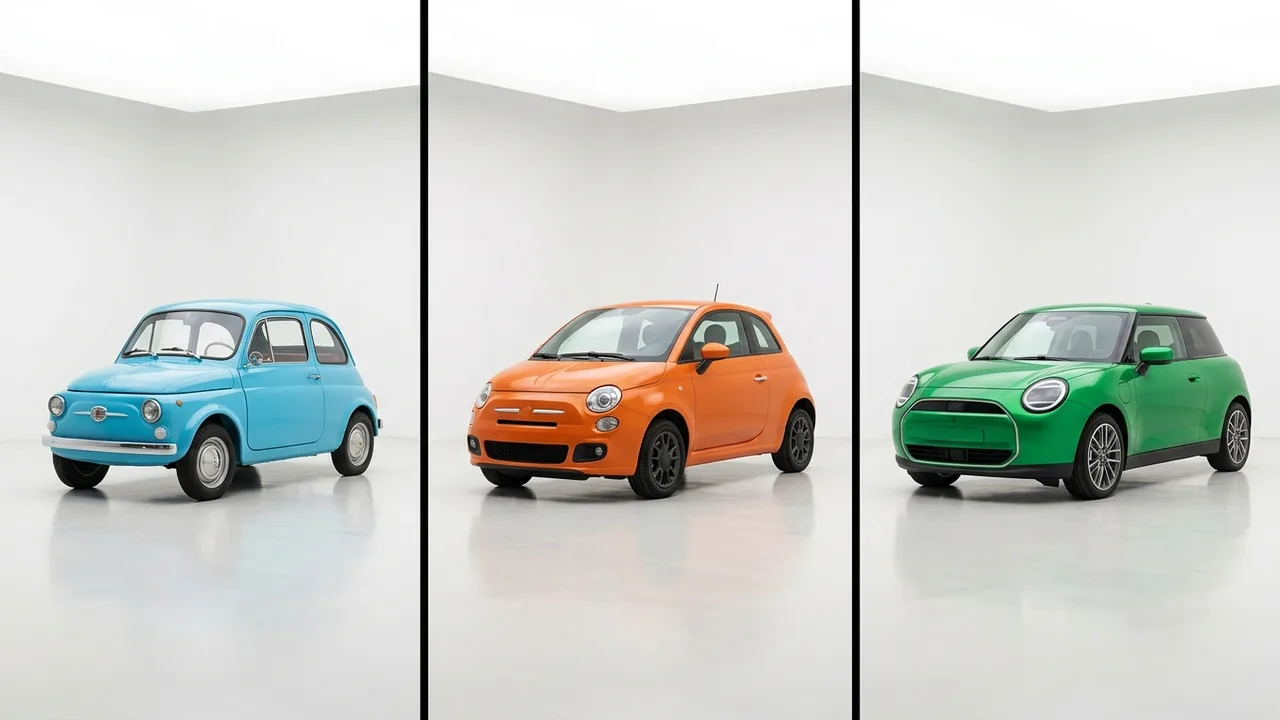
The original Mini (1959–2000). Produced for forty-one years with continuous evolution but no fundamental redesign — a longevity comparable to the Land Rover's or the Ambassador's.
Cooper and Cooper S (from 1961). John Cooper recognised what the layout could do with more power. The Cooper S's Monte Carlo Rally successes, as our retrospective explored, made a tiny economy car into a giant-killer — and the reasons were lightness, front-drive traction on snow, agility, and usable rather than inaccessible power.
The long middle. Through the 1970s, 80s and 90s the Mini soldiered on — increasingly outdated, increasingly beloved, and increasingly difficult to reconcile with modern safety and emissions requirements. The same trajectory the classic Defender followed.
Production ended in 2000.
The BMW era
BMW acquired the Mini brand through its ownership of the Rover Group, and — crucially — retained it when the rest of Rover was divested. That decision looks increasingly astute.
The new MINI (from 2001). A clean-sheet design that was substantially larger, vastly safer, dramatically better built and considerably more expensive than the original.
The repositioning was the point. BMW didn't attempt to build a cheap car. It built a premium small car, trading on the original's character and charm while charging accordingly.
Subsequent generations have grown further in size, equipment and price, with a broader range — including larger models that stretch the "Mini" name to its limits.
Electric MINI. The brand's electric transition, positioning it as a premium small EV — competing, as our small-EV megatest noted, in a different budget bracket from the value contenders.
The argument, and it's familiar
The purist objection: the modern MINI isn't small, isn't cheap, and isn't a Mini. The original was affordable transport for people who needed it; the current car is a lifestyle purchase for people who want it.
The counter-argument: a car meeting modern crash, emissions and equipment requirements cannot be the size or price of a 1959 Mini. As our Defender and 911 chronologies both concluded — the alternative wasn't a purer version, it was nothing.
And BMW's stewardship saved the brand. The name survives, the design language is genuinely distinctive, and the cars are good. That's not a small achievement given what happened to the rest of Rover — as our badge graveyard coverage will explore.
Our honest read: the modern MINI is a good car and a legitimate business, and the original's defining virtue — cheap, brilliant packaging for people who needed cheap transport — is genuinely gone. Both true.
What survived
1. The packaging idea, universally — in every small car on the road.
2. The design language. The modern car is unmistakably descended from the original, which is a real design achievement.
3. The go-kart handling character, which BMW has protected deliberately across generations.
4. The Cooper name and its performance associations.
What didn't
1. Affordability. The most significant loss, and the one purists are right about.
2. Lightness. As our retrospective argued, the original's joy came from weight, not power — and the modern car is far heavier, for good reasons.
3. Simplicity and repairability.
The bottom line
The Mini began as a response to fuel rationing and produced a packaging solution so good that every small car since has copied it.
The Cooper S proved lightness could beat power and money — an argument published instrumented testing keeps re-proving sixty years later.
BMW's revival saved the brand and repositioned it entirely, from cheap transport to premium lifestyle. The cars are good, the design language survived, and the handling character was deliberately protected.
But affordability and lightness — the original's actual virtues — are gone, and no amount of heritage marketing recovers them.
The Mini survived. The Mini's purpose didn't. That's a more interesting story than either the purists or the marketing admits.
Key takeaways
- Born from Suez Crisis fuel rationing, and produced a packaging solution — transverse engine, front-drive, wheels at the corners — that every small car since has copied
- The Cooper S's Monte Carlo success proved lightness and agility could beat power and money, an argument our modern testing keeps confirming
- BMW retained the brand when the rest of Rover was divested — a decision that looks increasingly astute
- The modern MINI repositioned from cheap transport to premium lifestyle, and the cars are genuinely good
- What survived: packaging, design language, handling character. What didn't: affordability and lightness — the original's actual virtues
Sources & further reading
- BMC/BMW historical records
Figures, prices and policy details were current at the last-updated date above. Automotive pricing, incentives and regulations change frequently — verify time-sensitive details against the primary sources listed below. Read our editorial policy and fact-checking standards.