📚 MOMENTS & MILESTONES. Economic history is contested, and the account below sets out the main explanations rather than asserting one.
Before
India's car market before 1991 was a closed system, and our histories have documented what that produced.
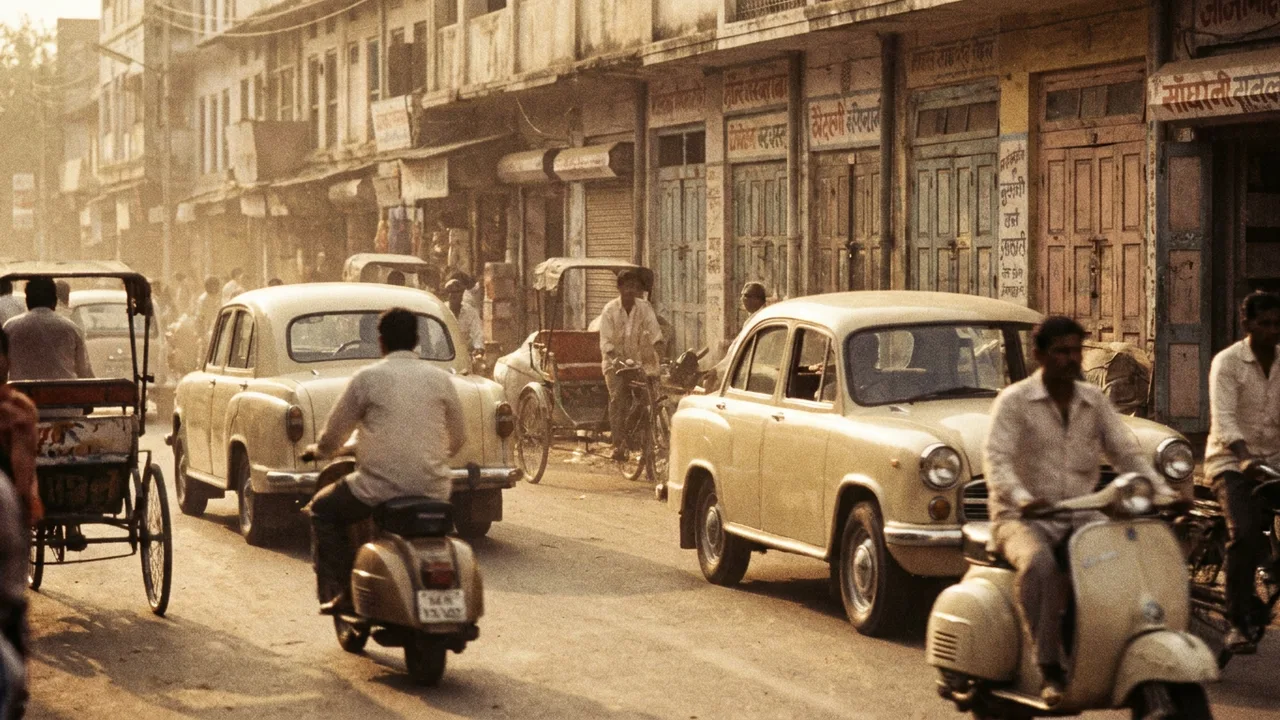
Two companies effectively had it entirely — Hindustan Motors with the Ambassador and Premier with the Padmini — both building designs from the 1950s, both protected by licensing restrictions and import controls, both facing waiting lists measured in years.
As our Hindustan and Premier history concluded: they weren't badly run given their incentives. With demand permanently exceeding supply, improving the product cost money and gained nothing.
The Maruti 800 (1983) had begun the change — a state joint venture with Suzuki that, as our retrospective described, was "generationally different."
But the market was still fundamentally closed.
What 1991 changed
India's economic reforms — prompted by a balance-of-payments crisis — dismantled much of the licensing system and progressively opened the economy to foreign investment and imports.
For the car industry, the consequences arrived quickly:
1. International manufacturers entered. Through the 1990s and beyond, global manufacturers established Indian operations — bringing modern products, manufacturing standards and competition.
2. Competition forced improvement. As our Ambassador retrospective put it, its decline "began with the 800 and accelerated with liberalisation" — and the ending is the lesson: it ended not because it stopped being suitable, but because Indians were finally offered something better.
3. The old order collapsed. Hindustan and Premier could not respond. Fifty years of non-development cannot be recovered in five.
4. Choice expanded enormously. From two effective options to a market with dozens of manufacturers across every segment.
5. Prices and waiting lists normalised. The years-long waits ended.
What India gained
1. Modern cars. Safer, more efficient, more reliable, better equipped.
2. An industrial base. As our Maruti history noted, the supplier ecosystem built to Japanese standards benefited the entire market — including competitors — and made a genuine Indian automotive industry possible.
3. Indian manufacturers that could compete. Tata's trajectory is the clearest evidence. As our Indica retrospective covered, it built passenger car capability through expensive failure — the Sierra (1991), the Indica (1998) — and is now India's EV leader, a genuine safety champion, and maker of the country's best-selling car.
That doesn't happen in a closed market. Protection removes the pressure that produces capability.
4. Export capability. Indian-built vehicles now serve global markets.
5. Employment and industrial development on a scale the protected era never achieved.
What was lost, honestly
A balanced account requires this:
1. Two long-established manufacturers, with the employment and supplier relationships attached. Those were real jobs and real communities.
2. A certain kind of repairability. As our Ambassador retrospective argued, any mechanic in any town could fix one — a genuine virtue that modern vehicles have progressively surrendered.
3. Industrial self-sufficiency, in the specific sense that India's car industry is now substantially foreign-owned or foreign-partnered — though as our badge-versus-factory investigation argued about Britain, manufacturing location matters more than ownership for jobs and value.
4. The transition was disruptive, and disruption falls unevenly.
What the moment reveals
1. ⭐ Competition is what improves cars. This is the central lesson, and our Ambassador history stated it plainly. Fifty years of protection produced a 1950s design still in production. A decade of competition transformed the market.
2. Capability is built under pressure. Tata developed genuine engineering capacity because it had to. Hindustan and Premier didn't, because they never did.
3. Consumers were the beneficiaries. Better cars, more choice, no waiting lists, competitive prices — and, eventually, crash safety that as our comparisons note is now a competitive requirement rather than a premium feature.
4. Protection has costs that are invisible while it lasts. Nobody in 1985 could see the cars India wasn't getting.
The bottom line
1991 transformed Indian motoring within a decade — from two effectively unchanged 1950s designs with years-long waiting lists, to one of the world's most competitive car markets.
The old order collapsed because it could not answer competition, having had no reason to develop the capacity to.
What India gained — modern cars, a genuine industrial base, manufacturers like Tata that can compete globally, and eventually safety standards that are now competitive requirements — is enormous.
What was lost was real too, and worth acknowledging: two long-established companies, a certain repairability, and a disruptive transition.
But the verdict is not close. As our Ambassador retrospective concluded: it ended not because it stopped being suitable, but because Indians were finally offered something better. That's competition working, and it's the most important thing 1991 demonstrates.
Key takeaways
- Before 1991, two companies effectively had the entire market — both building 1950s designs, both with years-long waiting lists
- Liberalisation brought international manufacturers, competition, and the collapse of an old order that couldn't answer it
- Tata is the proof of what India gained: it built capability through expensive failure and is now the country's EV leader and safety champion
- What was lost was real — two established manufacturers, a repairability modern cars have surrendered, and a disruptive transition
- The central lesson: competition is what improves cars. Fifty years of protection produced a 1950s design still in production
Sources & further reading
- Indian economic and automotive history
Figures, prices and policy details were current at the last-updated date above. Automotive pricing, incentives and regulations change frequently — verify time-sensitive details against the primary sources listed below. Read our editorial policy and fact-checking standards.