🛻 OPINION — AMERICAN METAL
A recurring column on American car culture, written from inside it.
What this column is for
American motoring is the most misread in the world, and the misreading runs in both directions.
From outside, it's frequently reduced to caricature — oversized trucks, indifference to efficiency, an irrational attachment to V8s. From inside, there's a tendency toward defensive dismissal of any criticism as foreign incomprehension.
Both are lazy. This column exists to explain American motoring on its own terms, honestly — including the parts that genuinely deserve criticism.
The thing outsiders get wrong
Distance.
Almost every misunderstanding of American motoring starts here. The United States is enormous, and it is not densely settled. Public transport outside a handful of cities ranges from limited to nonexistent. Journeys that would be intercity trips in Europe are routine commutes here.
That single fact explains most of what confuses people:
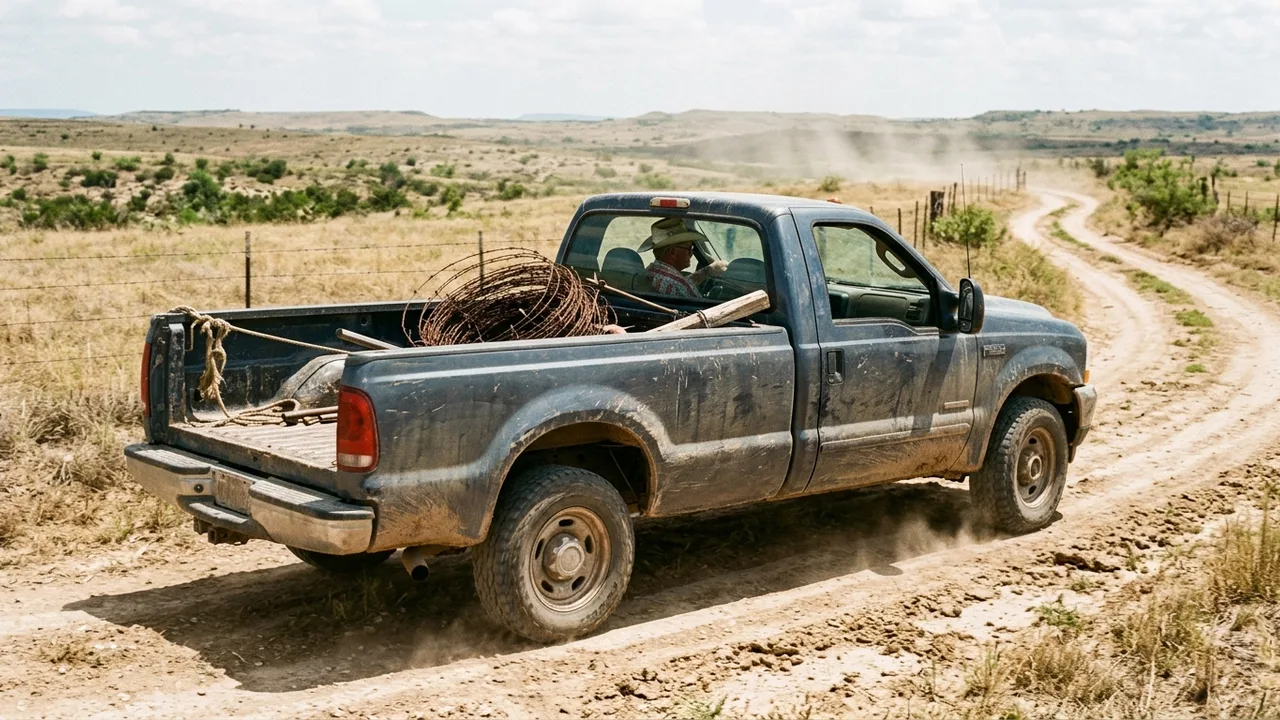
- Why trucks dominate. A vehicle that tows, hauls, works and covers long distances comfortably is a genuinely rational purchase for millions of people.
- Why range anxiety hits harder. As our coast-to-coast piece explored, 3,000 miles is a different problem from 300, and a five-minute fuel stop has a value that's easy to underestimate from a small country.
- Why efficiency ranks lower than outsiders expect. Not because Americans don't care, but because capability and distance frequently rank higher — and that's a defensible ordering of priorities, not a failure to have any.
The V8, and why it keeps not dying
I've watched the press bury the V8 several times, and as our archive analysis noted, premature death notices are one of motoring journalism's recurring failure modes.
The reasons for its persistence are practical, not sentimental:
Uncompromised towing over long distances. Refuelling anywhere in five minutes. Proven durability in vehicles people keep for a decade or more. Lower purchase cost. And — legitimately — character, which is a real product attribute even if enthusiast priorities aren't most buyers'.
The market has been unusually clear. Pure-electric pickup demand undershot forecasts substantially. Ram cancelled its all-electric truck entirely for the Ramcharger EREV. GM's decision to keep investing in the conventional Silverado, which looked conservative in 2021, looks well-judged now.
But — and this is where I part company with the defensive version of this argument — "the V8 lives" is not "the V8 lives forever." Efficiency is genuinely poor, regulatory pressure is real, and our own truck comparison placed the F-150 PowerBoost hybrid first, partly on economy and partly because Pro Power Onboard adds capability no conventional V8 offers.
The honest position: the V8's next chapter is electrified, not extinct. That's a more interesting outcome than either camp predicted.
What genuinely deserves criticism
A column that only defends its subject isn't worth reading. So:
1. Vehicles have got too heavy, and it's an arms race nobody chose. As our sedan piece argued, people buy larger vehicles partly because other people have larger vehicles. Each decision is rational; the aggregate is worse for everyone — heavier vehicles, worse pedestrian outcomes, more particulates, higher costs.
2. Front-end height is a genuine safety problem. Tall, blunt front ends are more dangerous to pedestrians and to occupants of smaller vehicles. This is measurable, and it's not adequately discussed here.
3. We lost the affordable car. As our Gen Z piece found, the demand is at the affordable end and the industry moved upmarket. America builds fewer genuinely cheap new cars than it did, and that's a choice manufacturers made.
4. The sedan didn't have to die. As our comparison found, the survivors are excellent — the Camry is now hybrid-only with class-leading efficiency. Discontinuation was substantially margin-driven, and buyers lost choice.
What this column will cover
- Trucks — honestly, including where they're overspecified for how they're used
- The electrification transition, which is proceeding differently here than anywhere
- Distance, road trips and the geography that shapes everything
- The affordable-car problem
- Detroit, and the industrial politics that come with it
- Where American motoring genuinely leads — and it does, in several areas
The bottom line
American motoring makes considerably more sense once you account for distance, and considerably less sense once you look honestly at weight.
The V8 endures for practical reasons and will most likely become electrified rather than extinct. Trucks dominate because for millions of people they're genuinely the right tool. Those aren't irrationalities to be corrected by outsiders.
But the arms race in size and mass is a real problem, front-end height is a measurable safety issue, and the disappearance of the affordable American car was a choice rather than an inevitability.
This column will defend what deserves defending and criticise what deserves criticism. If it only ever does one of those, it isn't doing its job.
Key takeaways
- OPINION. A column explaining American motoring on its own terms — including where it genuinely deserves criticism
- Distance explains most of what confuses outsiders: why trucks dominate, why range anxiety hits harder, why capability outranks efficiency
- The V8 persists for practical reasons, not sentiment — but "the V8 lives" isn't "forever," and its next chapter is likely electrified rather than extinct
- What deserves criticism: the size-and-weight arms race nobody chose, front-end height as a measurable safety problem, and the lost affordable car
- The sedan's death was substantially margin-driven — the survivors are excellent, and buyers lost choice