🔍 OPINION — THE USED-CAR WHISPERER
A recurring column on the used market: what's undervalued, what's dangerous, and what to check.
What this column is for
Most people buy used, and most car journalism covers new. That gap is where this column lives.
The used market is where the genuine value is — and where the genuine risk is. This column will point at both, monthly, without pretending every car is a bargain or every seller a fraud.
What's genuinely undervalued right now
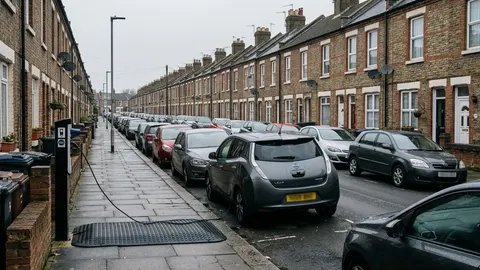
1. Used electric cars — the standout opportunity.
As our depreciation investigation found, EV values fell unusually hard, driven by rapid technological improvement, new-car price cuts and battery-health caution.
The losses fell on early adopters. The gain is sitting in the used market now.
For a buyer who can charge at home, keeps cars for years, and gets a battery health report — non-negotiable — a used EV currently offers the strongest value proposition in motoring: dramatically lower running costs, minimal servicing, and the steepest depreciation already absorbed by somebody else.
The caveat is real: if you'll sell within two years, residual risk remains.
2. Family sedans and estates.
As our comparison found, the sedans that survived the SUV cull are better than ever — and they're undervalued precisely because fashion moved elsewhere. More efficient, better to drive, usually cheaper, and adequately spacious for most families.
3. Full hybrids.
Our hybrid economy testing found full hybrids generally deliver close to their official figures, particularly in urban driving. A used one offers proven efficiency with no infrastructure requirement.
4. Unfashionable colours and specifications.
Manual estates. Beige. Diesel with genuinely high mileage but complete history. The market prices on desirability; you can buy on condition.
What to walk away from
1. Any car with a battery you can't assess. For a used EV or hybrid, no battery health report means no purchase. Everything else is negotiable; this isn't.
2. Uncharged plug-in hybrids. As our economy testing established, an uncharged PHEV is worse than the equivalent petrol car — carrying hundreds of kilograms of dead weight for no benefit. If the previous owner never plugged it in, you're buying a heavy, complicated petrol car.
3. Cat S write-offs without documented structural repair. As our write-off explainer set out, the structure IS the safety system, and repair quality is genuinely hard to assess. Cat N with proper verification can make sense; Cat S mostly shouldn't.
4. Flood cars. As our salvage investigation found, the damage is progressive, electronic and frequently invisible — and it attacks safety systems. Silt in the seat rails, moisture in light units, corrosion in odd places, and musty smell under heavy air freshener.
5. A mileage claim the wear doesn't support. As our odometer piece noted, digital rollback is easier than mechanical ever was. Check the steering wheel, driver's seat bolster, pedal rubbers and whether the tyres are original.
6. Complex premium cars just outside warranty. As our new-versus-used comparison argued, modern complexity has widened this risk considerably — air suspension, dual-clutch transmissions, multiple ECUs. A single failure can erase the entire depreciation saving.
The checks that actually save money
In order of value:
1. Full service history. The single most informative document. A mileage sequence that jumps illogically is the clearest evidence of fraud available.
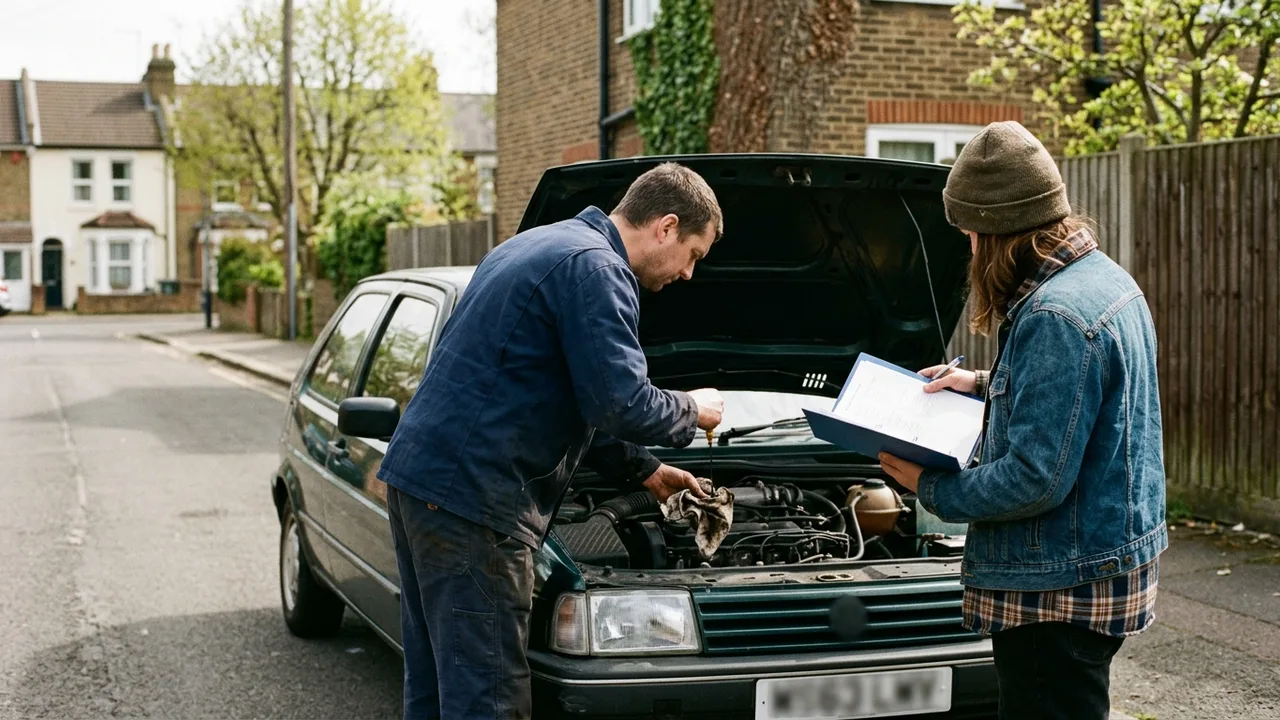
2. Independent inspection by someone you chose. Not the seller's suggestion. Tell them what you're worried about — flood, structural repair, whatever — because it changes what they check.
3. History check — multiple services. Coverage differs. A clean report from one is not proof, and a clean history means nothing was recorded, not that nothing happened.
4. Battery health report for anything electrified.
5. Check what warranty remains, particularly battery and drivetrain cover, which frequently transfers.
6. A contingency fund. 10–15% of the purchase price, held separately. The deciding question from our new-versus-used piece applies: if this car needed a £3,000 repair next month, what would happen?
The honest framing
Most sellers are honest and most used cars are fine. Treating every transaction as adversarial is exhausting and inaccurate.
But the checks above cost an hour and a modest inspection fee, and the downside of skipping them is measured in thousands.
The single best habit: buy on condition and history, not on desirability. The market prices the badge, the colour and the specification. You can price the maintenance record — and that's where the value is.
The bottom line
Used electric cars are the standout opportunity in motoring right now — provided you can charge at home, keep the car, and get a battery health report.
Walk away from anything with an unassessable battery, an uncharged PHEV, a Cat S without documented repair, or a mileage claim the wear doesn't support.
And do the checks. Full service history first, independent inspection second, multiple history services third. An hour of diligence routinely saves four figures, and occasionally five.
See you next month.
Key takeaways
- OPINION. A monthly column on the used market — where the value is, where the risk is, and what to check
- Used EVs are the standout opportunity — but only if you can charge at home, keep the car, and get a battery health report
- Walk away from: unassessable batteries, uncharged PHEVs (worse than the equivalent petrol car), Cat S without documented repair, and flood cars
- The checks in order of value: full service history, independent inspection by someone you chose, multiple history services, battery health report
- The best habit: buy on condition and history, not desirability. The market prices the badge; you can price the maintenance record