🌙 OPINION — THE LONG WAY HOME
A recurring essay column on driving for its own sake.
What this column is for
Almost all motoring coverage — including most of ours — treats a car as a tool to be assessed. Range, cost, capability, safety, value. Our own testing section exists to measure exactly those things, and it should.
But that isn't why most people who love cars love cars.
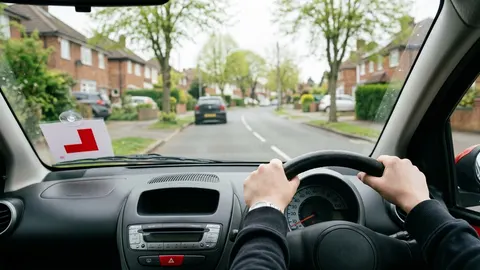
There's a category of driving that serves no purpose: the long way home. The drive taken because the weather is good. The pointless late-night loop. It doesn't appear in any spec sheet and it can't be measured — and for a lot of people it's the entire point.
This column is about that.
Why the pointless journey persists
Cars have become extraordinarily good at everything except this, and yet the impulse survives.
A few honest observations about why:
1. It's one of the few remaining forms of legitimate solitude. Driving alone is socially acceptable in a way that sitting alone frequently isn't. The car is a room that moves, and nobody questions why you're in it.
2. It occupies exactly the right amount of attention. Enough to stop rumination; not so much that it becomes work. This is genuinely unusual — most activities are either too demanding or too idle.
3. Progress is visible. You leave, you arrive. In a life where most effort produces ambiguous results, a journey completes.
4. It's a legitimate reason to be nowhere in particular. Not at work, not at home, not obliged.
What this has to do with cars specifically
A cynic would say the car is incidental — that any solitary activity would do.
I don't think that's right, and here's why:
Engagement matters. As our reviews keep finding, some cars produce this feeling more readily than others. The Ford Puma won our best-sellers comparison because it's genuinely enjoyable to drive in a segment of dullards. The Renault 5 succeeded by making an affordable EV desirable rather than merely sensible.
Those aren't rational purchase criteria. They're this criterion, expressed in the language of a review.
And our archive pieces keep circling the same thing. The Mini Cooper S's joy came from lightness, not power. The McLaren F1 was built to one uncompromised idea. The Golf GTI Mk1's genius was the ratio, not the horsepower.
Every one of those is an article about feel, dressed as an article about engineering.
The honest complications
A column like this could easily become sentimental, so:
1. Driving is not therapy, and shouldn't substitute for it. If someone is struggling, a drive is a coping mechanism, not treatment. Saying otherwise would be irresponsible, and this column won't.
2. There's an environmental cost to pointless journeys, and pretending otherwise is dishonest. It's small per person; it isn't zero. I'd rather acknowledge it than perform indifference.
3. Driving for pleasure is a privilege. It requires a car, fuel or charge, time, and roads worth driving. Not everyone has those.
4. It's genuinely more dangerous than staying home. As our India road safety investigation documented, speed causes the overwhelming majority of road deaths. A drive taken for pleasure is not a licence to drive badly, and the enjoyable roads are frequently the dangerous ones.
What this column will cover
- Specific roads and why they work — the geometry, the rhythm, the surface
- Night driving, which is a different activity entirely
- The cars that produce this feeling — and why it correlates poorly with price
- Commuting, and whether it can be redeemed
- Passengers, and why the same journey changes completely with company
- What happens to this when cars drive themselves
The bottom line
Most motoring coverage measures cars, and it should. Range, safety, cost and capability are what most purchases turn on, and our testing exists to get them right.
But the reason people care about cars in the first place isn't measurable, and pretending otherwise makes for thin writing.
The long way home persists because a car is one of the few places where you can be alone, occupied, in motion, and legitimately nowhere. That's not sentimentality — it's a fairly specific set of conditions that's genuinely hard to reproduce elsewhere.
This column will take that seriously, without pretending it's therapy, without ignoring the costs, and without confusing the pleasure of driving with permission to drive badly.
The good roads are usually the dangerous ones. Enjoy them carefully.
Key takeaways
- OPINION. An essay column on driving for its own sake — the part of motoring that no spec sheet measures
- The pointless journey persists because a car offers legitimate solitude, the right amount of attention, visible progress, and a reason to be nowhere
- The car isn't incidental: our reviews keep praising feel over specification — the Puma's enjoyment, the Renault 5's desirability, the Mini's lightness
- Driving is not therapy and shouldn't substitute for it — it's a coping mechanism, not treatment
- The good roads are usually the dangerous ones. Speed causes the overwhelming majority of road deaths; enjoyment isn't licence
Sources & further reading
- True Motion Auto reviews and archive coverage. Opinion column — clearly labelled. Verified July 2026.
Figures, prices and policy details were current at the last-updated date above. Automotive pricing, incentives and regulations change frequently — verify time-sensitive details against the primary sources listed below. Read our editorial policy and fact-checking standards.