⚖️ OPINION — DEBATE
Both sides argued properly. Rules in this area have changed repeatedly and remain contested in the courts — verify the current position before relying on anything here.
The rule, and why it's contested
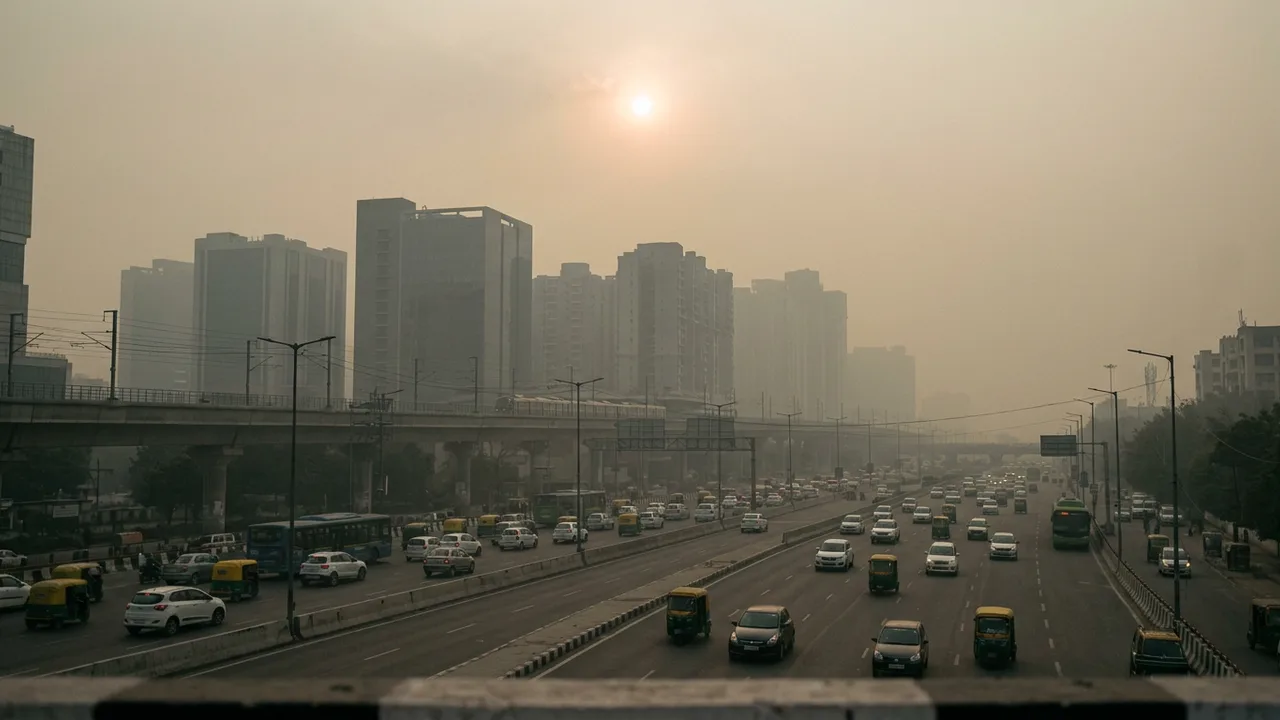
Delhi and the wider National Capital Region have applied age-based restrictions on older vehicles — most prominently the deregistration and use restrictions affecting diesel vehicles beyond around ten years and petrol vehicles beyond around fifteen — on air-quality grounds.
It is among the most contested vehicle policies in India, and the argument reveals a genuine tension between two things people reasonably care about: breathable air and the value of what they own.
✅ THE CASE FOR
1. Delhi's air quality is a genuine public health emergency, not an abstraction. The health burden — respiratory disease, cardiovascular impact, reduced life expectancy — is severe and falls hardest on the poorest, who spend most time outdoors and in traffic.
2. Older vehicles pollute disproportionately. Emissions standards have tightened dramatically. A vehicle built to a standard several generations old emits substantially more per kilometre than a current one, and older diesels are particularly significant for particulates and NOx.
3. Age-based rules are enforceable. Registration dates are documented. Emissions testing at scale is harder to administer and easier to evade — as anyone familiar with PUC certificate practices will acknowledge.
4. It accelerates fleet renewal, moving the whole vehicle population toward cleaner standards faster than attrition would.
5. The alternative is worse for the same people. Those most affected by the restriction are also, disproportionately, those most affected by the air. The policy's burden and its benefit fall partly on the same population.
❌ THE CASE AGAINST
1. Age is a proxy for emissions, not a measure of them. This is the strongest objection. A well-maintained ten-year-old diesel may emit less than a poorly-maintained five-year-old one. The rule destroys value in vehicles that are performing adequately while permitting worse-performing newer ones.
An emissions-based rule would target the actual problem. The counter — that testing is hard to administer honestly — is an argument about capacity, not principle.
2. It's severely regressive. This is the argument that gives the policy its political heat, and it's legitimate.
A vehicle is frequently a household's largest asset, and forced deregistration destroys that value with limited compensation. The people least able to replace a vehicle are the most affected.
As our own coverage repeatedly notes, Indian buyers weight resale value heavily — precisely because a car is a store of value in a way it isn't for wealthier markets. A rule that arbitrarily zeroes that store is a substantial wealth transfer.
3. It displaces rather than solves. Restricted vehicles frequently move to other states rather than being scrapped. The emissions continue; they just happen somewhere else.
4. Vehicles are not the whole problem. Delhi's air quality involves crop residue burning, construction dust, industrial emissions and geography alongside transport. A policy focused on one visible source risks the appearance of action more than the substance.
5. It's applied unevenly. Commercial fleets, government vehicles and different categories face different treatment, which undermines the fairness case.
Where this actually lands
Both sides accept the underlying problem. Nobody serious disputes that Delhi's air is dangerous or that older vehicles pollute more. The dispute is about instrument design.
The proponents' strongest point is enforceability. An emissions-based rule is better in principle and requires testing infrastructure with integrity that India is still building.
The opponents' strongest point is the regressive burden. Destroying household wealth with limited compensation, using a proxy rather than a measure, is a genuine injustice — even in service of a legitimate goal.
The displacement problem is the one both sides should find uncomfortable, because it suggests the policy may be moving emissions rather than removing them.
What might work better
1. Emissions-based rather than age-based, with credible, tamper-resistant testing — which requires investment in testing integrity, not just rules.
2. Meaningful scrappage incentives. If the public benefits, the public should share the cost. Compensation converts a confiscation into a transaction.
3. Prevent displacement. A vehicle too polluting for Delhi is too polluting elsewhere.
4. Address the other sources with equal seriousness, or the policy carries a credibility problem it doesn't deserve.
5. Support the transition. As our India EV coverage argues, the binding constraint is charging access, not vehicle price — and public charging plus housing-society reform would do more for urban air than a deregistration rule.
The bottom line
Delhi's air quality is a genuine emergency and older vehicles genuinely pollute more. Those facts are not seriously disputed.
The rule's weakness is that age is a proxy, and a regressive one. It destroys household wealth using a measure that doesn't reliably track the thing it targets — and displacement means the emissions may simply move.
Our honest read: the goal is right and the instrument is crude. An emissions-based rule with credible testing, meaningful compensation, displacement controls and equal attention to non-vehicle sources would achieve more, more fairly.
But "build better testing infrastructure first" is not an answer to people breathing the air now, and that urgency is why the crude instrument exists.
Reasonable people disagree, and this one is genuinely hard.
Key takeaways
- DEBATE, and rules in this area have changed repeatedly and remain contested — verify the current position before relying on anything here
- For: Delhi's air is a genuine health emergency, older vehicles pollute substantially more, and age-based rules are enforceable where emissions testing integrity is still being built
- Against: age is a proxy, not a measure — and the rule is severely regressive, destroying household wealth where a car is often the largest asset
- Displacement should trouble both sides: restricted vehicles often move to other states, so the emissions continue elsewhere
- Better instruments exist — emissions-based testing, meaningful scrappage compensation, displacement controls — but "build testing first" doesn't answer people breathing the air now
Sources & further reading
- Delhi/NCR air quality policy
- Indian vehicle emissions standards
- True Motion Auto India EV coverage. Debate piece — policy is contested and changing
- verify current status. Verified July 2026.
Figures, prices and policy details were current at the last-updated date above. Automotive pricing, incentives and regulations change frequently — verify time-sensitive details against the primary sources listed below. Read our editorial policy and fact-checking standards.