⚖️ OPINION — DEBATE
Both sides argued as strongly as we can make them. We're not telling you what to conclude.
The question
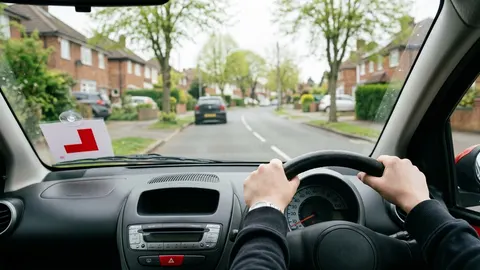
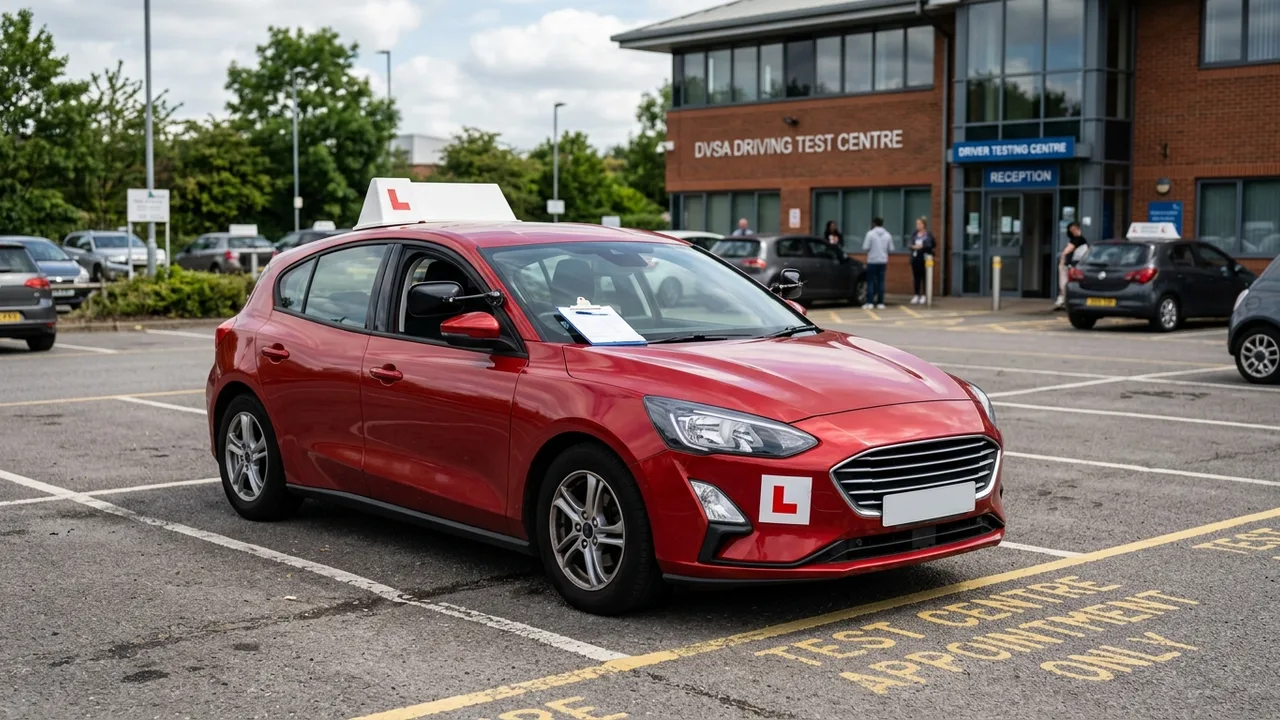
Many jurisdictions already restrict new drivers — passenger limits, night-driving curfews, lower alcohol thresholds, probationary periods. Several restrict engine power or power-to-weight for motorcyclists as standard.
Should cars be treated the same way? Specifically: should newly-qualified drivers be prohibited from vehicles above a defined power threshold?
This is a live policy question, and it deserves both sides properly.
✅ THE CASE FOR
1. Graduated licensing demonstrably works. This is the strongest argument. Restrictions on new drivers — night curfews, passenger limits, extended probation — have a substantial evidence base showing reduced casualties. Power limits would be an extension of an approach already proven.
2. Motorcycle licensing already does this, in many countries as standard, and the principle is uncontroversial there. The inconsistency is hard to defend on logic alone.
3. New drivers are over-represented in serious crashes, and inexperience combined with high performance is a genuinely poor combination.
4. Modern power figures have escalated dramatically. As our 0–60 inflation analysis found, a 2026 family SUV out-accelerates a 1992 Ferrari. A newly-qualified driver can legally buy something that would have been a supercar within living memory — and, crucially, can afford it used.
5. The measure is enforceable. Power output is a documented vehicle specification. Unlike behaviour-based rules, compliance is verifiable at the point of insurance or registration.
6. Insurance already does this implicitly, via pricing. A formal rule would apply the same logic more consistently and less regressively than a market mechanism that simply prices out poorer young drivers.
❌ THE CASE AGAINST
1. Power isn't what kills people. This is the strongest counter, and it's supported by our own reporting. Overspeeding causes 68% of Indian road deaths, and speed is achievable in any modern car. A 120 hp hatchback will comfortably exceed any speed limit.
Restricting power addresses a proxy rather than the behaviour.
2. Weight and size may matter more. As our braking work established, a heavy vehicle carries substantially more kinetic energy and takes longer to stop. A 4,000 lb SUV with 250 hp may be more dangerous — to others especially — than a light 320 hp coupe. A power rule would permit the former and prohibit the latter.
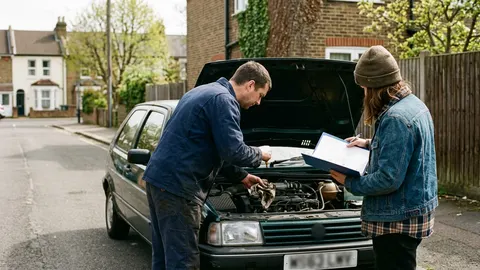
3. It's regressive. Power limits push new drivers toward older, cheaper, less safe cars. A modern 320 hp car has vastly better crash protection, stability control and automatic emergency braking than a twenty-year-old alternative within the limit. The rule could increase casualties.
4. Enforcement creates perverse outcomes. Where the line falls determines behaviour, and manufacturers build to thresholds. Motorcycle licensing produced a generation of machines engineered precisely to the limit rather than to the purpose.
5. Modern driver assistance narrows the gap. Stability control, traction control and AEB are standard, and — as our Learner's Permit column noted — AEB genuinely intervenes faster than a human. The 1990s assumption that power alone kills is less true now.
6. The alternative is better. More training, longer probation, better hazard-perception testing and stronger enforcement of speed address the actual causes. As our India road safety investigation found, average-speed enforcement cut one expressway's fatalities from 188 to 56 — an intervention aimed at behaviour rather than hardware.
Where the argument actually lands
Both sides agree on more than the framing suggests, and the disagreement is narrower than it looks:
Everyone accepts new drivers are at higher risk. Everyone accepts graduated licensing works. The dispute is whether power is the right variable.
The strongest case against is the regressive one. Pushing new drivers into older cars with worse crash protection is a genuinely plausible route to more harm, and any proposal has to answer it.
The strongest case for is consistency. If we restrict motorcycle power on safety grounds, the argument for exempting cars is weaker than it's usually assumed to be.
A middle position exists and gets less attention than it deserves: power-to-weight limits rather than absolute power, combined with a minimum safety-rating requirement — which addresses the regressive objection directly by ensuring restricted drivers aren't pushed into unsafe old cars.
The bottom line
Power limits for new drivers are a coherent extension of graduated licensing, already applied to motorcycles, and enforceable in a way behavioural rules aren't.
But power is a proxy, and the evidence points more strongly at speed, inexperience and weight than at horsepower. The regressive risk is real — a rule that pushes new drivers into older, less safe cars could cost lives rather than saving them.
Our honest read: the interventions with the strongest evidence are behavioural rather than mechanical — training, probation, hazard perception and speed enforcement. The expressway result in our India investigation is the clearest proof available.
But if a power rule were introduced, it should be power-to-weight rather than absolute power, and paired with a minimum crash-safety requirement. Otherwise it risks solving a proxy while worsening the real problem.
Reasonable people disagree. Argue with us.
Key takeaways
- DEBATE. Both cases argued properly — this is a live policy question and we're not telling you what to conclude
- For: graduated licensing demonstrably works, motorcycles are already restricted, power figures have escalated dramatically, and it's enforceable
- Against: power is a proxy — speed is achievable in any car, weight may matter more, and the rule is regressive, pushing new drivers into older, less safe vehicles
- The strongest evidence favours behavioural interventions: our India investigation found average-speed enforcement cut one expressway's deaths from 188 to 56
- A middle position deserves attention: power-to-weight limits plus a minimum crash-safety requirement, which answers the regressive objection directly
Sources & further reading
- Graduated licensing evidence
Figures, prices and policy details were current at the last-updated date above. Automotive pricing, incentives and regulations change frequently — verify time-sensitive details against the primary sources listed below. Read our editorial policy and fact-checking standards.