🗳️ OPINION
A column taking a position. The counter-argument is set out below.
The argument
India's electric vehicle conversation is overwhelmingly about price — cheaper batteries, lower GST, subsidy structures, Battery-as-a-Service.
All of that matters. None of it is the binding constraint.
The binding constraint is whether an Indian buyer can charge where they park — and no amount of price reduction fixes that.
Why price isn't the problem it's treated as
India has already solved a great deal of the EV affordability question, and rather cleverly:
- The GST advantage is substantial — EVs at 5% against 18%+ for petrol equivalents, a genuine structural incentive
- Battery-as-a-Service was a masterstroke. As our comparison found, MG's scheme cut roughly ₹3.5 lakh off the upfront cost of the Windsor, and it's a large part of why that car became India's best-selling EV. Maruti followed with the e Vitara from ₹10.99 lakh
- Genuinely competitive products exist across price points — the Windsor, e Vitara, Nexon EV, Punch EV, and now the Kia Syros EV claiming a segment-best 526 km
An Indian buyer can now purchase a capable, safe, well-equipped EV at a price that works. That problem is substantially addressed.
The constraint nobody prices
Our apartment charging test found the thing that actually decides it, and it's not on any spec sheet:
- A 15A domestic socket over a 10-hour overnight window adds roughly 150–200 km — enough for typical commuting, but it cannot recover a heavy driving day
- A 7.4 kW wallbox charges essentially any mainstream EV fully within the same window — you wake up full, every day, regardless
The difference between those two is the difference between an EV that works and one that quietly frustrates you.
And the obstacle is almost never technology. It's the housing society.
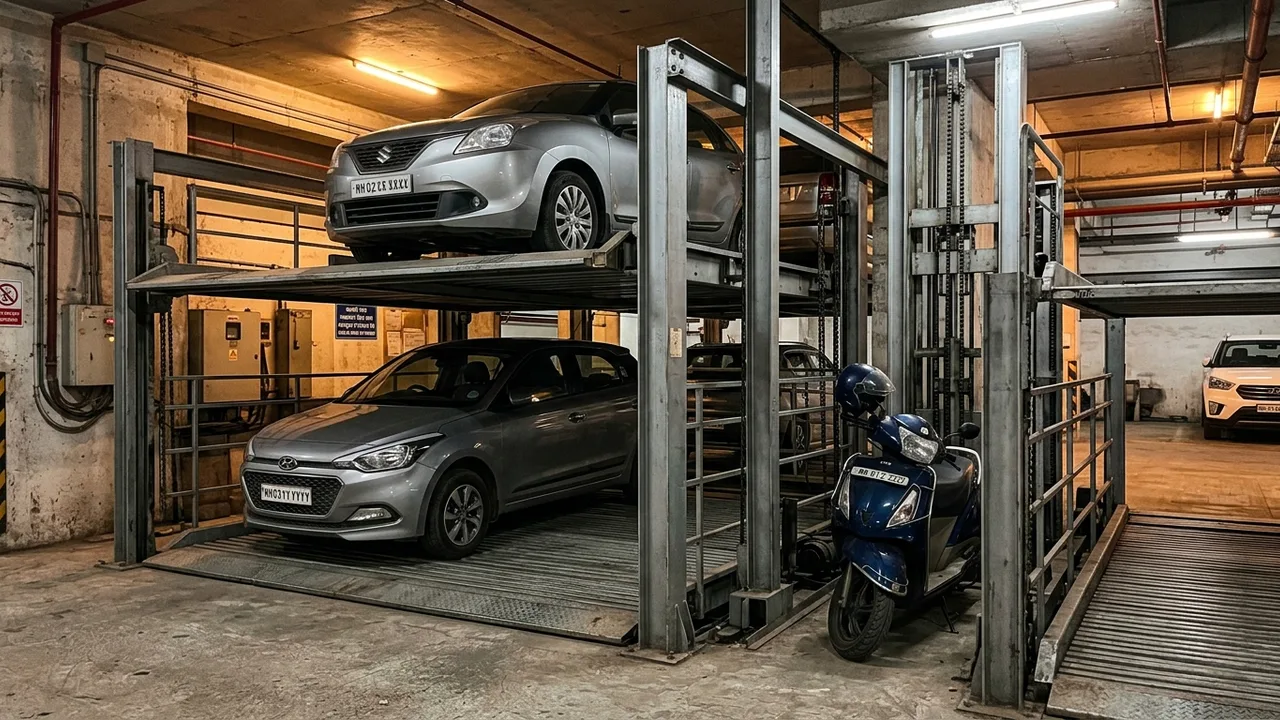
Society approval for a charge point in shared or stacked parking. Metering and billing. Building supply capacity in older complexes. Allocated versus floating parking, which makes a fixed charger impractical. Cable routing and safety objections.
A large share of urban Indian car buyers live in exactly these buildings. For them, the price of the car is not the question.
Why public charging isn't the answer here
Someone will say: build public chargers. They should be built — but as our public-charging diary found, relying on them as a substitute for home charging is a substantially worse ownership experience, and it's worse in India than in Britain.
The cost differential is real, eroding the running-cost advantage that is the main economic case for an Indian EV.
The time cost is worse in Indian conditions — queueing, uncertain availability, and chargers that exist but don't work.
And our own Golden Quadrilateral planning found the honest picture: metro corridors are genuinely good; the long inter-city stretches thin considerably, with the Chennai–Kolkata leg the hardest.
Public charging is a supplement. It is not a substitute.
What I'd actually do
1. Mandate and enforce charging provision in new residential construction. This is the highest-leverage intervention available, and it's cheap at the point of building versus expensive to retrofit.
2. Create a clear, standardised legal right for residents to install a charge point in allocated parking, with defined society obligations and a dispute mechanism. Several states and municipal bodies have moved here; consistency and enforcement are what's missing.
3. Solve sub-metering properly. Most society objections are ultimately billing objections. A standardised, approved individual metering solution removes the commonest obstacle.
4. Subsidise the wallbox, not just the car. A 7.4 kW installation costs a fraction of a purchase subsidy and delivers more usable benefit per rupee. Maruti including one with the e Vitara was genuinely smart product design; policy should reinforce it.
5. Target workplace charging. For apartment dwellers, this is the closest available substitute for home charging.
The strongest counter-argument
The best case against me:
1. Price still excludes most Indians. Even at ₹10–15 lakh, EVs remain out of reach for the majority. Charging infrastructure serves people who can already afford the car — a narrower group than the affordability problem.
2. Two- and three-wheelers are the real Indian EV story. They're where the volume is, where electrification is proceeding fastest, and their charging needs are far simpler. Focusing on car charging may be solving the wrong market's problem entirely. This is the argument I find most persuasive against my own position.
3. Infrastructure follows demand. Build the fleet, and charging investment becomes commercially rational.
4. Grid capacity is a genuine constraint in parts of India, and mandating charge points without addressing supply creates different problems.
All four are serious, and the second may simply be right.
The bottom line
India has largely solved the EV price problem through GST advantage, Battery-as-a-Service and genuinely competitive products. A buyer who wants an affordable, capable EV can find one.
What hasn't been solved is whether they can charge it where they park — and for the large share of urban Indian buyers living in apartments, that's determined by their housing society rather than by any manufacturer or subsidy.
A 15A socket adds 150–200 km overnight. A 7.4 kW wallbox charges fully. Policy should be obsessing over that gap, not over another few thousand rupees off the sticker price.
Subsidise the wallbox. Standardise the right to install. Fix sub-metering. That's a cheaper intervention than purchase subsidies and a more binding one.
Key takeaways
- OPINION on contested policy; the counter-arguments are set out in full
- India has largely solved EV affordability — 5% GST, Battery-as-a-Service cutting ~₹3.5 lakh off upfront cost, and genuinely competitive products
- The binding constraint is whether you can charge where you park: a 15A socket adds 150–200 km overnight; a 7.4 kW wallbox charges fully
- The obstacle is almost never technology — it's the housing society: approval, metering, supply capacity and allocated parking
- Highest-leverage fixes: mandate charging in new construction, standardise the right to install, solve sub-metering, and subsidise the wallbox rather than only the car
Sources & further reading
- True Motion Auto apartment charging test, public-charging diary, India EV comparisons. Opinion — clearly labelled. Verified July 2026.
Figures, prices and policy details were current at the last-updated date above. Automotive pricing, incentives and regulations change frequently — verify time-sensitive details against the primary sources listed below. Read our editorial policy and fact-checking standards.