📚 BRAND HISTORY. Corporate history is contested and dates vary by source.
A century of extremes
Few car companies have swung as violently between brilliance and crisis as Jaguar.
It has produced some of the most beautiful and successful cars ever made, won Le Mans repeatedly, and defined a particular idea of British luxury. It has also collapsed in quality, been nationalised, been sold repeatedly, and reinvented itself so completely that the current company shares little but a name with its predecessors.
The whole century is worth telling honestly, because the failures explain the present as much as the triumphs.
The rise
Origins (1920s–30s). Founded by William Lyons as a sidecar business, evolving into coachbuilding and then car manufacturing. The SS name was abandoned after the war for obvious reasons, and Jaguar was adopted.
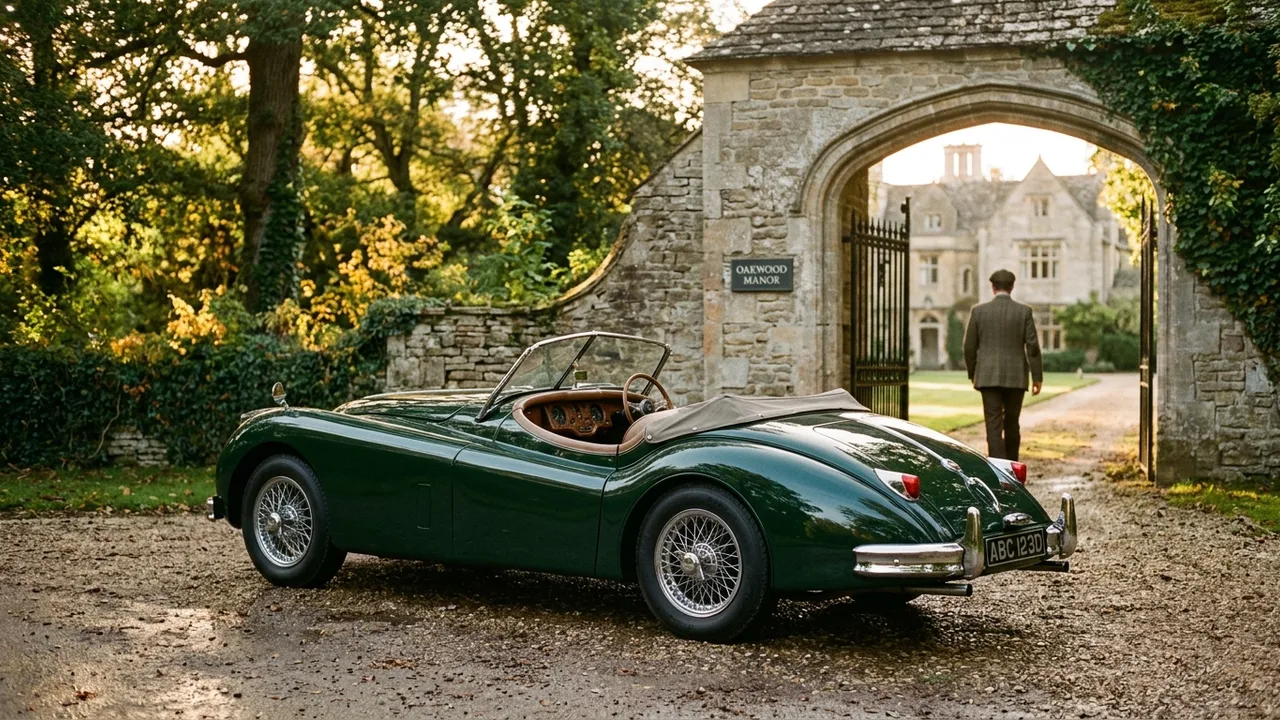
The post-war peak (1940s–60s). This is the golden era, and it was genuinely golden:
- The XK120 established Jaguar as a performance manufacturer with extraordinary style
- Le Mans dominance in the 1950s with the C-Type and D-Type — five wins in the decade
- The Mark 2 saloon, which defined a certain kind of British motoring
- The E-Type (1961), one of the most beautiful cars ever built, and — crucially — dramatically cheaper than its Italian rivals
Lyons's formula was value. Jaguars offered performance and beauty at prices that undercut Ferrari and Aston Martin substantially. That was the brand's actual proposition, and it's frequently forgotten.
The fall
British Leyland (from 1968). Jaguar was absorbed into the BL conglomerate, and the consequences were severe.
Quality collapsed. Industrial disputes, underinvestment, poor materials and inconsistent assembly produced cars that were beautiful, capable and unreliable — a reputation that took decades to shake and which, fairly or not, still colours perceptions.
Nationalisation (1975). BL was taken into state ownership as the British car industry's crisis deepened — a story our British industry history covers in full.
The XJS era. A capable grand tourer launched into a fuel crisis, following the E-Type — an almost impossible brief, and one it was judged harshly for.
Privatisation (1984) and a period of independence.
The Ford years (1989–2008)
Ford acquired Jaguar and invested heavily. The results were genuinely mixed:
Real improvements: quality and reliability improved substantially, and Ford's engineering resources modernised the company.
Real problems: platform sharing produced cars — notably the X-Type — that were widely criticised as insufficiently Jaguar. The brand's positioning became confused, chasing volume it wasn't suited to.
The XK and later XJ showed what the company could do with proper investment, but Ford's broader financial difficulties eventually forced a sale.
The Tata era (from 2008)
Tata Motors acquired Jaguar Land Rover, and the acquisition has been more successful than most predicted.
Investment continued, product improved, and — importantly — Land Rover's commercial strength subsidised Jaguar's ambitions.
The F-Type (2013) was a genuine return to form: a beautiful, fast, characterful sports car that felt like a Jaguar in a way the X-Type never had.
The I-Pace (2018) was more significant than its sales suggested — a genuinely accomplished electric SUV that beat the German establishment to market, and won substantial critical acclaim.
But Jaguar's fundamental problem persisted: it sold far fewer cars than its rivals, and lacked the volume to fund competitive development independently.
The reinvention
Jaguar's decision to cease production of its existing range and relaunch as an electric-only brand positioned considerably upmarket is among the most radical repositionings any established manufacturer has attempted.
The logic is defensible: Jaguar could not compete on volume with BMW, Mercedes and Audi. Attempting to had produced compromised products and thin margins. Moving decisively upmarket, with fewer, more expensive, more distinctive cars, addresses that directly.
The risk is obvious: it abandons the existing customer base, the brand's value-oriented heritage, and — as our tariff coverage noted about origin — a great deal of accumulated goodwill.
As our badge graveyard coverage will explore, brands rarely survive discontinuity of this magnitude. Jaguar is attempting something with few successful precedents.
We're not going to pretend to know whether it works. It's genuinely uncertain, and anyone claiming confidence in either direction is guessing.
What the century reveals
1. Value was the original proposition, and it's frequently forgotten. Lyons undercut Ferrari. The current strategy inverts that entirely.
2. Quality reputation is asymmetric. Jaguar's BL-era reliability problems damaged the brand for decades after they were fixed — the same lesson our Tata Indica retrospective drew about reputational repair taking far longer than reputational damage.
3. Ownership matters enormously. BL nearly destroyed it. Ford improved quality and confused positioning. Tata invested and allowed genuine product ambition.
4. Volume is the trap. Jaguar's persistent problem has been lacking the scale to fund competitive development. The reinvention is an attempt to escape that by not needing volume.
The bottom line
Jaguar's century runs from Le Mans dominance and the E-Type — beautiful, fast, and dramatically cheaper than its rivals — through the British Leyland quality collapse, Ford's mixed stewardship, and Tata's genuine investment.
Its persistent structural problem has been volume: too few sales to fund development against rivals selling many times more.
The electric-only, upmarket reinvention addresses that directly, and it is among the most radical repositionings ever attempted by an established manufacturer.
Whether it works is genuinely unknown. The strategic logic is sound; the execution risk is enormous; and brands rarely survive discontinuity on this scale.
What's certain is that the alternative — continuing as a sub-scale competitor to the Germans — wasn't working either.
Key takeaways
- Value was the original proposition: Lyons's Jaguars offered Ferrari-rivalling performance and beauty at dramatically lower prices — frequently forgotten now
- The British Leyland era collapsed quality, producing a reliability reputation that took decades to shake and still colours perceptions
- Ownership mattered enormously: BL nearly destroyed it, Ford improved quality but confused positioning, Tata invested and enabled real ambition
- Volume has been the persistent structural trap — too few sales to fund competitive development against far larger rivals
- The electric-only upmarket reinvention addresses that directly and is enormously risky. Whether it works is genuinely unknown
Sources & further reading
- Jaguar and JLR corporate history
- British motor industry records. Corporate dates vary between sources. Verified July 2026.
Figures, prices and policy details were current at the last-updated date above. Automotive pricing, incentives and regulations change frequently — verify time-sensitive details against the primary sources listed below. Read our editorial policy and fact-checking standards.