The scale, stated plainly
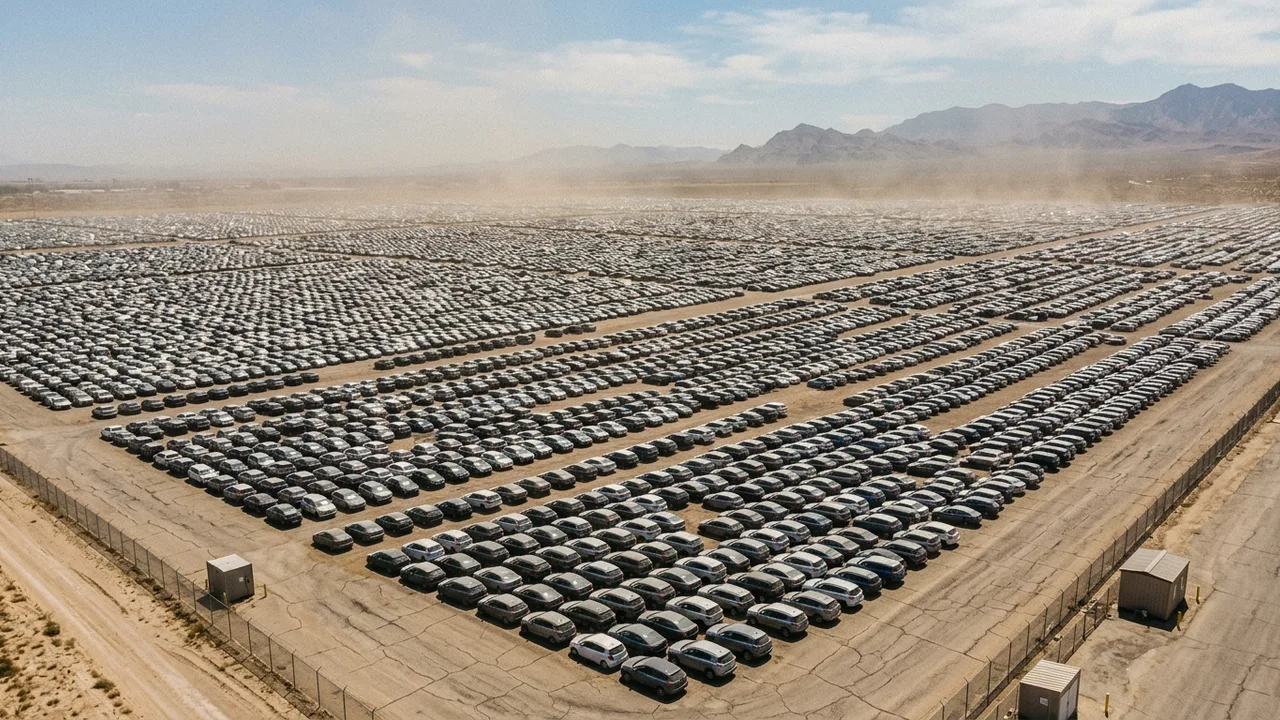
The Takata airbag recall is the largest and most complex safety recall in automotive history, and it is not over.
- ~67 million airbag inflators recalled in the US (priority groups 1–12)
- ~41 million vehicles affected in the US alone
- At least 28 deaths and over 400 injuries in the US
- Deaths and injuries in numerous other countries — this is a global recall spanning dozens of manufacturers
- Nearly 4.8 million US vehicles still carry unrepaired inflators as of 2026 — over a decade after the nationwide recall began
Let that last number land. Ten years on, a fleet the size of a mid-sized country's entire vehicle population is still driving around with a component that can kill.
What actually goes wrong
The engineering failure is specific, and understanding it explains everything else about this saga.
Takata's inflators use ammonium nitrate as the propellant — the chemical that, when ignited, produces the burst of gas that inflates the airbag in a crash. Ammonium nitrate is cheap and energetic, which is why Takata used it. It is also chemically unstable, which is why nobody else did.
Critically, many Takata inflators used ammonium nitrate without a chemical drying agent (desiccant) to keep moisture out. And ammonium nitrate is hygroscopic — it absorbs atmospheric moisture — and it degrades under repeated temperature cycling (hot day, cold night, over and over, for years).
Over time, the propellant breaks down into a denser, more unstable form that burns far too aggressively. When the airbag then deploys in a crash, the propellant doesn't gently inflate the bag — it over-pressurises and ruptures the metal inflator housing, firing sharp metal fragments into the cabin at high velocity, straight at the occupant's face and neck.
The airbag — the device meant to save your life — becomes a fragmentation grenade twelve inches from your head. People have been killed by Takata inflators in crashes so minor they would otherwise have walked away unharmed.
Why heat and humidity are everything
The single most important fact about the Takata risk is that it gets worse with age, and worst in heat and humidity.
This is why the recall was rolled out regionally and in priority groups — the hottest, most humid zones first. In the US, high-absolute-humidity coastal and southern states were prioritised. Globally, the highest-risk regions have been hot, humid places: parts of Southeast Asia, the Gulf, southern Europe, Australia.
It's also why the recall keeps escalating rather than winding down. An inflator that was merely "under recall" five years ago may now be under a do-not-drive order, because five more years of heat cycling have made it genuinely likely to rupture. Time is the enemy here in a way it isn't for most recalls.
The timeline of a decade-long crisis
- 2008: Honda issues the first Takata inflator recall after inflators explode.
- 2014: NHTSA mandates the nationwide recall. The scale becomes clear — this is unlike anything before it.
- 2015–2016: Takata formally acknowledges to NHTSA that a large number of its inflators are defective. Recalls cascade across dozens of manufacturers — Honda, Toyota, BMW, Audi, Nissan, Ford, Mazda, Subaru, Mitsubishi, Chrysler and many more.
- 2017: Takata Corporation, crushed by liabilities, files for bankruptcy — one of the largest manufacturing bankruptcies in Japanese history. Its assets are largely acquired by Key Safety Systems.
- 2019: A separate recall of non-azide driver inflators (NADI) adds another category of defective Takata airbags.
- 2020s: The long tail. Repair rates climb slowly. Manufacturers send teams across the country to physically locate cars. Do-not-drive orders proliferate on the oldest vehicles.
- February 2026: Stellantis (FCA) issues a blanket do-not-drive order for all ~225,000 of its remaining unrepaired US vehicles with Takata airbags — models built 2003–2016.
- 2026: ~4.8 million US vehicles still unrepaired.
Why it still isn't over
If the repair is free and the danger is lethal, why are millions of cars still unfixed a decade later? Four reasons.
1. The cars have changed hands. NHTSA has explicitly noted that the remaining vehicles are older, frequently no longer with the original owner, and inherently harder to reach. The recall notice went to someone who sold the car years ago. This is the notification gap, at massive scale.
2. The absolute numbers were staggering. 67 million inflators couldn't be manufactured overnight. The recall was deliberately staggered over years to let replacement-part supply catch up with demand — which is itself part of why it dragged on.
3. Owner inertia and disbelief. A car that has worked fine for fifteen years doesn't feel dangerous. Convincing someone that their reliable old commuter contains a lethal component is a genuine communication challenge.
4. Concentration in hard-to-reach populations. The unrepaired vehicles cluster in specific states — Texas (over 660,000 unrepaired), California (over half a million), Florida and Arizona — and disproportionately among owners who are harder to contact.
What manufacturers are now doing
The remaining outreach is genuinely aggressive, because the alternative is more deaths:
- Free repair, always — parts and labour, at any franchised dealer
- Mobile and at-home repair — technicians coming to you
- Free towing under do-not-drive orders
- Multi-language mailers (Nissan mails in Spanish plus nine other languages)
- DMV partnerships — manufacturers jointly working with state DMVs to cross-reference registration data and reach owners the mailing lists miss
- Free lookup tools like CARFAX's Vehicle Recall Search Service, letting states and inspection departments flag unrepaired recalls
What you must do
This is not abstract history. If you own any vehicle built between roughly 2003 and 2018, of almost any mainstream brand:
- Check your VIN right now at nhtsa.gov/recalls (US), gov.uk/check-vehicle-recalls (UK), or your manufacturer's checker.
- If it's a Takata recall, treat it as urgent — especially if you live somewhere hot and humid, and especially if the car is older. Age and climate are the accelerants.
- If it's under a do-not-drive order, stop driving it. Call the manufacturer for free towing and repair.
- If you bought the car used, do not assume the previous owner had it done. Confirm with a dealer.
- The repair is free. Parts, labour, sometimes at your home. There is no reason to wait.
The Takata saga is the definitive proof of two things this whole section keeps returning to: that recall notifications follow owners while defects follow cars, and that some defects get more dangerous every year they're ignored. Nearly 4.8 million American families are still, right now, in the population this article is describing.
Don't be one of them. Check the VIN.
Key takeaways
- The largest recall in history: ~67 million inflators, ~41 million US vehicles, dozens of manufacturers
- Ammonium nitrate propellant degrades with heat and humidity, causing the inflator to rupture and fire shrapnel
- At least 28 US deaths and 400+ injuries; Takata itself went bankrupt in 2017
- ~4.8 million US vehicles remain unrepaired in 2026 — mostly older cars no longer with the original owner
- The risk increases with age — check any 2003–2018 vehicle's VIN, and treat a Takata recall as urgent
Sources & further reading
- NHTSA Takata Recall Spotlight
- CARFAX Recall Tracker 2026
- Auto Remarketing
- MoparInsiders
- Nissan USA
- Axios
- PR Newswire/CARFAX. Verified July 2026 — check your VIN at the official checker.
Figures, prices and policy details were current at the last-updated date above. Automotive pricing, incentives and regulations change frequently — verify time-sensitive details with the linked primary sources. Read our editorial policy and fact-checking standards.